Chiropractic Medicare Coverage Modernization Act of 2025 This bill expands Medicare coverage of chiropractic services to include all services provided by chiropractors, rather than only subluxation corrections through manual manipulation of the spine.
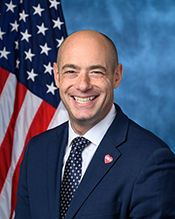
Rep. Greg Landsman
Sponsored bills
Maddy summaryHR 485, the Muhammad Ali Congressional Gold Medal Act, authorizes Congress to award a gold medal in recognition of Muhammad Ali's lifetime contributions to sports, civil rights, and humanitarian causes. The bill directs the Treasury Secretary to strike the medal and present it to Ali's widow, Lonnie Ali, following his death in 2016. It also permits the sale of bronze duplicates to cover costs, with proceeds going to the U.S. Mint. This is a commemorative measure with no policy impact, solely honoring Ali's legacy through a symbolic medal.
Maddy summaryHR 488, the Combating Cartels on Social Media Act of 2025, requires the Department of Homeland Security, Department of Justice, and Department of State to jointly assess how transnational criminal organizations use social media platforms and messaging services for recruitment and illicit activities near U.S. borders. Within 180 days of enactment, they must submit a report detailing such usage and current countermeasures. By one year after enactment, the agencies must develop a national strategy focused on improving interagency coordination, enhancing intelligence analysis, and conducting youth outreach in border communities to counter cartel recruitment. The strategy must include privacy and civil liberties protections, with annual progress reports to Congress for five years. The bill does not authorize new law enforcement powers or funding.
Maddy summaryThe Prevent Tariff Abuse Act amends the International Emergency Economic Powers Act to prohibit the President from using emergency powers to impose tariffs or import quotas on goods entering the U.S. It adds a specific provision stating the President cannot impose duties, tariffs, or quotas under this law. This directly limits the executive branch's authority during emergencies, preventing the use of emergency powers for trade restrictions. The bill does not affect other trade policies or the President's other emergency authorities.
Maddy summaryHR 433, the Department of Education Protection Act, prohibits the use of federal funds to reorganize the Department of Education. Specifically, it blocks any spending from current fiscal year appropriations on activities that would decentralize the department, reduce staffing, or alter its structure, responsibilities, or authority relative to its organization as of January 1, 2025. The bill directly affects the Department of Education by preventing structural changes to its existing offices and operations. This is a procedural measure focused solely on preserving the current departmental framework, not on changing education policy or funding.
Maddy summaryThe TRUST in Congress Act requires current and new Members of Congress, along with their spouses and dependent children, to place certain investments - such as stocks, commodities, and derivatives - into a blind trust within 90 to 180 days of taking office. It excludes U.S. Treasury securities and widely held mutual funds from this requirement and exempts investments tied to a spouse’s or dependent child’s primary job. Members must certify the trust’s setup to the House Clerk or Senate Secretary within 15 days, with these records posted publicly online. The act also prohibits dissolving such trusts until 180 days after a member leaves office.
Sea Turtle Rescue Assistance and Rehabilitation Act of 2025 This bill expands the John H. Prescott Marine Mammal Rescue and Response Grant Program to include separate grants to rescue sea turtles for the next seven years. The grants must be used for the recovery, care, or treatment of sick, injured, or entangled sea turtles; responses to rescue stranded sea turtles; the collection of data and samples from living or dead stranded sea turtles for scientific research or health assessments; facility operating costs that are directly related to activities to assist sea turtles; or development of stranding network capacity where facilities do not exist or are sparse. In addition, the bill establishes the Sea Turtle Rescue, Rehabilitation, and Rapid Response Fund.
Maddy summaryThe Proxy Voting for New Parents Resolution (HRES 23) would allow U.S. House Members who have given birth or whose spouse has given birth to appoint another Member as a proxy to cast their vote or record their presence in the House and committees for up to 12 weeks after childbirth. To use this, the new parent must submit a signed letter to the Clerk detailing the birth or medical condition and naming the proxy; the proxy must vote exactly as instructed and announce the vote as "by proxy." The proxy vote does not count toward quorum, and the new parent can revoke the proxy at any time by submitting a new letter or casting their own vote. This resolution applies to all House Members, including Delegates and the Resident Commissioner, though they cannot cast votes for the House itself.
Maddy summaryHR 253, the Bipartisan Restoring Faith in Government Act, prohibits members of Congress, their spouses, and dependents from owning or trading most stocks, bonds, commodities, and derivatives. Covered individuals must divest such investments within 90 days of the bill’s enactment or when becoming covered, with exceptions for U.S. Treasury securities, state/local government bonds, and Thrift Savings Plan investments. The law requires divestment through sale or placement in a qualified blind trust (approved by the ethics office), mandates annual compliance certificates, and imposes civil penalties up to $50,000 for violations. It directly affects congressional staff and family members with financial holdings, aiming to prevent conflicts of interest in legislative decision-making.

Maddy summaryThis bill increases healthcare affordability for low- and middle-income people by expanding eligibility for premium tax credits under the Affordable Care Act. It removes the previous 400% of poverty level cap for subsidy eligibility and replaces it with a new sliding scale based on income tiers, ranging from 0% to 8.5% of household income for coverage costs. The scale adjusts linearly across income levels, with households earning 300-400% of poverty paying 6.0%-8.5% of income (up from the prior fixed 400% cap), while lower-income households pay progressively less. These changes apply to tax years beginning after December 31, 2025, directly affecting individuals purchasing health insurance through marketplace plans.