

Stronger Communities through Better Transit Act This bill requires the Department of Transportation (DOT) to establish a grant program to support operating projects for public transportation and related service improvements, particularly in underserved communities and areas of persistent poverty. Specifically, the bill requires DOT to allocate funding under the program for urbanized areas, states, and Indian tribes that are recipients of funds under either the Federal Transit Administration's (FTA's) Urbanized Area Formula Funding program or Formula Grants for Rural Areas program. Eligible recipients may use funding for operating costs associated with projects that improve public transportation service for transit-dependent populations and support increased transit ridership (e.g., service expansion, information technology enhancements, and workforce development). DOT must apportion the funding so that recipients receive funds that are proportional to their share of operating costs. The bill also provides for an increased federal cost share for operating assistance for projects or programs carried out in areas of persistent poverty or underserved communities. DOT must set up a multimodal access measurement interface for public agencies to aid transit agencies in determining and reporting on access to jobs and essential services. A grant recipient must (1) report specific information to the FTA for inclusion in the National Transit Database, and (2) survey transit riders and non-riding residents regarding transit service improvements. Further, the bill expands the purposes of the public transportation programs to include supporting public transportation's role in combating climate change through growing/retaining transit ridership.
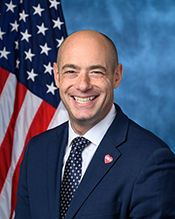
Rep. Greg Landsman
Sponsored bills
Maddy summaryHR 3452, the "Six Assurances to Taiwan Act," formally codifies six longstanding U.S. policy commitments regarding Taiwan that were established in 1982. It reaffirms that the U.S. has never agreed to set a date for ending arms sales to Taiwan, consult with China on such sales, mediate between Taiwan and China, revise the Taiwan Relations Act, take a position on Taiwan's sovereignty, or pressure Taiwan to negotiate with China. The bill’s key mechanism requires the President to notify Congress before taking any action that could alter these assurances, giving Congress 30 days (or 60 days during a specific period) to review proposals through a joint resolution process. This applies to actions like pausing arms sales, negotiating with China on arms, or changing U.S. policy on Taiwan’s status. The bill directly affects U.S. executive branch decisions on Taiwan policy and Congressional oversight authority.
Maddy summaryHR 3418, the Historic Preservation Fund Reauthorization Act, extends the federal Historic Preservation Fund through 2035 and increases its annual funding from $150 million to $250 million. This bill directly affects historic preservation programs nationwide, including state and local grants for protecting historic sites and buildings. The key provision updates the funding levels and duration in existing law (54 U.S. Code § 303102), ensuring continued support for preservation efforts. The change maintains current program operations without creating new requirements or altering eligibility.
Maddy summaryHR 3417, the Websites and Software Applications Accessibility Act of 2025, requires websites and applications used by covered entities - including businesses, government agencies, and public accommodations - to be accessible to people with disabilities. The bill mandates the Department of Justice and Equal Employment Opportunity Commission to establish accessibility standards within 24 months, with different compliance timelines for small businesses (2-3 years) versus larger entities (30 days). It includes provisions for technical assistance, grants to help small entities remediate inaccessible websites, and enforcement mechanisms to address violations. The law aims to ensure people with disabilities can access the same information, services, and transactions online as people without disabilities. Commercial providers who develop websites or applications for covered entities must also ensure their products meet accessibility standards.
Maddy summaryHR 3405 requires the Secretary of State to provide Congress with all documents and a detailed report within 30 days regarding negotiations between the U.S. and Qatar about transferring an aircraft to the U.S. government for eventual transfer to an entity controlled by former President Donald Trump. The report must detail any promises made to Qatar, potential private contracts, and legal reviews related to the transfer. The bill also prohibits federal funding for any action supporting the transfer of foreign-owned aircraft to the U.S. government, the President, or Trump’s presidential library. This applies specifically to aircraft transfers involving Qatar and Trump-controlled entities, focusing on transparency and funding restrictions.
Maddy summaryHR 3398 (the Aaron Salter, Jr., Responsible Body Armor Possession Act) bans civilians from purchasing, owning, or possessing "enhanced body armor" (defined as bullet-resistant gear meeting National Institute of Justice RF1 standards) without exception. The law directly affects most private citizens who might seek such armor, while exempting law enforcement officers (including corrections officers), government agencies, tribes, and individuals who legally owned enhanced body armor before the law took effect. Key provisions include creating a new federal criminal offense punishable by up to five years in prison for violations, with clear definitions of "enhanced body armor" and "covered law enforcement officer" based on existing legal standards. The bill focuses on restricting access to high-level protective gear for non-official use, not on regulating standard body armor.
Maddy summaryHCONRES 32 establishes the Commission on Evidence-Based Policymaking within Congress to study how federal data can better inform lawmaking. The 12-member commission, appointed by congressional leadership with specific expertise (including academics, former staff, and legislative data specialists), will review federal data practices and recommend improvements to Congress. Key focus areas include enhancing access to administrative data, incorporating evidence into legislation, and exploring a potential congressional Chief Data Officer role. The commission must submit reports with at least two-thirds member approval, but the resolution itself does not create new laws or directly affect the public.
Maddy summaryHR 3368, the "Born in the USA Act of 2025," prohibits federal funding for Executive Order 14160 (which aimed to restrict birthright citizenship for children born in the U.S.). The bill directly affects federal agencies that might implement the executive order by blocking their use of funds for that purpose. Its key provision is a funding ban targeting the executive order and any similar future policies, without changing citizenship law. The bill does not alter birthright citizenship rights but prevents federal resources from being used to enforce the controversial executive order. It is a procedural measure focused on funding, not a substantive policy change to citizenship rules.
Maddy summaryThis bill requires the Department of Veterans Affairs (VA) to establish clear standards for evaluating all VA suicide prevention and mental health grant or pilot programs. It mandates that these programs set measurable goals, develop detailed evaluation plans (including data collection methods and analysis), and share results with relevant stakeholders before, during, and after implementation. The VA must also conduct post-program evaluations to assess effectiveness and share "best practices" across programs. These standards apply to all existing and future VA programs focused on veteran mental health, ensuring consistent evaluation and transparency. The bill directly affects how the VA administers suicide prevention initiatives for veterans.
Saving Our Veterans Lives Act of 2025 This bill requires the Department of Veterans Affairs (VA) to implement a program to provide, upon request, a firearm lockbox (or voucher for such item) to eligible individuals. Currently, there is a pilot program under which certain veterans may be prescribed a lockbox by a VA clinician. The VA must also provide information with respect to the benefits of and options for secure firearm storage. The VA must develop an informational video on the secure storage of firearms as a suicide prevention strategy and publish the video on its website. Additionally, the VA must publish information to inform individuals who participate in the lockbox program that such lockboxes are not for resale. The VA must also implement a public education campaign to educate eligible individuals about the availability of lockboxes under the program and that participation in the program does not affect the rights of an individual with respect to the lawful ownership of a firearm.