

Maddy summaryHR 5714, the October 7 Remembrance Education Act, directs the U.S. Holocaust Memorial Museum to create a curriculum for secondary schools within 180 days of enactment. The curriculum will cover Hamas’ October 7, 2023 attacks on Israel, the history of antisemitism, the spread of anti-Israel rhetoric on campuses and social media following the attacks, and how denial or distortion of antisemitism occurs. It specifically requires schools to address the attacks' brutality, historical context of antisemitism, and contemporary manifestations of hate speech. The Museum must submit a report on the curriculum to Congress within 180 days of completion or by 3 years after the bill’s enactment. This bill affects secondary schools using the curriculum and focuses on educational content about the attacks and related antisemitism.
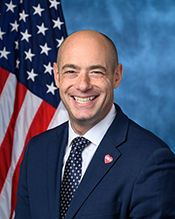
Rep. Greg Landsman
Sponsored bills
Maddy summaryThe Keep the Heat On Act of 2025 ensures low-income households continue receiving home energy assistance during a federal government shutdown in fiscal year 2026. It directs the use of unused Treasury funds to maintain the same payment rates for the home energy assistance program as in fiscal year 2025, preventing service interruptions. This applies specifically to any shutdown period during the 2026 fiscal year, guaranteeing consistent support for vulnerable families. The bill addresses a funding gap without altering existing program eligibility or requirements.
Maddy summaryThis bill prohibits the removal of most federal civil service employees during government shutdowns caused by funding gaps. It prevents the President or agency heads from terminating these employees (including through layoffs) while discretionary funding is not in place. The protection specifically excludes political appointees, defined as those in leadership roles like cabinet positions, senior executive service roles, or "schedule C" policy positions. The law aims to stabilize the permanent workforce during funding disruptions.
Maddy summaryThis bill adds Medicare coverage for multi-cancer early detection screening tests (blood or biological tests analyzing cell-free DNA) starting January 1, 2028. It directly affects Medicare beneficiaries aged 68 and older (starting in 2028, with the age limit increasing by 1 year annually), requiring tests to be FDA-cleared and deemed reasonable/necessary by the Secretary for early cancer detection across multiple organ sites. Payment will initially match current stool DNA test rates before 2031, then shift to a lower rate or new payment system after 2031, with limits preventing more than one test per year. The bill explicitly states it does not alter coverage for existing cancer screenings like breast, colorectal, or prostate cancer tests.
Fair Pay for Federal Contractors Act of 2025 This bill provides back pay to employees of federal contractors who lost pay due to a lapse in appropriations (i.e., government shutdown) in FY2026. Specifically, the bill provides appropriations for federal agencies that are subject to a lapse in appropriations in FY2026 to adjust the price of contracts to compensate federal contractors for providing back pay to employees who were affected by the lapse in appropriations. The agencies must adjust the price of any contract for which the contractor stopped, suspended, delayed, or interrupted all or part of the work under the contract due to the lapse in appropriations. The price adjustment must compensate the contractor for reasonable costs incurred to (1) compensate employees who were furloughed or laid off, were not working, or experienced a reduction of hours or compensation due to the lapse in appropriations; or (2) restore paid leave taken by employees during the lapse in appropriations if the contractor required or permitted employees to use paid leave as a result of the lapse in appropriations. The maximum amount of weekly compensation of an employee for which an adjustment may be made under this bill may not exceed the lesser of (1) the employee's actual weekly compensation, or (2) $1,442 (or a lesser amount pro-rated for an employee who works less than 40 hours per week). The bill also requires the Office of Federal Procurement Policy to submit a report to Congress on the adjustments made under this bill.
Maddy summaryThis bill ensures federal firefighters continue receiving pay and benefits during government funding gaps and shutdowns. It authorizes continuing appropriations for firefighter pay during any period without full-year funding for fiscal year 2026, and prohibits layoffs due to reduction-in-force actions during funding lapses. The law directly affects firefighters employed by executive agencies or military departments whose primary duties involve fire control and extinguishment. Key provisions guarantee job security and pay continuity without requiring new legislation during budget implementation delays.
Maddy summaryHR 5660, the Pay Our Military Act, ensures military personnel and support staff receive pay during a government funding gap in fiscal year 2026. It appropriates funds from the Treasury to cover pay and allowances for active-duty troops, reservists, Department of Defense civilian employees, and contractors supporting military operations, if Congress hasn’t passed regular funding by then. The funding remains available until either regular appropriations are enacted or January 1, 2027, whichever comes first. This is a temporary measure to prevent disruptions in military pay during budget negotiations.
Maddy summaryHR 5572, the Help FEDS Act, ensures federal employees who must work during government shutdowns (but aren't paid due to the shutdown) can access unemployment benefits through their state's program. The bill requires states to allow these "excepted" employees to apply for and receive unemployment compensation during fiscal years 2026-2027, while also mandating repayment if they later receive pay under a separate federal provision. The federal government will reimburse states 100% of the unemployment benefits paid to these employees plus related administrative costs, funded from the Unemployment Trust Fund. This directly affects federal workers performing emergency work during shutdowns and state unemployment systems managing these claims.
Maddy summaryThis bill prevents federal agencies from terminating employees during a government shutdown caused by a lapse in discretionary funding. It prohibits removals of civil service employees at any agency affected by a funding gap, and if an employee is wrongfully removed, they can return to their job with back pay once funding resumes. The law directly protects all federal employees covered by the civil service system during shutdowns. It applies automatically to any funding lapse, requiring automatic reinstatement without needing separate legal action.
Maddy summaryHR 5568, the "Funding Small Businesses During Shutdown Act," ensures certain Small Business Administration (SBA) loan programs continue during government shutdowns by appropriating specific funds from the Treasury. It allocates $500,000 for section 7(m) loans, $2.9 billion for section 7(a) loans, $1.25 billion for Small Business Investment Act loans, and $13.775 million for administrative costs related to section 7(m) loans. These funds cover salaries and expenses to maintain loan servicing during any 30-day shutdown period (or pro-rated for shorter lapses), directly affecting small businesses relying on SBA loans. The bill creates a targeted funding mechanism to prevent program interruptions without requiring new appropriations during shutdowns.