

Maddy summaryThis bill authorizes the U.S. Department of Justice and Department of State to provide Ukraine with law enforcement technical assistance, training, and advisory support focused on recovering forcibly transferred Ukrainian children and addressing related abductions. Key provisions include training in biometric identification, open-source intelligence, and secure communications; medical and psychological rehabilitation services for affected children; and coordination with NGOs and Ukrainian authorities to investigate and prosecute cases. The assistance directly supports Ukraine’s government, child protection services, and the children themselves who were abducted or forcibly transferred by Russia. Reports to Congress detail funding, assistance types, and efforts to align international sanctions.
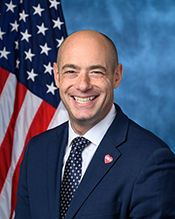
Rep. Greg Landsman
Sponsored bills
Maddy summaryThis joint resolution designates October 2025 as Head Start Awareness Month to symbolically recognize the program's 60-year impact. It highlights Head Start's service to over 40 million children and families nationwide, emphasizing its role in early childhood development, health screenings, and educational support. The resolution serves as a ceremonial acknowledgment of the program's legacy and achievements, not as a policy change or funding measure. It was introduced by multiple representatives to honor Head Start's contributions to child well-being and educational outcomes.
Maddy summaryHRES 846 is a symbolic resolution designating October 2025 as National Domestic Violence Awareness Month. It expresses the House's support for raising awareness about domestic violence and its impacts, and calls for continued congressional attention to ending domestic violence through existing programs. The resolution does not create new laws, allocate funding, or directly affect any specific groups - it is purely a statement of support. It references statistics on domestic violence prevalence but focuses on awareness rather than policy changes.
Prevent Government Shutdowns Act This bill provides continuing appropriations to prevent a government shutdown if the appropriations bills for a fiscal year have not been enacted before the fiscal year begins and continuing appropriations are not in effect. Specifically, the bill provides appropriations at the rate of operations that was provided for the prior fiscal year to continue programs, projects, and activities that were funded in the preceding fiscal year. The bill also limits official travel, congressional recesses or adjournments, and the consideration of legislation that is unrelated to appropriations after the beginning of a fiscal year if the appropriations process has not been completed.
Maddy summaryHR 5849, the USCP Act, ensures Capitol Police officers continue receiving pay during government shutdowns. It directs funds from the Treasury to cover Capitol Police salaries and expenses if discretionary funding lapses after the bill's enactment. This directly affects U.S. Capitol Police employees, guaranteeing they are paid even when the federal government is partially closed. The bill provides a specific funding mechanism to prevent pay interruptions during shutdowns. It does not alter Capitol Police duties or create new requirements.
Maddy summaryThe American Energy Independence and Affordability Act extends multiple clean energy tax credits that were set to expire between 2025 and 2026. It specifically extends residential clean energy credits through 2034, clean electricity investment credits for wind and solar through 2032, and clean vehicle credits for electric vehicles through 2032. The bill also reinstates special rates for sustainable aviation fuel and modifies requirements for energy-efficient home improvements. These provisions directly affect homeowners installing solar panels, businesses investing in clean energy infrastructure, and manufacturers producing clean energy equipment.
Maddy summaryThe GRAD Act (HR 5850) prevents colleges from changing or ending a student's enrollment status if federal financial aid under Title IV is delayed due to a government shutdown. It directly affects students receiving federal aid and the institutions that award it. The bill amends the Higher Education Act to require schools to maintain enrollment status during disruptions caused by lapses in government funding. This ensures students aren’t penalized for aid delays beyond their control during shutdowns.
Maddy summaryHR 5816, the HELP FEDs Act, protects federal employees from student loan penalties during government shutdowns. It prevents late fees, additional interest, and credit damage on qualified education loans (like federal student loans) when employees miss payments due to a funding lapse causing government operations to halt. The law requires the Department of Education to coordinate with loan servicers and credit agencies to remove any inaccurate negative credit reports from these missed payments, applying retroactively to shutdowns after October 1, 2025. The bill does not eliminate the need to repay loans but pauses penalties and credit impacts during covered disruptions.
Head Start Shutdown Protection Act of 2025 This bill requires the Department of Health and Human Services to reimburse a state, local government, or school district that uses its funds to maintain participation in the Head Start program or the Early Head Start program during a government shutdown in which there is a lapse in federal appropriations for the programs. The Head Start programs provide comprehensive early childhood education and development services to low-income children. The programs seek to promote school readiness through the provision of educational, health, nutritional, social, and other services.
Maddy summaryThis bill requires FEMA to reimburse fire departments for specific expenses when National Fire Academy courses or activities are canceled due to a government funding gap. It covers travel costs and "backfill" expenses (like overtime pay for staff covering shifts) incurred by departments that planned to send personnel to in-person, off-campus, or virtual courses. Fire departments must submit an itemized claim within 30 days after funding resumes, and reimbursement must be issued within 90 days. Exceptions apply if cancellation is due to "good cause," such as facility closures unrelated to funding, instructor unavailability, or national emergencies.