

Maddy summaryThis House resolution designates September 2026 as National Voting Rights Month to highlight the historical and ongoing challenges faced by various groups in exercising their right to vote. It encourages Congress to pass legislation that strengthens voting protections, specifically endorsing the John R. Lewis Voting Rights Advancement Act of 2025 while opposing bills that could restrict voter eligibility. The resolution also recommends that public schools develop curricula on voting history and current suppression tactics, and it invites funding for public service announcements to promote voter registration and participation.
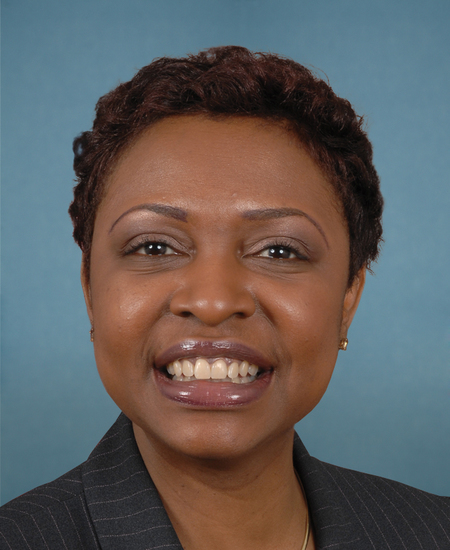
Rep. Yvette D. Clarke
Sponsored bills
Maddy summaryThe Survivors' Rights Restitution Act of 2026 establishes a federal compensation program administered by the Attorney General for victims of sexual assault, abuse, trafficking, or exploitation involving Jeffrey Epstein or Ghislaine Maxwell, as well as victims whose rights were violated by the federal government. Petitions are filed with the United States Court of Federal Claims and assigned to special adjudicators who must be mental health professionals or experts in victim services, civil rights law, or claims administration. The process is designed to be informal and less adversarial than standard litigation, with decisions required within 120 days and a minimum compensation award of $123,000. Compensation is funded by a dedicated Treasury account that accepts forfeited assets and voluntary contributions, and payments are exempt from federal income tax and means-tested benefit calculations.
Maddy summaryThe Pray Safe Act of 2025 establishes a federal Clearinghouse within the Department of Homeland Security to provide houses of worship, faith-based organizations, and nonprofit groups at risk of threats with evidence-based safety resources. The Clearinghouse will publish online best practices for security planning, facility safety, and incident response, while listing existing federal and state grant programs to help these organizations implement these measures. It requires annual updates based on user feedback and includes a centralized resource section for contacts like Protective Security Advisors and Fusion Centers. The program expires four years after enactment and does not create new funding but coordinates existing federal and state safety resources.
Maddy summaryHR 1706 designates the U.S. Postal Service facility at 1200 William Street, Room 200, in Buffalo, New York, as the "William J. Donovan Post Office Building." The bill updates all federal references in laws, maps, and documents to use this new name for the building. This is a ceremonial naming bill with no policy changes or direct impact on citizens or programs. It solely honors William J. Donovan, a notable historical figure, through official renaming of the post office location.
Maddy summaryThis bill designates the U.S. Postal Service facility at 86 Main Street in Haverstraw, New York, as the "Paul Piperato Post Office Building." It updates all official references - such as maps, documents, and records - to reflect this new name. The change directly affects the postal facility and any official communications or records mentioning its location. No policy changes or new requirements are introduced; it is solely a commemorative naming action.
Maddy summaryThis bill names a U.S. Postal Service facility at 298 Route 292 in Holmes, New York, as the "Sheriff Adrian 'Butch' Anderson Post Office Building." It updates all official references in federal documents, maps, and records to reflect this new name for the location. The bill has no policy provisions or direct impact on constituents beyond commemoration.
Maddy summaryThis bill renames a U.S. Postal Service facility at 80 Prospect Street in Avon, New York, as the "Officer Anthony Mazurkiewicz Memorial Post Office Building" to honor the late officer. It updates all official government references, documents, and records to use the new name. The bill has no policy impact beyond this ceremonial designation, directly affecting only the postal facility's official identification.
Maddy summaryThe EBOLA Act requires the President to rejoin the World Health Organization within 30 days of enactment and immediately coordinate with that body to address an ongoing Ebola outbreak in Central and Eastern Africa. The legislation authorizes necessary funding to cover U.S. membership fees and financial obligations, as well as voluntary contributions to support international disease response efforts. By mandating this rapid re-entry into the global health agency, the bill aims to enhance the nation's ability to monitor emerging infectious diseases and prevent the spread of the virus to American soil.
Maddy summaryThis bill establishes new procedural safeguards for the Internal Revenue Service when conducting tax inquiries or examinations of universities, requiring high-level Treasury approval based on reasonable belief that a university may not qualify for tax-exempt status. It mandates that the IRS provide written notice to the institution before beginning an inquiry and at least 15 days before starting a formal examination, offering the university the opportunity to hold a conference to discuss concerns. The legislation imposes strict time limits, requiring inquiries to be completed within 90 days and examinations within two years, while also restricting the ability to re-examine a university for five years if no significant tax issues are found. Additionally, it requires the Secretary of the Treasury to submit confidential reports to congressional committees detailing any new university tax investigations.