

Maddy summaryHR 6181, the John Lewis Every Child Deserves a Family Act, prohibits child welfare agencies receiving federal funds from discriminating against children, youth, or prospective foster/adoptive parents based on religion, sex (including sexual orientation and gender identity), or marital status. It directly affects LGBTQ youth in foster care - overrepresented at 30% of the system - who face higher risks of trauma, group home placements, and suicide attempts compared to non-LGBTQ peers. Key provisions require agencies to collect data on sexual orientation and gender identity, establish a National Resource Center for LGBTQ youth support, provide cultural competency training, and eliminate discriminatory practices. The law aims to improve safety, permanency, and placement stability by expanding access to family-based care and ensuring equitable services for all children in the system.
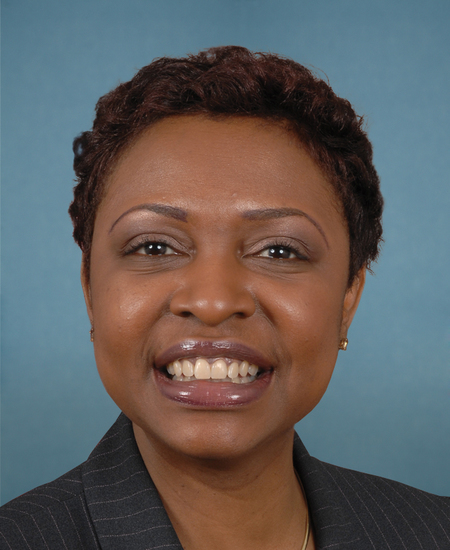
Rep. Yvette D. Clarke
Sponsored bills
Maddy summaryThe Housing Financial Literacy Act of 2025 modifies mortgage insurance premiums for first-time homebuyers who complete approved financial literacy counseling programs. It requires that such counseling be completed before signing a mortgage application or sales agreement. The bill reduces the mortgage insurance premium by 25 basis points (0.25%) below the standard rate established by the Secretary of Housing and Urban Development. This change directly affects first-time homebuyers who participate in qualifying housing counseling programs.
Maddy summaryThe FAIR Act requires immigration detention centers to provide detained immigrants with access to forms needed to contact their congressional representatives, including a Privacy Waiver form (ICE Form 60-001) and a Congressional Privacy Release form, upon written request. Detainees must receive these forms and a multilingual handbook explaining constituent services within 90 days of the bill’s enactment, with the handbook provided in their language or via interpreter. Centers must notify the detainee’s congressional office within seven days of a request and allow access to communication tools like computers and printers for ongoing contact. Failure to comply allows detainees to file complaints or sue in federal court, with enforcement mechanisms detailed in the bill. The law takes effect 90 days after enactment.
Maddy summaryThe Global Respect Act (HR 6151) requires the U.S. President to publicly list foreign officials responsible for severe human rights violations against LGBTQI individuals, including torture, prolonged detention, or violence based on sexual orientation or gender identity. It mandates denying visas and entry to listed individuals and requires annual reports on the list's updates and impacts. The bill also directs the State Department to track global violence against LGBTQI people and update annual human rights reports to include discrimination based on sexual orientation or gender identity. These provisions directly affect foreign government officials and entities implicated in such abuses, aiming to increase accountability through U.S. visa restrictions.
Maddy summaryThe EXPERTS Act of 2025 requires agencies to disclose funding sources and potential conflicts of interest for studies submitted during rulemaking, including who funded research and any financial relationships that might influence findings. It establishes an Office of the Public Advocate within the Office of Management and Budget to assist public participation in rulemaking, conduct social equity assessments, and improve outreach to underrepresented groups. The bill also mandates that agencies consider social equity impacts when creating rules and requires detailed explanations for withdrawing proposed regulations. These provisions aim to increase transparency, inclusivity, and accountability in the federal regulatory process.
Maddy summaryThis resolution formally censures Representative Cory Mills for conduct deemed to discredit the House, citing multiple allegations including an investigation into a February 2025 domestic violence incident and disputed claims about his military Bronze Star award. It requires Mills to appear before the full House for the public reading of the censure, and removes him from the House Committee on Armed Services. The resolution references specific incidents documented in police reports and court records, including a Florida injunction for dating violence. As a procedural resolution (not a law), it directly affects Mills’ standing and committee assignments within the House.
Maddy summaryThis bill requires oil, gas, and geothermal companies to test nearby underground drinking water sources before, during, and after hydraulic fracturing ("fracking") operations. Companies must conduct testing at specified intervals (e.g., before starting, every 6 months during operations, annually for 5 years after) and submit results to the EPA within two weeks. The EPA will maintain a public database of all test results, making it searchable by ZIP code for community access. The requirement does not apply to sites with no accessible drinking water sources within one mile.
Maddy summaryThe CLEANER Act of 2025 requires the EPA to evaluate within one year whether drilling fluids, produced waters, and other wastes from oil, gas, and geothermal operations qualify as hazardous waste under federal law. If determined hazardous, the EPA must list these wastes and create tailored regulations for their handling, while also setting new safety standards for facilities managing non-hazardous waste from these sources. Key provisions include mandatory groundwater monitoring, location criteria for waste facilities, and financial assurance requirements to protect public health and the environment. This bill directly affects oil and gas producers, waste management facilities, and geothermal energy operations by imposing new regulatory obligations on their waste streams.
Maddy summaryThis bill requires oil and gas companies conducting hydraulic fracturing operations to disclose detailed chemical ingredients before starting and within 30 days after completing operations. Companies must provide full chemical names, CAS numbers, safety data sheets, and volumes to state or federal authorities, who then make this information publicly available online. The bill includes an exception allowing immediate disclosure of proprietary chemical formulas during medical emergencies, though companies can later request confidentiality agreements. It directly affects fracking operators in oil, gas, and geothermal production, amending the Safe Drinking Water Act to mandate transparency while maintaining trade secret protections outside emergency situations.
Closing Loopholes for Oil and other Sources of Emissions Act or the CLOSE Act This bill amends the Clean Air Act to revise requirements for hazardous air pollutants. Specifically, the bill allows (1) emissions from oil or gas exploration or production wells and emissions from pipeline compressors or pump stations to be aggregated with emissions from other similar sources and regulated as a major source of toxic air pollutants, (2) emissions from those wells to be aggregated for purposes of emissions standards for hazardous air pollutants, and (3) emissions from oil or gas production wells to be regulated as an area source of toxic air pollutants. The Environmental Protection Agency must (1) issue a final rule adding hydrogen sulfide to the list of hazardous air pollutants; and (2) revise the list of air pollution sources within 365 days after issuing the rule to include categories and subcategories of major sources and area sources of hydrogen sulfide, including oil and gas wells.