

Consumer Protection and Recovery Act This bill authorizes the Federal Trade Commission (FTC) to seek monetary relief in federal court from businesses that engage in unlawful commercial practices such as false advertising, consumer fraud, and anticompetitive conduct. Specifically, the FTC may seek restitution in these cases for losses, rescission or reformation of contracts, refund of money, return of property, or disgorgement of unjust enrichment. On April 22, 2021, the Supreme Court held in AMG Capital Management, LLC v. Federal Trade Commission that the Federal Trade Commission Act does not authorize the FTC to seek, or a court to award, such relief.
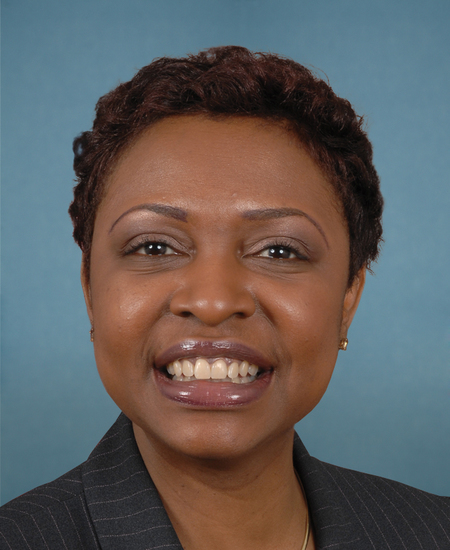
Rep. Yvette D. Clarke
Sponsored bills
DHS Industrial Control Systems Capabilities Enhancement Act of 2021 This bill requires the Cybersecurity and Infrastructure Security Agency (CISA) to maintain certain capabilities to identify and address threats to industrial control systems. Specifically, the bill requires CISA's National Cybersecurity and Communications Integration Center to ensure that its activities address the security of both information and operational technology, including industrial control systems. Additionally, CISA must maintain capabilities to identify and address threats and vulnerabilities to products and technologies intended for use in the automated control of critical infrastructure processes by (1) leading efforts to identify and mitigate cybersecurity threats to industrial control systems; (2) maintaining threat hunting and incident response capabilities to respond to cybersecurity risks and incidents; (3) providing cybersecurity technical assistance to stakeholders; and (4) collecting, coordinating, and providing vulnerability information to the industrial control systems community. CISA shall provide to the homeland security committees a briefing on its industrial control systems capabilities at specified intervals. The Government Accountability Office must review and report on implementation of the bill's requirements.
This resolution expresses support for the designation of Black Maternal Mental Health Awareness Week.
This resolution reaffirms the House of Representatives' commitment to media diversity and expresses its pledge to eliminate barriers to such diversity.
Consumer Equity Protection Act of 2021 This bill establishes a task force within the Federal Trade Commission's Bureau of Consumer Protection to advise the commission on matters related to equity in consumer protection. The task force also must collaborate with relevant agencies to (1) monitor the market for unfair and deceptive acts targeting or affecting specified consumers or groups of consumers, and (2) educate the public about such acts. Finally, the task force must support the processing of complaints involving unfair and deceptive acts.
Medium- and Heavy-Duty Electric Vehicle Infrastructure Act of 2021 This bill directs the Environmental Protection Agency to establish a rebate program that encourages the purchase and installation of electric vehicle charging equipment for medium-duty electric vehicles and heavy-duty electric vehicles.
End Double Taxation of Successful Consumer Claims Act This bill allows a deduction from gross income (above-the-line deduction) for attorney fees and court costs in connection with a claim of a consumer protection violation.
Green New Deal for Public Schools Act of 2021 This bill provides environmental and educational resources to public elementary and secondary schools and Bureau of Indian Education (BIE) schools. Specifically, the bill requires the Department of Energy's (DOE's) Office of Energy Efficiency and Renewable Energy to provide climate capital facilities grants to eligible entities (e.g., public schools and BIE schools). Grant recipients must use these funds to construct new, or convert existing facilities into, healthy zero-carbon schools. Healthy zero-carbon school refers to a school with highly energy-efficient facilities that produce or procure sufficient carbon-free and pollution-free renewable energy to meet the school's needs. Next, the bill directs the Department of Education (ED) to award resource block grants to qualified local educational agencies (LEAs) to hire and retain educators and support staff in high-need schools. ED must award grants to eligible consortia of LEAs for educational equity planning and implementation. In addition, ED must establish the Climate Change Resiliency Program to increase the resiliency of public and BIE schools during climate change-related events, natural disasters, and public health crises. Further, ED must establish a related grant program for state educational agencies. Grant recipients must use these funds for certain activities (e.g., green infrastructure projects). The bill establishes the Office of Sustainable Schools within ED to (1) administer the resource block grant and educational equity grant programs, and (2) coordinate with DOE and the White House Office of Domestic Climate Policy on climate capital facilities grants and the Climate Change Resiliency Program.
Social Determinants Accelerator Act of 2021 This bill establishes the Social Determinants Accelerator Interagency Council to increase coordination among health and social service programs and provide technical assistance to increase the impact of such programs. The council must also assist the Centers for Medicare & Medicaid Services to award up to 25 grants to state, local, or tribal health or human services agencies for social determinants accelerator plans. These plans must address at least one health and one social outcome for a specified target population.
Data to Save Moms Act This bill expands data collection and research on maternal morbidity and mortality among minority populations. Specifically, the bill adds requirements to a program within the Centers for Disease Control and Prevention (CDC) that supports maternal mortality review committees. To the extent practicable, the committees must use the most up-to-date indicators of severe maternal morbidity; review deaths caused by suicide, overdose, or other behavioral health conditions attributed to or aggravated by pregnancy or childbirth; and consult with representatives of communities about nonclinical factors that may contribute to adverse maternal outcomes. The CDC may also award grants to committees to increase their engagement with local communities, such as by bringing on community representatives as committee members. Additionally, the Centers for Medicare & Medicaid Services and the Agency for Healthcare Research and Quality must consult with diverse stakeholders to review maternal health data collection processes and quality measures and make recommendations to improve them. The Indian Health Service and the Department of Health and Human Services must also arrange for studies on adverse maternal health outcomes among tribal and minority populations, respectively.