

Maddy summaryThe Energy Bills Relief Act aims to lower household energy costs and accelerate the development of low-cost, clean energy by modifying federal tax credits, expanding weatherization programs, and streamlining permitting processes. Key provisions include restoring tax incentives for renewable energy projects, increasing funding for low-income heating assistance, and requiring federal agencies to treat wind, solar, and storage projects with the same procedural fairness as oil and gas projects. The bill also establishes new incentives for upgrading the electricity grid, such as tax credits for transmission lines and grants for wildfire prevention measures, while creating mechanisms to ensure utilities serve public interests and protect consumers from price volatility.
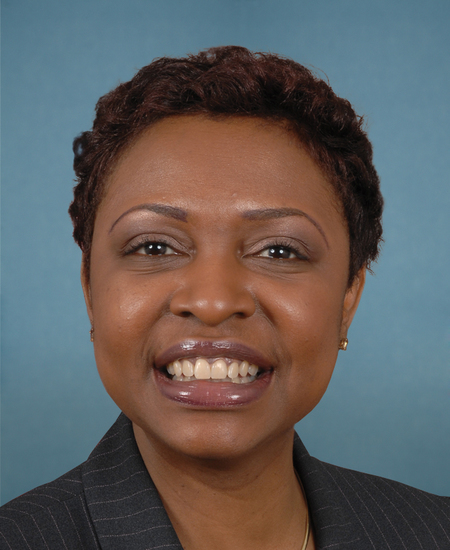
Rep. Yvette D. Clarke
Sponsored bills
Maddy summaryThis bill requires the Department of Veterans Affairs (VA) to cover abortion care, counseling, and related medication as part of standard hospital and medical services for eligible veterans and certain dependents. It amends VA healthcare law to explicitly include these services under existing coverage for veterans qualifying under section 1703 and dependents eligible under section 1781(a). The policy directly affects veterans and their dependents enrolled in VA healthcare programs by expanding covered benefits to include abortion-related care. This is a concrete policy change to VA healthcare benefits, not a broader abortion law.
Maddy summaryThis bill exempts H-1B visa holders working in healthcare from a presidential restriction that requires a $100,000 payment for entry into the United States. It directly affects foreign medical professionals and healthcare workers who hold H-1B nonimmigrant visas. The legislation removes the additional fee requirement for these workers while limiting any fees that may be charged to the standard amount already established under immigration law. The bill defines healthcare workers using the existing definition from the Affordable Care Act and was introduced in the 119th Congress in March 2026.
Enhanced Iran Sanctions Act of 2025 This bill imposes sanctions on certain foreign persons (individuals and entities) that are involved in Iran's petroleum sector as well as certain associated persons. The bill also requires or authorizes actions to facilitate the enforcement of sanctions on Iran. Specifically, the bill requires the President to impose visa- and property-blocking sanctions on any foreign person that, after the bill's enactment, knowingly engages in any transaction related to the processing, export, or sale of oil, condensates, gas, liquefied natural gas, or other petrochemical products in whole or in part from Iran. The President must also impose sanctions on certain foreign persons associated with a sanctioned individual or entity. For example, the President must sanction the subsidiaries and corporate officers of a sanctioned business. The bill provides certain exceptions to these sanctions, including specifying that sanctions do not apply to the importation of goods or to conducting or facilitating transactions for humanitarian assistance. The Department of State must establish an interagency working group that shall seek to establish a multilateral contact group to coordinate international efforts to enforce sanctions on Iran. The bill expands the State Department rewards program to authorize a reward payment to any individual who furnishes information leading to the identification of a person (1) subject to sanctions under this bill, or (2) that has attempted or is attempting to evade sanctions under this bill.
Maddy summaryHRES 1114 is a ceremonial resolution recognizing the 114th anniversary of the Girl Scouts of the United States of America (founded March 12, 1912). It formally celebrates the organization’s mission of building girls’ courage, confidence, and character through programs focused on leadership, STEM, community service, and inclusive spaces. The resolution specifically honors Girl Scouts who earned the Gold Award in 2025 and encourages continued support for their work in developing future women leaders. As a non-binding resolution, it has no legal effect but serves as a symbolic expression of congressional appreciation for the Girl Scouts’ community impact.
Maddy summaryThis bill, known as the Fair Wages for Home Care Workers Act, would change federal labor rules to require overtime pay and minimum wage protections for certain babysitters. It specifically targets casual babysitting work that is irregular or intermittent, while excluding trained medical professionals like nurses and home health aides from these changes. The law would also allow babysitters to perform up to 20% of their work time on unrelated household tasks without losing their protected status. These amendments would apply to workers covered by the Fair Labor Standards Act of 1938 who provide custodial care for infants or children in private homes.
Maddy summaryThis resolution (HRES 1108) expresses the U.S. House of Representatives' support for designating March 2026 as "Music in Our Schools Month." It recognizes music's historical role in U.S. education, its cultural importance, and the current inequities in access to music programs - particularly in schools serving urban, rural, low-income, and majority Black, Hispanic, or Native American communities. The resolution does not create new laws or allocate funds; it is a symbolic gesture urging greater support for music education in public schools. It highlights research linking music participation to improved student engagement, cognitive development, and social skills.
Maddy summaryHRES 1107 is a House resolution urging the President to issue a proclamation flying the U.S. flag at half-staff to honor Rev. Jesse Jackson. The resolution recognizes his civil rights leadership, including founding the Rainbow PUSH Coalition and his presidential campaigns in 1984 and 1988, which advanced racial equality and economic justice. This symbolic gesture directly affects the President (as the one who would issue the proclamation) and the public, who would observe the flag at half-staff.
Maddy summaryThis bill, titled the Welcoming International Success Act, would nullify a 2025 executive proclamation that restricted entry for certain nonimmigrant workers. It directly affects foreign workers holding H-1B visas and other nonimmigrant categories who were previously subject to the entry restrictions. The key provision states that the proclamation will have no legal force and prohibits the use of federal funds to implement it. This legislation would effectively remove the barriers established by the earlier proclamation, allowing the affected workers to enter the United States under normal immigration procedures.
Maddy summaryThis bill, known as the Guarantee Access to Arts and Music Education Act of 2026, amends the Elementary and Secondary Education Act to expand federal funding for arts and music programs in public schools. It directly affects school districts and educators by allowing Title I funds to support sequential, standards-based instruction in dance, media arts, theater, visual arts, and music. The legislation requires these programs to be taught by certified educators and aligns them with state academic standards to ensure quality instruction. Additionally, the bill allows targeted assistance schools to use federal funds for supplies, professional development, and equipment needed for arts and music education.