

Maddy summaryThis bill adds the Administrator of the Small Business Administration (SBA) as a permanent member of the Federal Acquisition Regulatory Council, which sets rules for how federal agencies purchase goods and services. It directly affects small businesses by ensuring their representative has a formal role in shaping federal contracting policies. The key mechanism requires the SBA Administrator to submit a report within 90 days of the bill's enactment, detailing staffing needs and suggesting policy changes to support their new council role. The bill does not alter existing contracting rules but changes who participates in creating them.
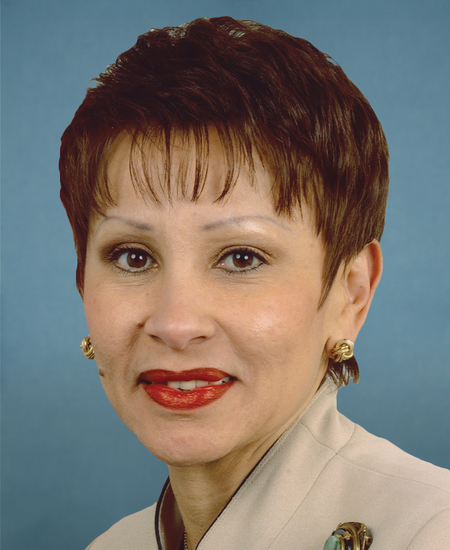
Rep. Nydia M. Velázquez
Sponsored bills
Maddy summaryHR 1816, the WOSB Accountability Act, changes how the federal government counts women-owned small businesses (WOSBs) for contracting goals. It removes self-certified WOSBs (businesses claiming to be women-owned without formal SBA review) from federal goal calculations, requiring formal certification by the Small Business Administration (SBA) or an approved entity instead. The bill creates a transition period for businesses already self-certified before the law takes effect, allowing them to count toward goals until SBA reviews their applications. It also mandates quarterly reports to Congress on certification applications, processing times, costs, and outreach efforts to track implementation. This focuses on improving accountability in meeting federal contracting goals for women-owned businesses.
Maddy summaryThis resolution (HRES 457) is a symbolic measure expressing congressional support for designating June 6, 2025, as "National Gun Violence Awareness Day" and June 2025 as "National Gun Violence Awareness Month." It does not create new laws or policies but encourages public awareness through specific actions: wearing orange on June 6, focusing on gun safety during summer months, and holding community discussions. The resolution references statistics on gun violence deaths and honors Hadiya Pendleton, a teen victim killed in 2013. It directly affects the public by calling for voluntary observance and community engagement, not government mandates.
Maddy summaryThe Menstrual Equity For All Act of 2025 requires schools, colleges, correctional facilities, and federal buildings to provide free menstrual products to those who need them. It makes menstrual products covered by Medicaid, prohibits states from taxing these products, and creates grant programs to support low-income individuals. Key provisions include mandating free products in educational settings, requiring employers with 100+ employees to provide them, and expanding Medicaid coverage for these items. The bill directly affects students, incarcerated individuals, homeless people, Medicaid beneficiaries, and low-income families by addressing period poverty through concrete access requirements.
Maddy summaryThe Strength in Diversity Act of 2025 provides federal grants to schools and districts with racial or socioeconomic isolation to develop and implement strategies increasing diversity. It authorizes planning grants (up to 2 years) for assessments and community engagement, and implementation grants (up to 3 years) for activities like transportation plans, teacher recruitment, innovative school assignments, and equitable enrollment systems. Recipients must track measurable progress on academic outcomes (e.g., graduation rates, achievement gaps) and diversity metrics, including reducing isolation in covered schools (public K-12 schools and publicly-funded early childhood programs). The bill requires robust community input, data-driven evaluation, and plans for sustainability beyond the grant period, with funding authorized for fiscal years 2025-2029.
Maddy summaryHRES 441 is a symbolic House resolution expressing support for designating May 2025 as "Mental Health Awareness Month." It does not create new laws, allocate funding, or change existing policies - it solely aims to raise public awareness about mental health challenges. The resolution cites statistics on rising mental health issues (including youth depression, suicide rates, and disparities in care access) to underscore the need for greater attention. It encourages the public, schools, and organizations to use the month to promote mental well-being and reduce stigma, but contains no concrete policy changes or mandates.
Maddy summaryThis bill extends existing federal reentry programs under the Second Chance Act through 2030, continuing funding for services supporting people returning to communities after incarceration. It specifically maintains grants for state/local reentry projects (including substance use treatment, housing, and peer recovery services), family-based substance abuse treatment, prison/jail educational programs, career training, and community mentoring by nonprofits. The bill updates program timelines from their previous 2019-2023 authorization period to 2026-2030 without altering the core services provided. It directly affects state/local agencies, prisons, and nonprofit organizations administering these reentry programs. The legislation focuses solely on extending current funding mechanisms, not changing program requirements or creating new initiatives.
Maddy summaryThis bill prohibits the U.S. military from discriminating against service members or applicants based on gender identity. It bans policies that would deny service, involuntarily separate members, deny medically necessary healthcare, or require service in a gender different from one's identity. The law defines "gender identity" broadly to include a person's internal sense of gender, appearance, and mannerisms, regardless of sex assigned at birth. It directly affects transgender and gender-diverse individuals currently serving or seeking to serve in the Armed Forces.
Maddy summaryThe DEFIANCE Act of 2025 creates a new civil legal remedy for victims of non-consensual intimate digital forgeries (synthetic images or videos manipulating real people into sexual contexts without consent). It allows affected individuals to sue perpetrators in federal court for damages up to $250,000, injunctions to remove content, and privacy protections like pseudonyms. The bill specifically covers cases where forgeries are created or shared with intent to disclose, including scenarios involving sexual assault or harassment. It expands existing federal protections under 15 U.S.C. 6851 to address digital forgeries while ensuring state laws remain in effect.
Maddy summaryThis bill amends federal education law to require K-12 schools to include Asian American, Native Hawaiian, and Pacific Islander (AANHPI) history in American history and civics education. It directs the Department of Education to update curriculum standards, teacher training programs, and national assessments to ensure AANHPI contributions and experiences are integrated into existing history lessons. The policy affects all public schools receiving federal education funding by mandating specific inclusion of AANHPI history alongside traditional American history content. This change aims to address historical gaps in curricula that have excluded these communities' diverse roles and experiences.