

Energy Storage Tax Incentive and Deployment Act of 2021 This bill allows tax credits for (1) energy storage technologies, and (2) battery storage technology. The bill expands the tax credit for investments in energy property to include equipment that (1) receives, stores, and delivers energy using batteries, compressed air, pumped hydropower, hydrogen storage (including electrolysis), thermal energy storage, regenerative fuel cells, flywheels, capacitors, superconducting magnets, or other technologies identified by the Internal Revenue Service; and (2) has a capacity of at least five kilowatt hours. The bill also expands the tax credit for residential energy efficient property to include expenditures for battery storage technology that (1) is installed on or in connection with a dwelling unit located in the United States and used as a residence by the taxpayer, and (2) has a capacity of at least three kilowatt hours.
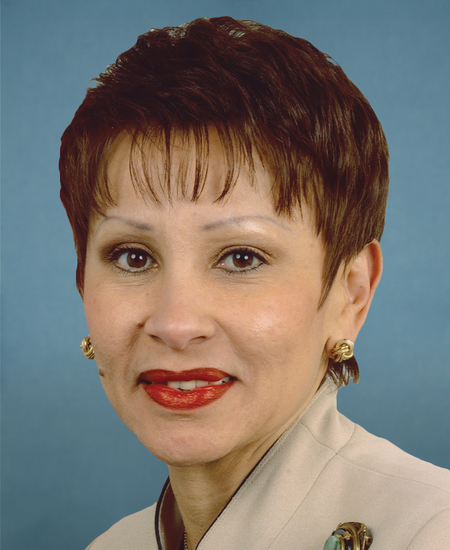
Rep. Nydia M. Velázquez
Sponsored bills
Improving Helicopter Safety Act of 20 21 This bill prohibits operating helicopter flights over any city with a population of over 8 million and a population density of over 25,000 people per square mile, except for purposes of (1) public health and safety, including law enforcement and emergency response; and (2) heavy-lift operations in support of construction and infrastructure maintenance.
George Floyd Justice in Policing Act of 2021 This bill addresses a wide range of policies and issues regarding policing practices and law enforcement accountability. It increases accountability for law enforcement misconduct, restricts the use of certain policing practices, enhances transparency and data collection, and establishes best practices and training requirements. The bill enhances existing enforcement mechanisms to remedy violations by law enforcement. Among other things, it does the following: lowers the criminal intent standard—from willful to knowing or reckless—to convict a law enforcement officer for misconduct in a federal prosecution, limits qualified immunity as a defense to liability in a private civil action against a law enforcement officer, and grants administrative subpoena power to the Department of Justice (DOJ) in pattern-or-practice investigations. It establishes a framework to prevent and remedy racial profiling by law enforcement at the federal, state, and local levels. It also limits the unnecessary use of force and restricts the use of no-knock warrants, chokeholds, and carotid holds. The bill creates a national registry—the National Police Misconduct Registry—to compile data on complaints and records of police misconduct. It also establishes new reporting requirements, including on the use of force, officer misconduct, and routine policing practices (e.g., stops and searches). Finally, it directs DOJ to create uniform accreditation standards for law enforcement agencies and requires law enforcement officers to complete training on racial profiling, implicit bias, and the duty to intervene when another officer uses excessive force.
Social Determinants for Moms Act This bill directs various federal departments to address social determinants of maternal health. These are nonclinical factors, such as economic or social factors, that impact maternal health outcomes. First, the Department of Health and Human Services (HHS) must convene a task force to coordinate federal efforts on social determinants of maternal health. HHS must also award grants to support access to free child care during prenatal and postpartum appointments; and address social determinants of, and eliminate racial and ethnic disparities in, maternal health. Second, the Department of Housing and Urban Development must award grants to community-based organizations and government entities to assist pregnant and postpartum individuals with affordable housing. Grantees may use funds to, for example, provide individuals with direct financial assistance. Third, the Department of Transportation must report on transportation barriers that prevent pregnant and postpartum individuals from accessing health care and other services. Fourth, the bill extends to 24 months the postpartum eligibility period for the Special Supplemental Nutrition Program for Women, Infants, and Children (WIC). Currently, WIC eligibility lasts for six months postpartum or one year for those breastfeeding. The Department of Agriculture (USDA) must evaluate the impact of this extension. USDA must also establish a grant program to deliver healthy foods and supplies to pregnant and postpartum individuals in food deserts. Last, the Environmental Protection Agency must enter into an agreement with the National Academies of Sciences, Engineering, and Medicine to study the impact of environmental conditions and contaminants on maternal and infant health outcomes.
This resolution supports the goals of a feminist foreign policy (i.e., a foreign policy that requires analysis of and challenges to power structures and inequalities that are based on systems of discrimination), and it supports the adoption of policies that promote gender equity and women's participation in public life.
National Women's Hall of Fame Commemorative Coin Act of 2021 This bill directs the Department of the Treasury to mint and issue $5 gold coins, $1 silver coins, half-dollar clad coins, and proof silver $1 coins in recognition and celebration of the National Women's Hall of Fame in Seneca Falls, New York. All minted coins shall include a specified surcharge, which shall be paid to the National Women's Hall of Fame Foundation to establish an endowment fund to provide for the long-term financing of the hall's operations.
LGBTQ Business Equal Credit Enforcement and Investment Act This bill requires financial institutions to report certain credit application data to the Consumer Financial Protection Bureau for the purposes of enforcing fair lending laws. Specifically, financial institutions must report this data regarding lesbian-, gay-, bisexual-, transgender-, or queer-owned businesses. Currently, this data is reported regarding women-owned, minority-owned, and small businesses.
New Way Forward Act This bill makes changes to immigration enforcement, including ending mandatory detention in certain cases. The Department of Homeland Security (DHS) shall not enter into or extend any contract with any public or private for-profit entity to own or operate a facility to detain aliens in DHS custody. The bill provides for various protections related to detaining aliens, such as (1) requiring DHS to make an initial custody determination and establish probable cause within 48 hours of taking an alien into custody, (2) establishing in hearings related to such determinations a presumption that the alien be released, and (3) requiring immigration judges to impose the least restrictive detention conditions necessary. A DHS officer may not interrogate a person as to immigration status based on factors such as the person's race, religion, sexual orientation, or spoken language. The bill removes mandatory detention requirements for certain aliens, such as asylum seekers with a credible fear of persecution. Removal proceedings against certain aliens previously admitted into the United States must commence within five years of the alien becoming deportable or inadmissible. The bill also removes certain crime-related grounds of inadmissibility and deportability. The bill gives immigration judges discretion to provide relief from removal if the removal is not based on certain crime-related grounds. State or local officers are prohibited from performing certain immigration enforcement functions, such as apprehending aliens. The National Crime Information Center database shall not contain an alien's immigration information. The bill repeals provisions providing criminal penalties for improper entry or reentry into the United States.
Reunite Every Unaccompanied Newborn Infant, Toddler and other children Expeditiously Act or the REUNITE Act This bill directs the Department of Homeland Security (DHS) and the Department of Health and Human Services (HHS) to reunite children and their parents or legal guardians who were apprehended for illegal entry into the United States. DHS and HHS shall develop procedures and programs, including procedures to (1) identify separated family members, (2) allow apprehended parents or legal guardians to have frequent no-cost contact with their separated children, and (3) coordinate with foreign consulates to locate apprehended individuals. DHS and HHS shall ensure immediate reunification of apprehended children with a parent or legal guardian, but may make exceptions for the child's safety. DHS and HHS may use DNA testing to determine family relationships, but shall first use other methods, such as official documents. DHS and HHS shall develop procedures for instances where the aliens refuse to consent to DNA testing. Collected DNA information may not be used for any purpose other than family reunification, including criminal or immigration enforcement. The bill restores the Family Case Management Program, an alternative to detention program that uses case managers to promote compliance with immigration law obligations. DHS, HHS, and the Department of Justice (DOJ) shall establish the Office for Locating and Reuniting Children with Parents. Aliens shall have access to counsel inside immigration detention facilities, and DOJ may provide counsel for immigration proceedings. DOJ shall provide counsel if necessary for children and vulnerable individuals, and children's cases shall be heard individually.
Protecting Sensitive Locations Act This bill prohibits immigration enforcement actions within 1,000 feet of a sensitive location unless there are exigent circumstances and written prior approval has been obtained from certain officials. Sensitive locations include health care facilities; schools and school bus stops; places that provide assistance for people such as children, pregnant women, and abuse victims; places that provide disaster or emergency services; places of worship; courthouses and lawyers' offices; and public assistance offices. The prohibition shall apply to Department of Homeland Security officers and agents, as well as state employees pursuing immigration enforcement actions. If an enforcement action is carried out in violation of this prohibition (1) no information resulting from the action may be entered into the record in a resulting removal proceeding, and (2) the affected alien may move to immediately terminate such a proceeding. U.S. Immigration and Customs Enforcement and U.S. Customs and Border Protection shall annually report to Congress about enforcement actions taken at sensitive locations in the preceding year.