

This resolution expresses that the House of Representatives applauds the Biden administration for reaffirming the U.S. commitment to the Paris Agreement on climate change and to our collective responsibility to globally combat climate change; encourages the Biden administration to implement measures to ensure global climate change remains a top priority for this and future administrations and to cement the United States as a global leader in the fight to mitigate its most severe consequences; voices strong commitment as legislators toward achieving the climate goals of the Paris Agreement, fulfilling the forthcoming pledges from the COP26 in Glasgow, Scotland, and advancing other international efforts to keep global warming to no more than 1.5 degrees Celsius and realize global net-zero carbon emissions by 2050 using a whole-of-government approach; and recognizes the critical responsibility of the United States and other developed nations to ensure all societies have the capabilities to transition to a clean energy economy, the resources to protect against climate-induced disasters, and the necessary assistance to endure climate-related challenges to food security, regional migration, and public health.
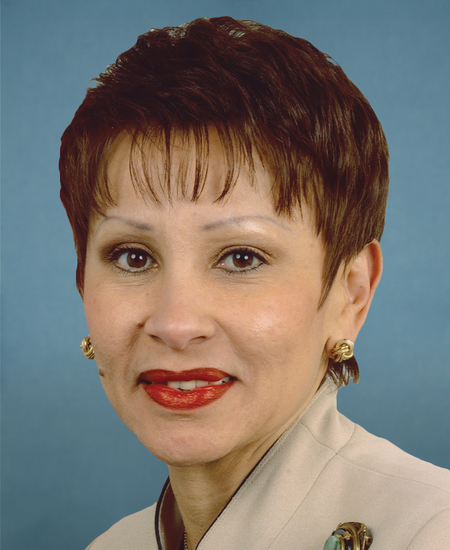
Rep. Nydia M. Velázquez
Sponsored bills
Cady Housh and Gemesha Thomas Student Suicide Prevention Act of 2021 This bill reauthorizes through FY2028, and otherwise revises, grants administered by the Substance Abuse and Mental Health Services Administration (SAMHSA) to support youth suicide early-intervention and prevention strategies. Specifically, the bill requires SAMHSA to award a portion of such grants for statewide training programs on emotional well-being, mental health, and suicide awareness and prevention for elementary and secondary school students and staff.
Social Security 2100: A Sacred Trust This bill makes changes to Social Security benefits, taxes, and other aspects of the program, including by raising the primary insurance amount, increasing the maximum taxable earnings that are subject to Social Security payroll taxes, and requiring Social Security account statements to be mailed unless the individual recipient opts for electronic delivery.
Original National Domestic Violence Awareness Month Resolution of 2021 This resolution supports the goals and ideals of National Domestic Violence Awareness Month. Further, it expresses the sense of the House of Representatives that Congress should continue to raise awareness of and support programs to end domestic violence.
Public Service Freedom to Negotiate Act of 20 21 This bill provides minimum collective bargaining rights and procedures for public employees and prohibits strikes by certain public safety workers. The Federal Labor Relations Authority (FLRA) shall determine for each state whether the laws of such state substantially provide for each of the minimum standard collective bargaining rights and procedures specified by this bill, including the right of public employees and supervisory employees to self-organize, form or join a labor organization, or collectively bargain. The FLRA must issue rules and take actions to establish and administer bargaining rights and procedures for those states that do not substantially provide for them. No employers, emergency services employees, or law enforcement officers may engage in a lockout, strike, or any other organized job action that is likely to result in a measurable disruption of the delivery of emergency or public safety services. Furthermore, no labor organization may be the cause of a violation of such prohibition.
Maddy summaryThis resolution (HRES 740) symbolically recognizes October 2021 as Liver Cancer Awareness Month. It does not create new laws or allocate funds but aims to raise public awareness about liver cancer risks and prevention. The resolution highlights that liver cancer is the fastest-growing cause of cancer deaths in the U.S., with higher rates among American Indian/Alaska Native, Black, and Hispanic communities due to factors like hepatitis infections and diabetes. It urges broader awareness of screening for at-risk groups and encourages collaboration between the CDC and health departments to address prevention and treatment access. The resolution focuses on education and early detection, not on implementing new policies or services.
Liver Illness Visibility, Education, and Research Act of 2021 This bill expands and coordinates activities related to the research of liver cancer and liver disease, including causes, prevention, detection, and treatment. Specifically, the National Cancer Institute must establish a working group to coordinate efforts across the National Institutes of Health to cure liver cancer and liver disease, including research into such cases resulting from hepatitis B. The institute may also award grants for developing preventative and diagnostic measures and supporting experimental treatment options. The bill further establishes grant programs, administered by the Centers for Disease Control and Prevention, to support liver disease prevention services, diagnostics, and hepatitis tracking programs and to raise awareness about liver disease within high-risk communities. The renamed National Institute of Diabetes and Digestive, Kidney, and Liver Diseases also must prioritize programs addressing liver disease, including (1) establishing a national clearinghouse for patient data, and (2) developing or expanding the centers for research of liver disease.
This concurrent resolution recognizes the disparity between wages paid to Latina women, and its impact on women, families, and the nation and reaffirms Congress' commitment to supporting equal pay and to narrowing the gender wage gap.
This concurrent resolution supports the goals and ideals of the National Day of Silence (during which students vow to remain silent to bring attention to the harassment and discrimination faced by lesbian, gay, bisexual, transgender, queer and questioning individuals in schools).
This resolution calls for the creation of a Green New Deal with the goals of achieving greenhouse gas and toxic emissions reductions needed to stay under 1.5 degrees Celsius of warming; establishing millions of high-wage union jobs and ensuring economic security for all; investing in infrastructure and industry; securing clean air and water, climate and community resiliency, healthy food, access to nature, and a sustainable environment for all; and promoting justice and equality. The resolution calls for accomplishment of these goals through a 10-year national mobilization effort. The resolution also enumerates the goals and projects of the mobilization effort, including building smart power grids (i.e., power grids that enable customers to reduce their power use during peak demand periods); upgrading all existing buildings and constructing new buildings to achieve maximum energy and water efficiency; removing pollution and greenhouse gas emissions from the transportation and agricultural sectors; cleaning up existing hazardous waste and abandoned sites; ensuring businesspersons are free from unfair competition; and providing higher education, high-quality health care, and affordable, safe, and adequate housing to all.