

Maddy summaryThis bill removes a previous exclusion that prevented temporary federal employees (including U.S. Postal Service staff and Members of Congress) from counting service after January 1, 1988, toward their retirement benefits. It allows these workers to have their post-1988 temporary service counted toward retirement eligibility if they pay a deposit to the retirement system. The change applies to anyone employed by the federal government on or after the bill's enactment date. The Office of Personnel Management must notify affected employees and create rules to implement this change.
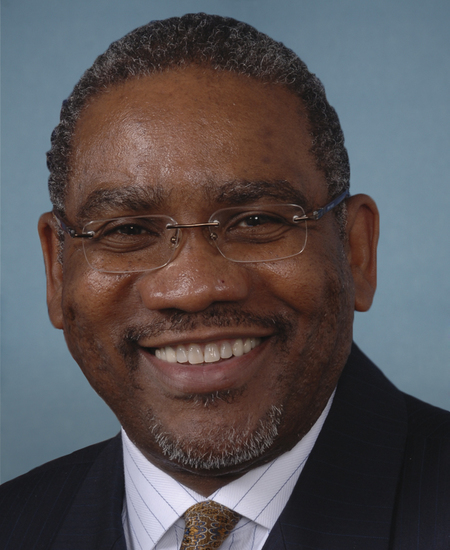
Rep. Gregory W. Meeks
Sponsored bills
Maddy summaryThis bill replaces "Columbus Day" with "Indigenous Peoples’ Day" as the official federal holiday observed on the second Monday in October. It directly affects federal government operations and all federal documents, rules, or laws that previously referenced "Columbus Day" by automatically updating those references to "Indigenous Peoples’ Day" upon enactment. The key mechanism is a simple amendment to federal law (5 U.S.C. § 6103(a)) to change the holiday name and a provision ensuring all existing federal references to Columbus Day are legally treated as referring to Indigenous Peoples’ Day instead. This is a procedural change to federal holidays and references, not a new policy or program.
Maddy summaryThe Oleksander Ivanov Act of 2023 establishes U.S. sanctions authority targeting individuals and entities responsible for Russia’s forced displacement and illegal adoption of Ukrainian children. It authorizes the President to block property and deny visas to foreign persons involved in forcibly transferring Ukrainian children to Russia, illegally assimilating them, or facilitating trafficking. The bill also directs the U.S. to support Ukraine through programs for trauma care, rebuilding education systems, creating a multilingual registry for missing children, and establishing emergency call centers to combat trafficking. These measures aim to address documented violations of international law, including Russia’s detention of over 6,000 Ukrainian children in occupied territories, with sanctions set to expire after six years.
Maddy summaryHRES 700 is a non-binding congressional resolution expressing support for designating September 2023 as "National Prostate Cancer Awareness Month." It highlights that prostate cancer affects 1 in 8 U.S. men and has significantly higher mortality rates among African-American men, while urging increased public awareness, early screening promotion, and research funding. The resolution does not create new laws or allocate funds but encourages the public, healthcare providers, and organizations to promote awareness and support efforts to improve detection and treatment. It aligns with existing federal cancer research investments, such as the $7.1 billion allocated to the National Cancer Institute in 2023.
Maddy summaryThis bill amends the Higher Education Act to require all U.S. colleges and universities receiving federal financial aid to create detailed anti-harassment policies covering physical, online, and institution-sponsored settings. It mandates policies prohibiting harassment based on race, sex (including sexual orientation and gender identity), disability, religion, and other protected characteristics, including harassment via institutional email, computers, or electronic messaging. The bill also establishes a $50 million annual grant program to fund colleges developing prevention programs, victim support services, and training for students and staff on recognizing and addressing harassment. These policies and grants must comply with existing civil rights laws like Title IX but add specific requirements for reporting and prevention.
Maddy summaryThis bill establishes a new Office within the Department of Justice to address racial disparities in missing and murdered Black women and girls cases. The Office will collect data on case resolution times, coordinate with law enforcement, and create a public dashboard tracking these cases. It also creates grants for community organizations to provide culturally appropriate services, prevention programs, and training for law enforcement targeting violence against Black women and girls. The bill directly affects Black women and girls who are victims of violence and their communities, focusing on improving data collection and support systems rather than changing criminal laws.
Maddy summaryThe Better CARE for Animals Act of 2023 amends the Animal Welfare Act to strengthen enforcement of animal welfare standards. It gives the Attorney General authority to bring civil cases for violations, including seeking penalties up to $10,000 per day per violation and injunctions to remove or relocate animals. The bill also requires the Secretary of Agriculture and Attorney General to coordinate through a new Memorandum of Understanding, focusing on repeat violators. These changes directly affect dealers, exhibitors, and enforcement agencies by expanding civil enforcement tools and clarifying jurisdiction over rule violations.
Maddy summaryThe John R. Lewis Voting Rights Advancement Act of 2023 would strengthen the Voting Rights Act of 1965 by updating the criteria for which states and localities must obtain federal preclearance before changing voting practices. It would establish new standards for proving vote dilution and vote denial by requiring courts to consider historical discrimination, racial polarization in voting, and whether voting practices disproportionately burden minority voters. The bill would also require states and localities to provide public notice of voting changes and share demographic data about polling locations. These changes would primarily affect jurisdictions with a history of voting rights violations, aiming to prevent discriminatory voting practices before they take effect.
Maddy summaryThe Humane Cosmetics Act of 2023 bans cosmetic animal testing in the United States, prohibiting companies from conducting or contracting such testing after its enactment (effective 1 year later). It also bans selling or transporting cosmetics developed using animal testing conducted after that date within U.S. interstate commerce. The law directly affects cosmetic manufacturers, retailers, and suppliers operating in the U.S. market, requiring them to use non-animal testing methods for safety evaluations. Exceptions exist for foreign regulatory requirements or when no alternative testing methods are available for specific ingredients.
Maddy summaryHR 3152, the "Fight CRIME Act," aims to maintain international restrictions on Iran's missile-related activities by requiring diplomatic efforts to extend these restrictions before they expire in October 2023. The bill mandates annual reports detailing U.S. diplomatic strategies, potential impacts of expiration, and measures to deter missile technology transfers to Iran. It establishes sanctions against foreign individuals or entities that knowingly support Iran's missile or drone programs, including asset freezes and visa restrictions. These sanctions apply regardless of whether UN restrictions remain in effect after their expiration, directly affecting foreign entities involved in these activities.