

Maddy summaryThe CROWN Act of 2024 prohibits discrimination based on hair texture or style commonly associated with race or national origin, such as braids, locs, cornrows, twists, or afros. It directly affects individuals - particularly people of African descent - who face workplace, school, housing, or public accommodation discrimination due to natural or protective hairstyles. The bill expands existing federal civil rights laws (like Title VI, the Fair Housing Act, and Title VII) to explicitly include hair-based discrimination, requiring compliance in federally funded programs, housing, employment, and public spaces. It clarifies that grooming policies targeting these hairstyles violate anti-discrimination protections without creating new legal standards.
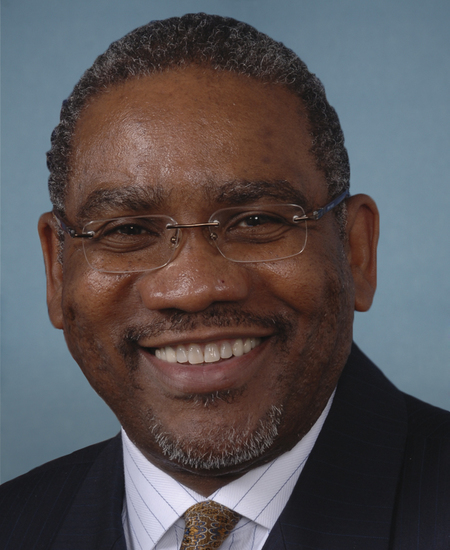
Rep. Gregory W. Meeks
Sponsored bills
Maddy summaryHRES 1154 is a symbolic resolution supporting "Financial Literacy Month" to raise public awareness about the importance of personal financial education. It calls on the Federal Government, states, schools, businesses, and communities to observe the month with programs highlighting how financial literacy helps individuals manage money, credit, and debt. The resolution references statistics on financial challenges (like 37% of adults struggling with emergency expenses) but does not create new laws or funding. As a non-binding resolution, it has no direct effect on policy or affected individuals.
Maddy summaryHR 3303, the Maternal Health for Veterans Act, requires the Department of Veterans Affairs (VA) to annually report on maternity care coordination programs and maternal health outcomes for veterans receiving care through VA facilities or VA-contracted providers. The bill mandates the VA to collect data on maternal outcomes - including disparities affecting high-risk demographic groups - and submit recommendations to Congress by September 2028. It authorizes $15 million annually (2024-2028) for VA maternity care coordination programs, supplementing existing funding without reducing current resources. The law directly affects veterans using VA maternity services, aiming to improve care through data-driven strategies.
Maddy summaryHR 1083, the Caring for Survivors Act of 2023, increases financial support for surviving spouses of veterans. It amends Title 38 to raise dependency and indemnity compensation from a fixed $1,154 to 55% of the monthly compensation rate under section 1114(j), effective six months after enactment. The bill also modifies eligibility for survivors of veterans who died before 1993, ensuring they receive the greater of their current benefit or the new calculation. Additionally, it reduces the required continuous service rating period for survivors from 10 years to five years when a veteran was totally disabled at death. These changes directly affect surviving spouses, particularly those with veterans who died prior to 1993.
Maddy summaryHRES 1139 is a non-binding House resolution that formally acknowledges April 17, 2024, as the 500th anniversary of Giovanni da Verrazzano’s 1524 discovery of New York Bay. It recognizes Verrazzano’s role as the first European to map the East Coast of North America, which contributed to the later establishment of New York City and its development as a major economic hub. The resolution highlights historical connections, including Verrazzano’s influence on New York Bay’s exploration and existing commemorations like the Verrazzano-Narrows Bridge. It does not create new laws, allocate funds, or affect any specific group or policy. This is purely a ceremonial acknowledgment by the U.S. House of Representatives.
Maddy summaryThis bill authorizes $5 billion annually (2025-2034) for three key housing programs - Home Investment Partnerships, Community Development Block Grants, and the Housing Trust Fund - but restricts funding to areas already designated with a "high housing cost adjustment" by HUD. It mandates a two-year assessment by the Secretary of Housing and Urban Development to evaluate how area median income (AMI) calculations impact affordability, particularly in high-cost urban areas, including analyzing ZIP code-level metrics and alternatives to AMI. The study must examine rent burdens, income limits for tax-subsidized housing, and the specific effects of high-cost adjustments in places like New York City. The bill directly affects low-income and middle-class families in urban areas where housing costs significantly exceed local median income, aiming to inform potential reforms to housing affordability metrics.
Maddy summaryHRES 1127 is a symbolic House resolution commemorating the 45th anniversary of the Taiwan Relations Act (TRA) and reaffirming U.S. policy toward Taiwan. It does not create new law but formally reiterates the U.S. commitment to Taiwan under the TRA framework, including regular defense transfers to support Taiwan's self-defense and advocacy for Taiwan's meaningful participation in international organizations. The resolution highlights longstanding U.S.-Taiwan cooperation on trade, security, education, and global challenges like public health and cybersecurity. It specifically calls on the Secretary of State to advance Taiwan's international engagement and supports existing programs like the Taiwan Fellowship Program and the American Institute in Taiwan. As a procedural resolution, it expresses congressional support for current policy without altering legal obligations.
Maddy summaryHRES 1118 is a symbolic resolution welcoming Prime Minister Fumio Kishida’s upcoming U.S. visit and reaffirming the U.S.-Japan alliance. It does not create new laws or policies but formally recognizes the alliance’s role in regional security, notes Japan’s defense spending goals, and supports trilateral cooperation with South Korea. The resolution specifically endorses Japan’s defense modernization efforts and U.S. security commitments under the 1960 treaty. It affects no specific groups or programs - it is purely a diplomatic statement expressing support for the alliance. (1 sentence, as it is a procedural resolution.)
Maddy summaryHRES 1101 is a non-binding resolution expressing the House of Representatives' support for collaborating with the Congressional Black Caucus to develop a "Black Wealth Agenda." It commits the House to outlining legislative priorities focused on closing the racial wealth gap through key areas like expanding Black entrepreneurship, reforming housing policies, building workforce development programs, and updating the federal minimum wage. The resolution emphasizes addressing systemic barriers in homeownership, education access, employment discrimination, and tax policy to advance economic equity for Black communities. It does not create new laws but directs the House to coordinate with the CBC on policy solutions targeting wealth-building opportunities.
Maddy summaryThis bill would provide federal grants to public housing agencies to modernize public housing through energy efficiency upgrades, infrastructure improvements, and renewable energy systems. It requires all public housing to become "zero-carbon homes" that produce enough renewable energy to meet their own consumption within 10 years. The bill includes specific requirements for workforce development, hiring from low- and very low-income communities (40% in year 1, 50% in year 2, 90% after that), and contracting with resident-owned businesses (20% in year 1, 30% in year 2, 50% after that). It also mandates resident and community engagement in planning, and requires public housing agencies to meet specific energy efficiency and water quality standards. The bill directly affects all public housing agencies managing housing for low- and very low-income residents across the United States, including tribal housing entities.