Maddy summaryEthan's Law requires gun owners to store firearms securely in homes where minors live or where residents are legally prohibited from owning guns. It makes it unlawful to leave firearms unsecured if a minor or ineligible person could access them, with fines of $500 per violation and harsher penalties if injury or death occurs. The bill creates a federal grant program to help states implement similar secure storage laws and treats unsafe storage as negligence in legal cases. It directly affects households with children or residents who cannot legally possess firearms, aiming to reduce accidental shootings and unauthorized access.
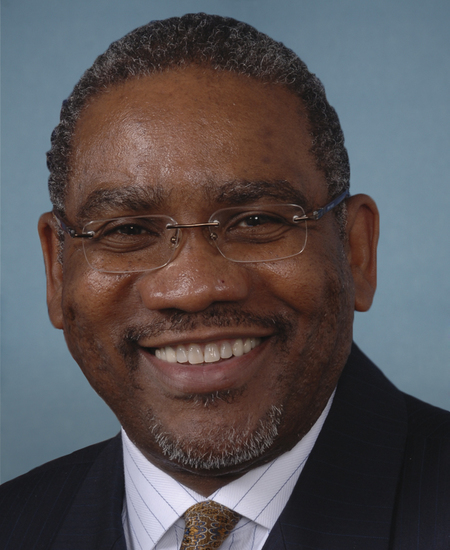
Rep. Gregory W. Meeks
Sponsored bills
Maddy summaryHRES 155 is a symbolic congressional resolution expressing strong U.S. support for Ukraine during Russia’s third year of invasion. It condemns Russia’s war crimes - including attacks on civilians, forced deportations of children, and infrastructure destruction - and demands Russia’s immediate withdrawal from all Ukrainian territory. The resolution reaffirms U.S. commitment to Ukraine’s sovereignty and territorial integrity within internationally recognized borders, insisting Ukraine must be central to any peace negotiations. It also calls for accountability for Russian leaders and the safe return of kidnapped Ukrainian children. As a non-binding resolution, it does not create new laws but formalizes U.S. diplomatic stance.
Maddy summaryHRES 154 is a symbolic resolution commemorating Ukraine's sacrifices 3 years after Russia's February 24, 2022, full-scale invasion. It condemns Russia's aggression, recognizes the human and material toll of the war (including civilian casualties and infrastructure damage), and reaffirms U.S. support for Ukraine's sovereignty and territorial integrity. The resolution does not create new policies or funding but expresses congressional solidarity with Ukraine through ceremonial recognition and condemnation of Russian actions. It was introduced by Rep. Kaptur and co-sponsors on February 24, 2025.
Maddy summaryThe American Victims of Terrorism Compensation Act amends the Justice for United States Victims of State Sponsored Terrorism Act to increase funding for victims of terrorism. It directs the transfer of approximately $1.5 billion from the Binance Holdings Limited case, plus 50% of excess unobligated balances from Department of Justice and Treasury forfeiture funds, into the Victims Fund. The bill establishes deadlines for agencies to deposit funds (within 30 days of receipt or 15 days after enactment), requires annual reports on fund activity, and authorizes annual payments to eligible claimants starting in 2026. This legislation directly affects terrorism victims who receive compensation from the fund and federal agencies that handle forfeited assets from terrorism-related cases.
Maddy summaryHR 1488 repeals two laws that authorized U.S. military force against Iraq: the 1991 Gulf War authorization and the 2002 Iraq War authorization. This bill removes the legal basis for military operations under these specific resolutions, directly affecting how future U.S. military actions in Iraq could be justified. The key provision is the direct repeal of both resolutions from federal law, eliminating their continued legal effect. As a result, any new military action in Iraq would require fresh congressional authorization rather than relying on these repealed laws.
Maddy summaryHR 1410 expands access to mental health care for 9/11 responders and survivors by allowing licensed mental health providers (not just physicians) to conduct initial health evaluations and certifications under the World Trade Center Health Program. It adjusts the program’s funding formula to account for changing enrollment numbers by linking annual funding to the previous year’s enrollment ratio, and clarifies that deceased individuals are excluded from enrollment counts. The bill also extends the timeframe for adding new health conditions to the program’s list and requires a 2028 report assessing long-term funding needs through 2090. These changes aim to streamline eligibility, improve care access, and ensure sustainable funding for the program.
Maddy summaryHRES 135 is a symbolic resolution affirming the U.S. commitment to NATO and its Article 5 mutual defense principle. It expresses support for NATO as a security alliance, reiterates the U.S. dedication to defending allies under Article 5, and encourages NATO members to meet the 2% defense spending target. The resolution also highlights NATO's support for Ukraine and promotes collaboration on defense technologies and cybersecurity. As a non-binding resolution, it does not create new laws or directly affect any group, but formally states the House's position on existing alliance commitments.
Justice for All Act of 2025 This bill prohibits discrimination based on sex, sexual orientation, gender identity, or race-related characteristics in schools, businesses, federally funded programs, and other settings. It also provides statutory authority for and expands the types of civil actions that may be brought for violations. For example, the bill expands provisions under the Civil Rights Act of 1964 so as to (1) prohibit federally funded programs from discriminating based on sex or religion; and (2) prohibit public accommodations, including stores and transit services, from discriminating based on sex. The bill defines sex to include sex stereotypes, pregnancy, childbirth, sexual orientation, gender identity, and sex characteristics. It also expands the definition of race to include traits that have been historically associated with race (e.g., natural hair textures). The expanded definitions apply to the Civil Rights Act of 1964, the Fair Housing Act (discrimination in public and private housing), and Title IX of the Education Amendments of 1972 (discrimination based on sex in federally funded educational programs). Further, the bill provides statutory authority for disparate impact or intentional discrimination claims under the aforementioned acts, as well as the Age Discrimination Act of 1975 (discrimination based on age by federally funded programs) and the Rehabilitation Act of 1973 (discrimination based on disability by federally funded programs). The bill also includes other provisions that address (1) profiling by law enforcement officers, (2) employer liability with respect to civil rights violations, (3) predispute arbitration agreements in civil rights cases, and (4) governmental immunity in suits involving constitutional violations.
United States-Israel Defense Partnership Act of 2025 This bill requires or authorizes certain actions to increase defense-related cooperation between the United States and Israel. Specifically, the bill requires the Department of Defense (DOD) to establish a cooperative program, with the concurrence of Israel's Ministry of Defense (MOD), to develop and deploy advanced technologies for countering unmanned systems that threaten the United States and Israel; establish in Israel an office of the Defense Innovation Unit (an organization that focuses on rapidly fielding and scaling commercial technology across the U.S. military); and seek to engage Israel's MOD on the ascension of Israel into the national technology and industrial base (currently defined in law as the persons and organizations engaged in research, development, production, integration, services, or information technology activities conducted within the United States, the United Kingdom, Australia, New Zealand, and Canada). The bill authorizes DOD, upon request of Israel's MOD, to jointly conduct research, development, test, and evaluation (RDT&E) of emerging technologies such as artificial intelligence and robotics to meet defense challenges. Additionally, the bill extends the authority for DOD to (1) carry out RDT&E on a joint basis with Israel to establish anti-tunnel and counter unmanned aerial systems capabilities through 2028, and (2) transfer defense articles intended for use as reserve stocks for Israel through January 1, 2029.

Maddy summaryThis bill restricts access to Treasury payment systems (including the Bureau of the Fiscal Service) to only Treasury employees with a "fully successful" performance rating and at least one year of civil service, or contractors/outsiders with security clearances, required privacy/cybersecurity training, ethics agreements, and no conflicts of interest. It treats non-government users accessing these systems as government employees for ethics rules and defines specific actions (like stopping payments) as "personal and substantial participation" in government matters. The Treasury Inspector General must investigate any unauthorized access within 30 days and report to Congress, detailing the breach, security risks, and any halted payments. The bill directly affects Treasury staff, contractors, and any external entities accessing federal payment systems.