

Maddy summaryThis bill designates Uyghurs and other Muslim minority group members from Xinjiang who have experienced or fear persecution for peaceful political, religious, or cultural expression as "persons of special humanitarian concern" for refugee resettlement. It provides for Priority 2 processing under the refugee system, waives the presumption that applicants are immigrants, and excludes them from numerical visa limits. The bill requires regular reporting on refugee applications from Xinjiang, including wait times and denial reasons, and encourages other countries to make similar accommodations for Xinjiang refugees. The provisions apply to individuals who fled Xinjiang due to detention, forced labor, family separation, or other human rights abuses documented in the bill's findings. The bill would expire 10 years after enactment.
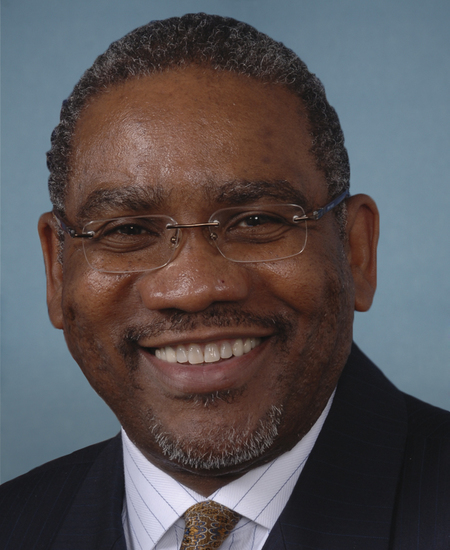
Rep. Gregory W. Meeks
Sponsored bills
Maddy summaryThe Paycheck Fairness Act strengthens equal pay protections by expanding the definition of "sex" to include pregnancy, childbirth, sexual orientation, gender identity, and sex characteristics. It modifies employer defenses for pay disparities to require proof that any pay difference is job-related, not based on sex, and accounts for the entire pay gap. The bill prohibits employers from asking about salary history, enhances penalties for violations, and requires employers with 100+ employees to collect and report detailed pay data by race, sex, and job category. It also establishes training programs for employers on eliminating pay bias and creates a National Equal Pay Enforcement Task Force to coordinate enforcement efforts. This legislation directly affects employers, particularly those with 100+ employees, and aims to address pay disparities impacting women, people of color, and other underrepresented groups.
Maddy summaryH.J. Res. 80 would declare the Equal Rights Amendment (ERA) part of the U.S. Constitution, asserting it has been ratified by 38 states (three-fourths of the states) despite the original 1972 deadline. If passed, this resolution would formally establish the ERA as a constitutional amendment, requiring all federal and state laws to align with its gender equality protections. The bill does not create new laws but confirms the ERA's status as part of the Constitution, affecting how laws are interpreted and enforced. It is a procedural step to resolve the legal dispute over the ERA's validity after decades of debate.
Maddy summaryHRES 239 is a non-binding resolution recognizing racial disparities in colorectal cancer (CRC) outcomes, specifically highlighting that Black Americans face 20% higher CRC rates and 40% higher death rates compared to non-Hispanic Whites. It directly affects Black communities disproportionately impacted by these disparities, which include the lowest 5-year survival rate for CRC. The resolution encourages the CDC to research screening disparities and develop strategies to eliminate them, promotes adherence to U.S. Preventive Services Task Force screening guidelines, and urges states to expand coverage for early CRC screenings, particularly for Black individuals and other high-risk groups. It does not create new laws but aims to raise awareness and guide existing public health efforts.
Maddy summaryThe Air America Act of 2025 authorizes one-time payments of $40,000 to individuals who worked for Air America or its affiliated companies for at least five years during 1950-1976, or to their surviving spouses, children, or dependents. Additional payments of $8,000 per full year beyond five years are allowed. The program is capped at $60 million total funding, with claims required within two years of final regulations. Payments are a single lump sum with no ongoing benefits, and the bill explicitly states it does not create new entitlements beyond this one-time award.
Maddy summaryHR 2169 adjusts federal holiday scheduling to prevent Martin Luther King, Jr. Day and Inauguration Day from overlapping. If both holidays would fall on the same date (the third Monday in January), the bill shifts Martin Luther King, Jr. Day to the Tuesday following that Monday. This ensures federal employees and government operations observe each holiday on separate days. The change applies to federal offices and institutions following the U.S. Code's holiday schedule.
Maddy summaryHRES 219 is a resolution recognizing four fellowship programs that support diversity in U.S. foreign affairs careers. These programs - the Charles B. Rangel Graduate Fellowship, Thomas R. Pickering Foreign Affairs Graduate Fellowship, William D. Clarke, Sr. Diplomatic Security Fellowship, and Donald M. Payne International Development Graduate Fellowship - help recruit underrepresented groups, including minority and economically disadvantaged students, for roles in diplomacy and development. The resolution emphasizes that these statutorily mandated programs strengthen national security and foreign policy by building a more diverse workforce for agencies like the State Department and USAID. It also notes these programs have historically drawn from over 500 colleges and all 50 states.
Metastatic Breast Cancer Access to Care Act This bill expedites payment of Social Security Disability Insurance (SSDI) benefits and eligibility for Medicare coverage for those with metastatic breast cancer (i.e., breast cancer that has spread to other sites in the body). Specifically, the bill eliminates the 5-month waiting period for SSDI benefits and the subsequent 24-month waiting period for Medicare coverage for individuals with metastatic breast cancer. Under current law, individuals generally must wait 5 months after the onset of disability to begin receiving SSDI benefits and an additional 24 months to become eligible for Medicare.
Maddy summaryThis bill requires the Transportation Security Administration (TSA) to transition its workforce from a special personnel management system to the standard federal personnel system under Title 5 of the U.S. Code by December 31, 2025. It protects TSA employees by ensuring no reduction in pay, benefits, or retirement rights during the transition, while preserving collective bargaining rights for screening agents. The legislation also mandates consultation with labor unions during the process and requires several reports on workforce issues including recruitment, harassment policies, and workplace safety.
Maddy summaryThis bill would expand Medicare to cover dental, vision, and hearing services for beneficiaries 65 and older (and some younger people with disabilities), effective January 1, 2026. It would provide 100% coverage for preventative dental services in 2026, with basic and major dental services gradually increasing to 80% coverage by 2029. Vision benefits would include 80% coverage for annual eye exams and specific limits on eyeglasses, frames, and contact lenses ($100 per year for lenses, $100 every two years for frames, $200 every two years for contacts). Hearing services would include 80% coverage for hearing exams and hearing aids, with a limit of one hearing aid per ear every 48 months. The bill also adds oral health professionals to the United States Preventive Services Task Force to help guide coverage decisions.