

Maddy summaryThis bill prohibits the President, Vice President, Members of Congress, and their immediate family members from engaging in specific digital asset activities. It bans them from owning digital assets where they could unilaterally alter them, serving as officers for crypto issuers, receiving compensation for crypto sales/marketing, or trading with non-public information while in office. The law also prevents these individuals from using trusts, companies, or other entities to secretly participate in digital asset markets, requiring full disclosure of indirect ownership. Violations could trigger criminal penalties under existing federal law, mirroring restrictions on other financial conflicts of interest.
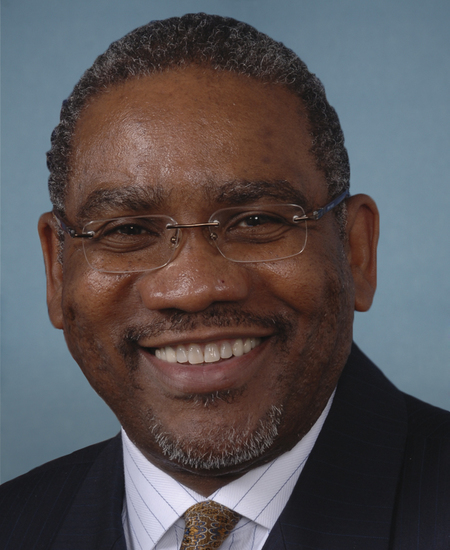
Rep. Gregory W. Meeks
Sponsored bills
Maddy summaryThe Strengthening the Quad Act directs the U.S. State Department to create a strategy within 180 days for deepening cooperation with the Quad (U.S., Australia, India, and Japan), covering democratic leadership, current initiatives (like infrastructure, climate, and supply chains), and barriers to collaboration. It also establishes a formal Quad Inter-Parliamentary Working Group, requiring the U.S. to form a congressional delegation of up to 24 members (split evenly between House and Senate, with committee representation) to meet annually with Quad counterparts. The strategy must include specific recommendations for Congress to address obstacles and secure new resources for Quad initiatives. This bill directly affects U.S. foreign policy coordination with Quad nations and congressional committees overseeing foreign affairs.
Maddy summaryHRES 391 establishes procedural rules for the House of Representatives to consider H.J.Res. 72, a joint resolution addressing a national emergency declared by the President on February 1, 2025. It waives all procedural objections to H.J.Res. 72 and its provisions, enabling direct debate and voting. The resolution allocates one hour of debate equally divided between the Foreign Affairs Committee chair and ranking minority member, and permits one motion to recommit. It also requires the Clerk to transmit the House's action on H.J.Res. 72 to the Senate within one week of passage.
Maddy summaryHJRES 96 is a congressional resolution that would block a specific proposed military sale to the United Arab Emirates. It targets defense articles and services listed in Transmittal No. 25-25 (submitted May 13, 2025), specifically F-16 aircraft components, spares, accessories, and related logistics support. The resolution would prohibit this sale under the Arms Export Control Act, requiring congressional disapproval before it could proceed. This directly affects the U.S. government (which would need to halt the sale) and the UAE (which would lose access to these defense items).
Maddy summaryHJRES 97 is a congressional resolution blocking a specific proposed military sale to the United Arab Emirates (UAE). It prohibits the sale of defense articles and services detailed in Transmittal No. 24-118, including six Chinook helicopters, missile warning systems, communications equipment, and machine guns. The resolution exercises Congress’s authority under the Arms Export Control Act to disapprove the sale before it proceeds. This directly affects the UAE government, which sought these defense items, and requires the U.S. State Department to halt the transaction. The bill does not create new policy but stops a specific foreign military sale.
Maddy summaryHR 3452, the "Six Assurances to Taiwan Act," formally codifies six longstanding U.S. policy commitments regarding Taiwan that were established in 1982. It reaffirms that the U.S. has never agreed to set a date for ending arms sales to Taiwan, consult with China on such sales, mediate between Taiwan and China, revise the Taiwan Relations Act, take a position on Taiwan's sovereignty, or pressure Taiwan to negotiate with China. The bill’s key mechanism requires the President to notify Congress before taking any action that could alter these assurances, giving Congress 30 days (or 60 days during a specific period) to review proposals through a joint resolution process. This applies to actions like pausing arms sales, negotiating with China on arms, or changing U.S. policy on Taiwan’s status. The bill directly affects U.S. executive branch decisions on Taiwan policy and Congressional oversight authority.
Maddy summaryHR 3405 requires the Secretary of State to provide Congress with all documents and a detailed report within 30 days regarding negotiations between the U.S. and Qatar about transferring an aircraft to the U.S. government for eventual transfer to an entity controlled by former President Donald Trump. The report must detail any promises made to Qatar, potential private contracts, and legal reviews related to the transfer. The bill also prohibits federal funding for any action supporting the transfer of foreign-owned aircraft to the U.S. government, the President, or Trump’s presidential library. This applies specifically to aircraft transfers involving Qatar and Trump-controlled entities, focusing on transparency and funding restrictions.
Maddy summaryHR 3368, the "Born in the USA Act of 2025," prohibits federal funding for Executive Order 14160 (which aimed to restrict birthright citizenship for children born in the U.S.). The bill directly affects federal agencies that might implement the executive order by blocking their use of funds for that purpose. Its key provision is a funding ban targeting the executive order and any similar future policies, without changing citizenship law. The bill does not alter birthright citizenship rights but prevents federal resources from being used to enforce the controversial executive order. It is a procedural measure focused on funding, not a substantive policy change to citizenship rules.
Maddy summaryHRES 372 is a symbolic resolution designating May as "National Menstrual Health Awareness Month" to address stigma around menstruation. It does not create new laws but formally recognizes how menstrual stigma impacts women, girls, and people who menstruate in areas like education, health, and daily life. The resolution supports efforts to normalize menstruation, improve access to menstrual products and sanitation facilities, and promote research on menstrual health conditions. It urges awareness and education to advance gender equity but has no legal force or direct policy changes.
Maddy summaryHRES 366 is a non-binding resolution recognizing the 50th anniversary of the Fall of Saigon on April 30, 1975, known as Black April in Vietnamese history. It honors the Vietnamese American community - now over 2.3 million strong - who resettled in the U.S. after 1975 and have contributed to American society through diverse fields like public service and business. The resolution commemorates the service of U.S. and South Vietnamese military personnel during the Vietnam War and reaffirms U.S. support for democracy and human rights in Vietnam. As a symbolic gesture, it does not create new laws but encourages public observance of this historical event and the community's resilience.