

Maddy summaryHCONRES 42 is a symbolic congressional resolution recognizing the persistent wage gap between Black women and White, non-Hispanic men in the U.S. It highlights that Black women earn 66 cents for every dollar earned by White, non-Hispanic men working full-time year-round, with the gap taking over 200 years to close at current rates. The resolution emphasizes how this disparity - rooted in both racial and gender discrimination - impacts Black women’s ability to afford essentials like education, childcare, and housing. It does not create new laws or policies but formally acknowledges the issue on Black Women’s Equal Pay Day (July 10, 2025) and reaffirms support for equal pay.
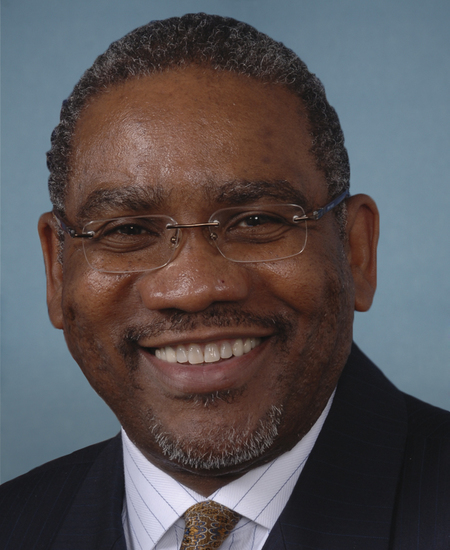
Rep. Gregory W. Meeks
Sponsored bills
Maddy summaryThis bill (HR 4286) requires the U.S. State Department to develop a comprehensive strategy within 90 days to address Haiti's security crisis, focusing on strengthening Haitian security forces, countering gang violence, and expanding economic opportunities through programs like Haiti HOPE/HELP. The strategy must assess international coordination, arms trafficking, sanctions impacts on aid, and gang reintegration, while prioritizing Haitian-led solutions. It mandates annual reports to Congress for five years tracking progress on security, governance, and humanitarian efforts, with specific metrics for evaluating U.S. support. The bill directly affects U.S. foreign policy implementation in Haiti and Haitian civil society, security forces, and international partners.
Maddy summaryHRES 564 is a non-binding House resolution calling on the U.S. government to prioritize the return of Ukrainian children abducted by Russia before any peace agreement is finalized. It cites 19,546 confirmed reports of unlawful child deportations to Russia or occupied territories as of April 2025, noting only 1,274 have been returned. The resolution condemns Russia's actions as violations of the Geneva Convention and Genocide Convention, including forced adoptions and Russification policies. It urges that all abducted children be returned prior to concluding peace talks, emphasizing this as a necessary condition for a just resolution to the war. The resolution does not create new law but expresses congressional position on a key issue in U.S. diplomatic efforts.
Maddy summaryHRES 550 is a non-binding House resolution recognizing June 2025 as LGBTQIA+ Pride Month. It formally encourages all U.S. citizens to celebrate Pride Month to learn about LGBTQIA+ history, including the Stonewall Inn and Compton's Cafeteria uprisings. The resolution affirms that LGBTQIA+ rights are human rights and emphasizes the ongoing struggle for equality. It has no legal effect but serves as a symbolic statement of support for the LGBTQIA+ community and its history.
Maddy summaryThis bill would provide $20.7 million in compensation ($10.398 million compensatory and $10.398 million punitive) to the two remaining living survivors of the 1921 Tulsa Race Massacre - Viola Ford Fletcher and Lessie Benningfield Randle - as of May 1, 2025. It requires the Treasury Secretary to pay this amount within 30 days of verifying survivors' identities through a birth certificate, using the Judgment Fund. The payments would fully satisfy all federal claims related to the massacre, preventing future compensation for this specific harm. The bill cites historical precedents like Japanese internment reparations and 9/11 victim compensation to justify the approach, following the survivors' 2024 Oklahoma Supreme Court case dismissal.
Maddy summaryHR 4167, the Expanding Access to Lending Options Act, amends the Federal Credit Union Act to extend the maximum time federally chartered credit unions can hold mortgage loans from 15 years to 20 years (or longer by NCUA regulation). This change directly affects federally chartered credit unions by allowing them to offer longer-term mortgage products to members. The key provision modifies Section 107(5) of the Federal Credit Union Act, specifically updating the time limit for mortgage loans held by credit unions. The bill also includes a non-binding sense of Congress statement emphasizing safety and soundness in NCUA oversight, but the core policy change is the extended mortgage holding period.
Maddy summaryThe Women's Health Protection Act of 2025 would protect access to abortion services across the United States by prohibiting states from imposing restrictions that are more burdensome than those on comparable medical procedures. The bill directly affects people seeking abortion care and health care providers by banning restrictions such as mandatory in-person visits, requirements for specific tests, limitations on telemedicine, and rules based on a patient's reason for seeking abortion. It prohibits state laws that single out abortion for unnecessary restrictions while allowing post-viability abortions when necessary to protect a patient's life or health. The bill preempts conflicting state laws and provides enforcement mechanisms through private lawsuits and actions by the Attorney General.
Maddy summaryThis bill prohibits state officials from blocking abortion access for patients traveling from other states, including restricting providers who offer legal abortions in their state to out-of-state patients. It protects people traveling across state lines for legal abortions, those assisting such travel, and the interstate transport of FDA-approved abortion medication. Violations can be challenged by the Justice Department or affected individuals through civil lawsuits seeking injunctions and damages. The law applies broadly across all states, territories, and tribal nations, defining "abortion service" to include both medical procedures and related care.
Maddy summaryHR 3381, the Encouraging Public Offerings Act of 2025, allows any company planning an initial public offering (IPO), follow-on offering, or initial securities listing to confidentially submit draft registration statements to the Securities and Exchange Commission (SEC) for staff review before public filing. The bill removes the previous restriction that limited this confidential review process to "emerging growth companies" and expands it to all issuers. Companies must publicly file the draft and any amendments within specific deadlines: 10 days before an IPO's effective date, 10 days before a securities listing, or 48 hours before a follow-on offering's effective date. This change directly affects businesses preparing to go public by providing a more flexible pre-filing review process.
Maddy summaryHR 2225, the Access to Small Business Investor Capital Act, modifies how investment companies report fees related to business development companies (BDCs). It allows registered investment companies to exclude fees paid indirectly to BDCs (which primarily invest in small businesses) from their "Acquired Fund Fees and Expenses" calculation on SEC registration statements. This change simplifies reporting for investment companies holding BDC shares by removing those specific fees from expense calculations. The bill directly affects investment companies filing SEC forms (N-1A, N-2, N-3) that hold BDC investments, potentially reducing their reported expense ratios. It does not create new funding for small businesses but aims to streamline investment in BDCs by easing reporting burdens.