

Maddy summaryHR 1484 requires the Federal Aviation Administration (FAA) to commission the National Academies of Sciences to convene experts and issue a report on the health impacts of air traffic noise and pollution within 30 days of the bill's enactment. The report will summarize current scientific knowledge on these health effects and must be submitted to the FAA, Health and Human Services, the Environmental Protection Agency, and specific congressional committees. This bill creates a new study requirement but does not change existing regulations or funding; it solely mandates the collection of expert consensus on the health impacts of aviation noise and emissions.
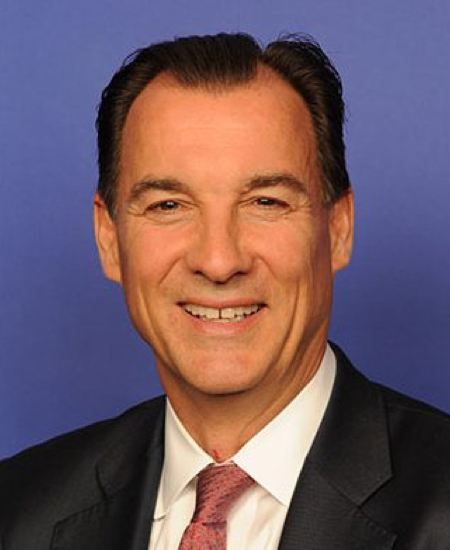
Rep. Thomas R. Suozzi
Sponsored bills
Maddy summaryHR 553 (BRAVE Act) creates a new Department of Veterans Affairs (VA) system to proactively connect veterans with mental health resources. It directly affects veterans enrolled in the VA's annual patient enrollment system who have experienced traumatic or highly stressful events, allowing them to opt-in to receive information about available mental health care services. The bill requires the VA to establish this outreach system within two years of enactment and coordinate it with the Department of Defense's Transition Assistance Program. This is a concrete policy change focused on improving access to mental health support for veterans in need.
Maddy summaryThis bill establishes a Veterans Affairs grant program to fund peer-to-peer mental health support for veterans. It provides up to $250,000 per grant to eligible organizations (like veteran nonprofits, service groups, or state agencies) to hire veterans as peer specialists who host nonclinical support groups and offer 24/7 mental health assistance. The program prohibits grant recipients from collecting or reporting veterans' personal information. It directly affects veterans seeking accessible, nonclinical mental health support through peer-led services.
Maddy summaryThis bill expands Veterans Affairs (VA) coverage for veterans with permanent and total service-connected disabilities needing medical care outside the U.S. It allows the VA to pay for hospital care and medical services abroad if the care meets U.S. medical standards and uses FDA-approved medications. Key provisions include requiring direct deposit for faster reimbursements, enabling digital submission and tracking of forms via VA mobile apps, and mandating a VA report to Congress within two years on implementation. The policy directly affects veterans with qualifying disabilities seeking necessary medical treatment overseas, modernizing how the VA handles foreign medical coverage.
Maddy summaryHR 1440, the Discriminatory Gaming Tax Repeal Act of 2025, repeals Chapter 35 of the Internal Revenue Code, which imposed excise taxes on wagering activities. This repeal directly affects gambling businesses and individuals subject to these taxes, removing the federal tax obligation. The change takes effect for taxable years beginning after December 31, 2024, eliminating the tax requirement for future reporting periods. The bill focuses solely on repealing the existing tax provision without altering other gambling regulations.
Maddy summaryThe Poverty Line Act of 2025 updates how the federal poverty line is calculated to better reflect current costs of basic needs. It requires annual revisions using a 5-year average of household spending on food, housing, childcare, and healthcare (adjusted for inflation), with regional variations based on state or county data. This change directly affects households applying for federal assistance programs like SNAP or Medicaid, as eligibility will now align with more accurate, location-specific costs. The bill also mandates a public online tool to help determine poverty line thresholds and includes safeguards to prevent sudden eligibility changes during relocations.
Maddy summaryHR 1421, the "Make American Flags in America Act of 2025," requires all flags of the United States displayed on federal property or procured by federal agencies to be 100% manufactured in the United States. This directly affects federal agencies (including executive departments, military branches, and legislative/judicial offices) by banning the use of foreign-made flags for official displays or purchases. The bill sets a 90-day deadline for procurement changes and a two-year timeline for display requirements, while excluding private entities from these rules. It also mandates a Federal Trade Commission study on enforcing country-of-origin labeling for flags, with a report due within one year of enactment.
Maddy summaryHR 1414, titled "Cameron’s Law," increases the tax credit for pharmaceutical companies developing orphan drugs (medicines for rare diseases) from 25% to 50% of qualified research expenses. This change directly affects drug manufacturers investing in treatments for conditions affecting fewer than 200,000 people in the U.S. The bill amends the Internal Revenue Code to implement this higher credit rate, effective for taxable years starting after the law’s enactment. It provides a concrete financial incentive to encourage research into rare disease treatments without altering eligibility criteria or adding new requirements.
Maddy summaryHR 1410 expands access to mental health care for 9/11 responders and survivors by allowing licensed mental health providers (not just physicians) to conduct initial health evaluations and certifications under the World Trade Center Health Program. It adjusts the program’s funding formula to account for changing enrollment numbers by linking annual funding to the previous year’s enrollment ratio, and clarifies that deceased individuals are excluded from enrollment counts. The bill also extends the timeframe for adding new health conditions to the program’s list and requires a 2028 report assessing long-term funding needs through 2090. These changes aim to streamline eligibility, improve care access, and ensure sustainable funding for the program.
Maddy summaryThis bill requires the U.S. State and Defense Departments to produce a report within 180 days analyzing how expanding the Comprehensive Security Integration and Prosperity Agreement (CSIPA) would improve regional security cooperation. The report must cover CSIPA’s benefits for military readiness, economic ties, and technology collaboration, including responses to Houthi attacks and Iranian threats, plus identify barriers to broader membership. It also mandates a follow-up strategy and briefing to engage Middle Eastern nations in joining CSIPA. The bill affects U.S. foreign policy agencies but does not alter existing laws or funding.