

Maddy summaryThis bill requires states to verify that Medicaid providers and suppliers are not deceased during enrollment and at least quarterly while enrolled. Starting January 1, 2027, states must check the federal Death Master File (a government database of deceased individuals) as part of provider onboarding and revalidation. The law directly affects all entities billing Medicaid for services, aiming to prevent fraud where deceased individuals' identities might be used. It creates a concrete, ongoing screening mechanism to ensure only active providers participate in the program.
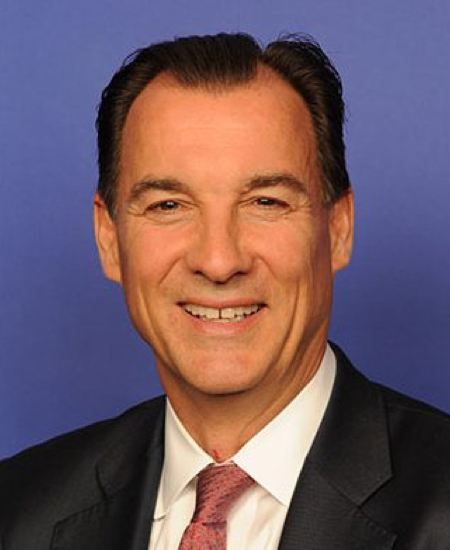
Rep. Thomas R. Suozzi
Sponsored bills
Maddy summaryHR 2296, the National Weather Service Communications Improvement Act, requires the National Weather Service (NWS) to replace its internal instant messaging system (NWSChat) with a commercial cloud-based solution by October 1, 2027. The new system must accommodate future growth, support increased users, be user-friendly, and resemble common commercial platforms. Funding up to $3 million annually from 2026-2029 will cover this upgrade, sourced from existing NWS operational budgets. This bill directly affects NWS personnel who rely on internal communications for weather forecasting and warnings.
Maddy summaryThis resolution (HRES 195) requests the President to provide the House of Representatives with specific documents and communications related to the Social Security Administration (SSA) after January 20, 2025. It seeks information about the Department of Government Efficiency’s (DOGE) access to SSA systems, visits to SSA offices, compliance with certain executive orders, call volumes, office closures, and staff reductions. The request covers documents like IT access logs, correspondence, audit trails, and operational metrics, all to be provided within 14 days of the resolution's adoption. As a procedural oversight measure, it does not change laws but aims to gather facts about SSA operations.
Maddy summaryHR 2246, the Foreign Investment Guardrails to Help Thwart (FIGHT) China Act, restricts U.S. investments in Chinese companies involved in sensitive national security technologies by prohibiting certain transactions and requiring notifications. The bill targets U.S. persons (individuals and businesses) making investments in "covered foreign persons" (those connected to China's military, surveillance, or defense sectors) in specific "prohibited technologies" including advanced semiconductors, artificial intelligence, quantum computing, and hypersonic systems. It creates a public database of covered entities, mandates divestment from securities of companies on the Non-SDN Chinese Military-Industrial Complex Companies List after a 365-day period, and requires notifications for certain transactions. The law applies specifically to China as the "country of concern," with Hong Kong and Macau included in the definition.
Maddy summaryHR 2279, the "No Tax on LOSAP Act," increases the tax exclusion for length-of-service awards from $50 to $1,000 per year for employees receiving these awards from their employers. It clarifies that payments under length-of-service award programs (LOSAPs) are explicitly included in the tax exclusion definition, removing ambiguity. The bill applies to awards given after its enactment date. This change directly affects employees who receive recognition awards for tenure, making the first $1,000 of such awards tax-free annually.
Maddy summaryHR 2256, the National Rosie the Riveter Day Act, designates March 21 as National Rosie the Riveter Day to honor the over 6 million American women who joined the workforce during World War II. The bill requests the President issue an annual proclamation urging Americans to observe the day with ceremonies and activities, while encouraging state, local, and tribal governments to hold educational programs. It directly affects the public and government entities by promoting awareness of women's wartime contributions, including their work in factories, farms, and volunteer roles despite facing discrimination. The legislation focuses solely on commemoration, not policy changes, and aligns with Women's History Month.
Maddy summaryHRES 127 is a procedural resolution requesting documents from the executive branch. It directs the President and Treasury Secretary to provide the House of Representatives, within 14 days, any documents related to the Department of Government Efficiency (DOGE) accessing Treasury payment systems or confidential taxpayer data (like tax returns, SSNs, and debt information). The resolution specifically seeks records such as emails, logs, agreements, and screenshots involving DOGE, Elon Musk, or his team. This is not a law but a formal request for transparency regarding access to government systems and taxpayer information.
Maddy summaryThis bill (HR 2199) prevents private health insurance plans from discriminating against patients with end-stage kidney disease (ESRD) who require dialysis. It amends the Social Security Act to prohibit plans from treating dialysis coverage differently than other medical services or applying network restrictions that disproportionately harm ESRD patients. The law clarifies that plans cannot deny or limit benefits for dialysis based on a patient’s diagnosis, while preserving a plan’s right to choose which dialysis providers are in their network. It directly affects ESRD patients and their private health insurance coverage, ensuring dialysis is treated equally with other covered medical services. The bill does not require plans to include specific dialysis providers but stops them from unfairly restricting access to necessary care.
Maddy summaryThe Air America Act of 2025 authorizes one-time payments of $40,000 to individuals who worked for Air America or its affiliated companies for at least five years during 1950-1976, or to their surviving spouses, children, or dependents. Additional payments of $8,000 per full year beyond five years are allowed. The program is capped at $60 million total funding, with claims required within two years of final regulations. Payments are a single lump sum with no ongoing benefits, and the bill explicitly states it does not create new entitlements beyond this one-time award.
Maddy summaryHR 2220, the PARA-EMT Act of 2025, creates a federal grant program to address the shortage of emergency medical technicians (EMTs) and paramedics. It authorizes $50 million annually (2026-2030) for grants to EMS agencies to fund recruitment, training, and retention programs - prioritizing youth, rural areas, and veterans with military EMS training. A separate $20 million annually supports state grants to help veterans transition to civilian EMT roles by covering certification costs and licensing fees. The bill also mandates a federal study on projected EMS workforce needs through 2034 to inform future policy. It directly affects EMS agencies, training programs, and veterans seeking civilian EMT careers.