

Hot Cars Act of 2021 This bill requires safety measures in passenger cars to reduce injuries or deaths from heatstroke and other harms to occupants of unattended vehicles. Specifically, the National Highway Traffic Safety Administration (NHTSA) must issue a motor vehicle safety standard that requires certain new passenger motor vehicles to include a system that detects and warns of the presence of an unattended occupant in the passenger compartment. The NHTSA must issue the final rule prescribing the safety standard within two years after the enactment of this bill, with full compliance with the standard required not later than two years after the rule is issued. After the standard is issued, the Department of Transportation must periodically contract with an independent third party to study retrofitting passenger motor vehicles with technologies and products that detect and warn when there is an unattended occupant in the passenger compartment. The study must identify relevant technologies and products to retrofit vehicles and provide recommendations about testing such technologies and products. Information about the performance of the technologies and products must be published on the NHTSA's website.
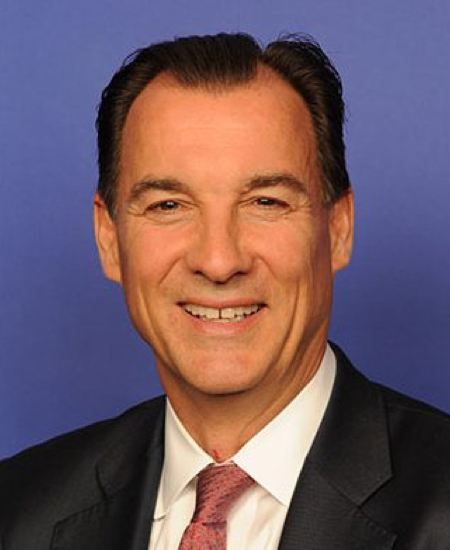
Rep. Thomas R. Suozzi
Sponsored bills
Mental Health Professionals Workforce Shortage Loan Repayment Act of 2021 This bill requires the Health Resources and Services Administration to establish a loan repayment program for mental health professionals who work in designated workforce-shortage areas.
Enhance Access To SNAP Act of 2021 or the EATS Act of 20 21 This bill expands eligibility for the Supplemental Nutrition Assistance Program to students attending institutions of higher education.
Safe Line Speeds in COVID-19 Act This bill directs the Food Safety and Inspection Service of the Department of Agriculture (USDA), for the duration of the COVID-19 (i.e., coronavirus disease 2019) emergency period, to suspend any waivers and not issue new waivers related to line speeds in meat and poultry establishments and inspection staffing requirements for such establishments. Additionally, the implementation of, and conversion to, the New Swine Slaughter Inspection System must be suspended. No funds made available to USDA during the COVID-19 emergency period shall be used to develop, propose, finalize, issue, amend, or implement any policy, regulation, directive, constituent update, or any other agency program that would increase line speeds at meat and poultry establishments. Upon termination of the COVID-19 emergency period, the Government Accountability Office shall conduct a review of actions taken by specific federal agencies, including USDA, in response to the COVID-19 pandemic to determine the effectiveness of such actions in protecting animal, food, and worker safety.
Helping Emergency Responders Overcome Act or the HERO Act This bill establishes a series of programs relating to the behavioral health of law enforcement officers, first responders, 9-1-1 operators, and other public safety officers and health care providers. The programs include a public safety officer suicide-reporting system at the Centers for Disease Control and Prevention, a grant program for peer-support behavioral health and wellness programs within fire departments and emergency medical services agencies, and a grant program for behavioral health and wellness programs for health care providers.
Family Support Services for Addiction Act of 2021 This bill directs the Substance Abuse and Mental Health Services Administration to award grants to certain nonprofits to develop or expand services for individuals with substance use disorders and their families.
Tax Parity for U.S. Mutual Funds Act of 2021 This bill establishes international regulated investment companies (IRICs) and specifies rules for the taxation of such companies. An IRIC is a regulated investment company (i.e., a mutual fund) that has all of its outstanding stock held by foreign shareholders, including nonresident alien individuals (and their foreign estates) and qualified foreign pension funds, and meets other specified requirements.
Accelerating Kids' Access to Care Act This bill requires state Medicaid programs to establish a process through which qualifying out-of-state providers may enroll as participating providers without undergoing additional screening requirements. Among other things, a qualifying provider must (1) serve minors, or adults whose condition began as a minor; and (2) have previously been screened for Medicare participation or for participation in the Medicaid program of the state in which the provider is located.
Breast Cancer Patient Equity Act This bill provides for Medicare coverage of custom fabricated breast prostheses following the surgical removal of the breast (i.e., a mastectomy), including replacements of such prostheses. Currently, Medicare covers surgically implanted breast prostheses, as well as some external breast prostheses (e.g., post-surgical bras).
Equity in Neuroscience and Alzheimer's Clinical Trials Act of 2021 or the ENACT Act of 2021 This bill sets out activities and requirements to increase the participation of underrepresented populations in research and clinical trials for Alzheimer's disease and related dementias. Specifically, the National Institute on Aging (NIA) must establish and provide technical assistance to Alzheimer's research centers located in areas with higher concentrations of minority groups. These centers must establish diagnostic and treatment clinics designed to serve minority, rural, and other underserved populations; operate clinical trials; and carry out public outreach to encourage members of minority populations to participate in clinical trials and research. Additionally, the NIA must disseminate information to members of minority populations about participating in clinical trials and take other actions to enhance diversity with respect to the Alzheimer's research that it conducts or supports. The bill also directs the NIA to increase diversity among Alzheimer's researchers by encouraging the participation of individuals who are from groups that are underrepresented in clinical, behavioral, and social sciences.