

Green New Deal for Public Schools Act of 2021 This bill provides environmental and educational resources to public elementary and secondary schools and Bureau of Indian Education (BIE) schools. Specifically, the bill requires the Department of Energy's (DOE's) Office of Energy Efficiency and Renewable Energy to provide climate capital facilities grants to eligible entities (e.g., public schools and BIE schools). Grant recipients must use these funds to construct new, or convert existing facilities into, healthy zero-carbon schools. Healthy zero-carbon school refers to a school with highly energy-efficient facilities that produce or procure sufficient carbon-free and pollution-free renewable energy to meet the school's needs. Next, the bill directs the Department of Education (ED) to award resource block grants to qualified local educational agencies (LEAs) to hire and retain educators and support staff in high-need schools. ED must award grants to eligible consortia of LEAs for educational equity planning and implementation. In addition, ED must establish the Climate Change Resiliency Program to increase the resiliency of public and BIE schools during climate change-related events, natural disasters, and public health crises. Further, ED must establish a related grant program for state educational agencies. Grant recipients must use these funds for certain activities (e.g., green infrastructure projects). The bill establishes the Office of Sustainable Schools within ED to (1) administer the resource block grant and educational equity grant programs, and (2) coordinate with DOE and the White House Office of Domestic Climate Policy on climate capital facilities grants and the Climate Change Resiliency Program.
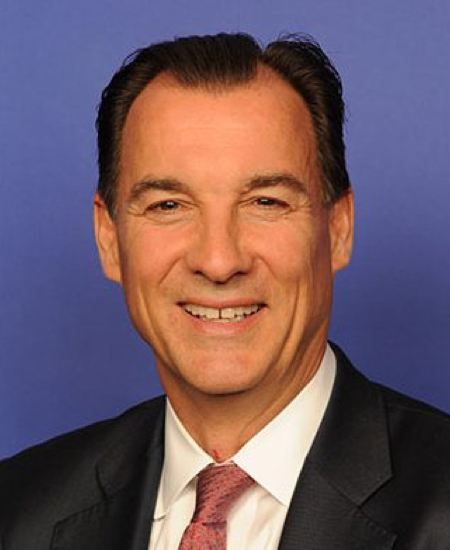
Rep. Thomas R. Suozzi
Sponsored bills
Pathways to Health Careers Act This bill provides funding for, reauthorizes through FY2026, and makes a variety of changes to certain grants administered by the Department of Health and Human Services that provide education and training to low-income individuals for health care occupations, including by establishing a new competitive grant for projects designed to train low-income individuals in allied health professions.
Social Determinants Accelerator Act of 2021 This bill establishes the Social Determinants Accelerator Interagency Council to increase coordination among health and social service programs and provide technical assistance to increase the impact of such programs. The council must also assist the Centers for Medicare & Medicaid Services to award up to 25 grants to state, local, or tribal health or human services agencies for social determinants accelerator plans. These plans must address at least one health and one social outcome for a specified target population.
Protecting Seniors Through Immunization Act of 2021 This bill specifies that certain deductible, coinsurance, initial coverage limit, and cost-sharing requirements that apply under the Medicare prescription drug benefit shall not apply with respect to vaccines that are recommended by the Advisory Committee on Immunization Practices of the Centers for Disease Control and Prevention. The Centers for Medicare & Medicaid Services must provide to Medicare beneficiaries specified information regarding (1) coverage of vaccines for seniors, and (2) access to recommended vaccines without cost-sharing.
National Infrastructure Development Bank Act of 2021 This bill establishes the National Infrastructure Development Bank as a government corporation to finance energy, environmental (e.g., drinking water or waste facilities), telecommunications, and transportation infrastructure projects. The bill establishes the National Infrastructure Development Bank Board, which must oversee the infrastructure projects. The board may make loans and loan guarantees to assist in financing infrastructure projects. Further, the board must establish an executive committee, a risk management committee, an audit committee, and a compliance office. To be eligible for financial assistance from the bank, an infrastructure project (1) must have a public benefit, as determined by the board; and (2) may not have a sole use or purpose that is private. An infrastructure project must use iron, steel, and manufactured products that are made in the United States. The bill also establishes accounting and reporting requirements. In particular, the Government Accountability Office must, within five years of this bill's enactment, submit a report to Congress evaluating the bank's activities.
This bill reauthorizes through FY2022 and otherwise revises the Centers for Disease Control and Prevention (CDC) national awareness campaign regarding gynecologic cancers. The CDC must target specified populations of women at higher risk for gynecologic cancers in the campaign. Additionally, the CDC may establish a grant program to evaluate different strategies to increase knowledge and awareness of gynecologic cancers among women and health care providers. In awarding these grants, the CDC must give preference to (1) grantees with expertise in gynecologic cancer education or treatment or expertise in working with groups of women at increased risk of such cancers; and (2) projects that will establish links between health care providers, hospitals, insurance companies, and state health departments.
Veterans Preventive Health Coverage Fairness Act This bill eliminates veterans' copayments for medication, hospital care, and medical services related to preventive health services provided by the Department of Veterans Affairs. The bill expands the definition of preventive health services to include (1) evidence-based items or services that have an A or B rating in the recommendations of the United States Preventive Services Task Force; (2) immunizations that have a recommendation from the Advisory Committee on Immunization Practices of the Centers for Disease Control and Prevention with respect to the individual involved; and (3) with respect to women, the preventive care and screenings provided for in the Health Resources and Services Administration Preventive Services Guidelines in effect as of January 1, 2017.
Semiquincentennial Commemorative Coin Act This bill directs the Department of the Treasury to mint and issue $25.00 gold coins, $2.50 silver coins, 25 cent clad coins, and proof silver $2.50 coins in commemoration of the 250th anniversary of the establishment of the United States. The designs of the coins shall be emblematic of the semiquincentennial anniversary of the establishment of the United States of America and celebrate 250 years of our nation. On each coin there shall be a designation of the value of the coin; an inscription of the years 1776-2026; and inscriptions of the words Liberty , In God We Trust , United States of America , and E Pluribus Unum . Treasury may issue coins under this bill only during the period beginning on January 1, 2026, and ending on December 31, 2026. All sales of coins issued shall include a surcharge as prescribed by this bill. All surcharges received by Treasury from the sale of such coins shall be paid to the America 250 Foundation to fund the restoration, rehabilitation, and interpretation of units of the U.S. National Park System and its related areas, as a legacy of the semiquincentennial commemoration.
This resolution expresses support for the designation of Journeyman Lineworkers Recognition Day. (A journeyman lineworker is a person who builds and maintains electrical power systems.)
Global Health Security Act of 2021 This bill directs the United States to implement a strategy to strengthen global health security, including by requiring the President to create the Global Health Security Agenda Interagency Review Council to implement the Global Health Security Agenda. The agenda is an initiative launched by nearly 30 nations to address global infectious disease threats. The council's responsibilities include (1) providing policy recommendations on agenda-related goals, objectives, implementation, and other international efforts to strengthen pandemic preparedness and response; (2) helping federal agencies with implementation; and (3) reviewing the progress and challenges in achieving U.S. commitments, including assistance to help other countries meet agenda targets. The bill also directs the federal agencies involved with the agenda to prioritize its implementation and to take certain steps to achieve that goal. The President shall coordinate a strategy for responding to global health security emergencies and submit a report on the implementation of this strategy. Additionally, the Department of State should seek to enter into negotiations with donors, relevant United Nations agencies, and other multilateral stakeholders to establish a Fund for Global Health Security and Pandemic Preparedness that (1) closes gaps in global health security and pandemic preparedness; and (2) builds capacity in eligible partner countries related to global health security, infectious disease control, and pandemic preparedness. The fund should provide grants, technical assistance, and innovative funding mechanisms to achieve its purposes.