This resolution supports the recognition of Distracted Driving Awareness Month. The resolution also supports the efforts of the Department of Transportation, state and local governments, and state and local law enforcement to prevent and stop distracted driving.
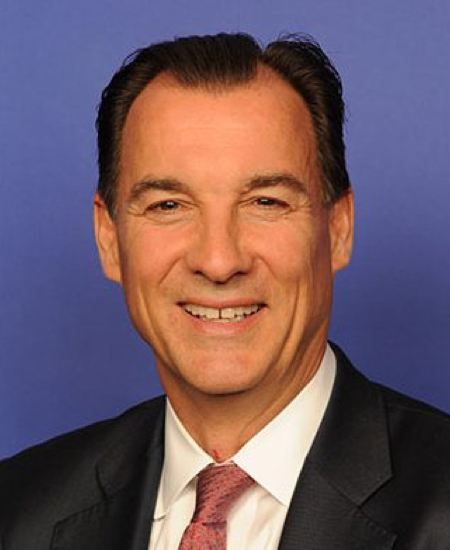
Rep. Thomas R. Suozzi
Sponsored bills
Maddy summaryThis resolution expresses the sense of the House of Representatives that open water lifeguards qualify as first responders and emergency response providers. It recognizes their essential, lifesaving work and reaffirms their role in protecting lives, property, evidence, and the environment.
Maddy summaryThe Momnibus Act is a comprehensive legislative bill designed to improve maternal health outcomes across the United States by addressing social determinants of health, expanding access to care, and reducing disparities among pregnant and postpartum individuals. The bill establishes a federal task force to coordinate efforts between agencies and stakeholders to eliminate preventable maternal mortality and severe morbidity, while providing sustained funding to community-based organizations to address nonclinical factors like housing, nutrition, and transportation. Key provisions include extending WIC eligibility to 24 months postpartum, creating grants to grow and diversify the perinatal workforce, implementing respectful maternity care training for all healthcare employees, and establishing compliance programs to track and address bias in maternity care settings. The legislation also includes specific measures for incarcerated mothers, veterans, and vulnerable populations affected by climate change, alongside funding for maternal mental health services and technology-enabled care models to expand access in underserved areas.

Maddy summaryThis bill directs the President to comply with the War Powers Resolution regarding the use of U.S. military forces in "Operation Epic Fury" in Iran. It requires the President to terminate military involvement in Iran within 60 days of the operation's start (February 28, 2026). Following this, a phased withdrawal of U.S. Armed Forces from Iran must commence within 30 days. The 60-day period can be paused if the U.S. is engaged in cease-fire negotiations or has entered into a cease-fire with Iran. This directive aims to limit presidential military action in Iran unless explicitly authorized by Congress or under specific defensive circumstances.
Maddy summaryThis resolution commemorates the fifth anniversary of the April 15, 2021, mass shooting in Indianapolis that killed eight people, including four members of the Sikh community, and denounces anti-Asian hate and xenophobic rhetoric. It formally condemns violence and discrimination against South Asian Americans, Arabs, Hindus, Muslims, and Sikhs, while also criticizing white supremacist ideology and anti-immigrant policies. The bill calls for expanded federal hate crime data collection and prevention programs, restoration of immigration processing, and reaffirms the government's commitment to protecting civil rights. As a House resolution, it expresses congressional sentiment and recommendations rather than enacting new laws or regulations.
Maddy summaryThe Supporting VA Families Act grants unpaid parental leave to Department of Veterans Affairs employees. This provision allows employees to take four weeks of unpaid leave within a 12-month period for the birth of a child or for adoption and foster care placements. The leave is designed to supplement existing leave policies rather than replace them, ensuring employees can balance family needs with their work responsibilities. The act defines eligible employees and children according to existing federal definitions found in Title 5 of the United States Code.
Maddy summaryThe SEPTIC Act proposes to make financial assistance received by homeowners from state or local governments for certain wastewater management improvements tax-free. It would amend current tax law to exclude from taxable income any direct or indirect subsidy provided to a resident for the purchase or installation of wastewater management measures on their primary residence. These measures are defined as installations or modifications primarily designed to manage wastewater, such as septic tanks and cesspools. This change means homeowners would not have to pay federal income tax on such financial aid.
Maddy summaryThis bill amends the Higher Education Act of 1965 to expand the definition of "institution of higher education" for certain graduate medical schools located outside the United States. This change affects these foreign medical schools and their students, potentially making more students eligible for federal student loans. The bill adds an alternative criterion for schools to qualify: they must have had a clinical training program approved by a U.S. state (requiring an on-site visit) as of January 31, 2021, and continue to operate such a program in at least one U.S. state with state approval. This is in addition to the existing criterion that at least 60% of their students and graduates are not U.S. citizens or eligible non-citizens.
Maddy summaryHR 8261, the Chronic Care Management Improvement Act of 2026, aims to reduce healthcare costs for Medicare Part B beneficiaries receiving chronic care management services. Effective January 1, 2027, the bill mandates that Medicare will cover 100% of the cost for these specific services. This means individuals will no longer be responsible for any copayments or deductibles for chronic care management. The change directly affects Medicare Part B enrollees who utilize these services, making them more affordable by eliminating out-of-pocket costs.
Maddy summaryThe SACRED Act adds a new federal crime to protect access to places of religious worship by prohibiting intimidating or harassing conduct within 100 feet of religious buildings. It directly affects individuals who engage in disruptive behavior near religious sites and those seeking to enter or exit them. The law defines prohibited actions as conduct that causes reasonable fear for physical safety or intentionally harasses people within 8 feet, with penalties ranging from fines up to $10,000 for nonviolent first offenses to potential life imprisonment if death results. The bill also establishes civil remedies allowing aggrieved individuals or religious organizations to sue for damages and injunctive relief, while permitting state and federal attorneys general to bring civil actions on behalf of affected persons. Importantly, the legislation explicitly preserves the right to peaceful expressive conduct like picketing and does not override existing state or local laws.