

Maddy summaryThe 9/11 Responder and Survivor Health Funding Correction Act of 2024 makes several key changes to the World Trade Center Health Program that serves 9/11 responders and survivors. It allows licensed mental health providers (not just physicians) to conduct mental health evaluations for program participants and extends the time period for adding new health conditions from 90 to 180 days. The bill also adjusts enrollment calculations by removing deceased individuals from program counts and provides $2.97 billion in new funding for fiscal year 2024 with a minimum annual funding level of $20 million for 2025. These changes aim to improve access to care while ensuring stable, long-term funding for the program that provides medical services to those affected by the 9/11 attacks.
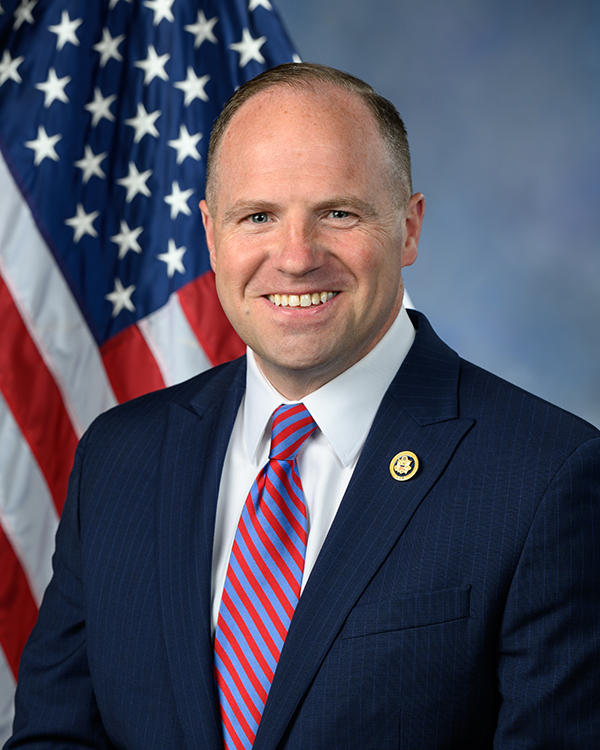
Rep. Timothy M. Kennedy
Sponsored bills
Maddy summaryHR 9104, the Access to Birth Control Act, requires pharmacies that normally stock contraception to provide birth control or related medications without delay if in stock, or immediately offer alternatives like referrals to other pharmacies or expedited orders if unavailable. It prohibits pharmacists from intimidating customers, misrepresenting availability, breaching confidentiality, or refusing to fill valid prescriptions for birth control. Pharmacies violating these rules face civil penalties up to $1,000 per day or private lawsuits. The law specifically applies to pharmacies that routinely carry contraception and excludes cases where a valid prescription is missing or payment cannot be made. It aims to address documented refusals to dispense birth control, particularly following the Dobbs decision.
Maddy summaryThe Railroad Safety Enhancement Act of 2024 establishes new safety requirements for high-hazard trains carrying hazardous materials, including speed limits of 50 mph (40 mph in urban areas) for trains with 20 or more flammable liquid tank cars. The bill requires rail carriers to provide real-time electronic train consist information to emergency responders and State emergency commissions, including details about hazardous materials being transported, routes, and emergency response contacts. It mandates railroads to develop and regularly update hazardous materials emergency response plans, with triennial reviews by the Federal Railroad Administration. The act also phases out older tank cars by December 2027, requiring all tank cars to meet DOT-117 specifications for flammable liquids, and increases civil penalties for rail safety violations up to $5 million.
Maddy summaryThe Revitalizing Downtowns and Main Streets Act creates a 20% tax credit for converting non-residential buildings into affordable housing. To qualify, buildings must be at least 20 years old and nonresidential, with conversion costs exceeding 50% of the building's adjusted basis or $100,000. The converted housing must be rent-restricted for 30 years for residents earning 80% or less of area median income (60% in certain designated areas), with a $12 billion national credit limit. Special provisions apply for economically distressed areas and rural historic preservation projects, primarily affecting developers who convert vacant commercial buildings in downtown or main street areas into affordable housing.
Maddy summaryHCONRES 118 is a symbolic congressional resolution recognizing the wage disparity faced by Black women in the U.S. It specifically highlights that Black women earn 69 cents for every dollar earned by White, non-Hispanic men, as noted in Census Bureau data. The resolution marks July 9, 2024, as Black Women’s Equal Pay Day to symbolize how long into 2024 Black women must work to earn what White men earned in 2023. It does not create new laws or policies but formally acknowledges this disparity and reaffirms congressional support for equal pay for equal work.
Maddy summaryHRES 1345 is a ceremonial resolution recognizing the 100th anniversary of diplomatic relations between the United States and Ireland, established on October 7, 1924. It commemorates the historical milestone, highlighting the strong cultural ties (with over 30 million Americans claiming Irish heritage), economic partnership (over $1 trillion in annual trade), and shared values supporting peace in Northern Ireland. The resolution does not create new laws or directly affect any individuals or entities, as it is purely symbolic. It affirms congressional support for continued U.S.-Ireland friendship and the enduring people-to-people connections between the two nations.
Maddy summaryThis bill creates a federal framework for "extreme risk protection orders" (ERPOs) that temporarily remove firearms from individuals who pose a risk of harming themselves or others. Family members or law enforcement officers can petition a federal court for a temporary order (up to 14 days) based on probable cause, followed by a hearing within 72 hours to determine if a longer-term order (up to 180 days) is warranted. The bill requires clear and convincing evidence of risk at the hearing and mandates respondents to surrender firearms to law enforcement within 48 hours. It also includes provisions for reporting, training law enforcement on ERPOs, and a federal grant program to support state ERPO implementation, without preempting state laws.
Maddy summaryHCONRES 115 is a procedural resolution calling for a joint session of Congress in Philadelphia, Pennsylvania, on July 2, 2026. It directs both the House and Senate to convene together at Independence National Historical Park to commemorate the 250th anniversary (semiquincentennial) of the Declaration of Independence. The resolution does not create new laws or affect any specific group; it solely schedules a ceremonial event honoring Philadelphia's historical role as the site where the Declaration was approved. This is a non-binding commemorative measure focused on marking a historical milestone.
Maddy summaryThis bill (HR 8827) renames a specific U.S. Postal Service facility in Rochester, New York, at 216 Cumberland Street as the "Minister Franklin Florence Memorial Post Office." It directly affects USPS records, maps, and official documents by updating all references to this location to the new name. The bill contains no policy changes or funding provisions; it solely serves to honor Minister Franklin Florence through a ceremonial naming. This is a standard procedural bill with no impact on postal services or operations.
Maddy summaryThe Pell Grant Preservation and Expansion Act of 2024 would double Federal Pell Grants, increasing the maximum award to $10,000 for the 2025-2026 academic year with annual inflation adjustments, and make Pell Grants a fully mandatory program rather than requiring annual appropriations. It would expand eligibility for students with negative student aid indexes (those with the lowest expected family contributions), provide Pell Grant eligibility for "Dreamer" students protected under DACA, and restore eligibility for students who previously lost it due to academic progress issues. The bill would also increase the total semesters of Pell Grant eligibility from 12 to 18. These changes would directly affect millions of undergraduate students, particularly students of color who currently rely on Pell Grants, with 3 in 5 African American students and half of Latino students depending on these grants. The bill would take effect for the 2025-2026 academic year.