

Maddy summaryThis bill, the Remote Control Locomotives Safety Improvement Act of 2026, prohibits railroads from operating trains on main lines or outside rail yards using remote control locomotives without a human engineer physically present in the lead locomotive's cab. It mandates that any train moving on a main line must be led by a certified engineer inside the cab and explicitly excludes remote control operators from performing these duties. To enforce these rules, the Federal Railroad Administration must conduct mandatory audits of Class I railroads within 180 days and perform unscheduled inspections of other carriers within a year, while violations can result in civil penalties of up to one percent of annual income or $1 million per day.
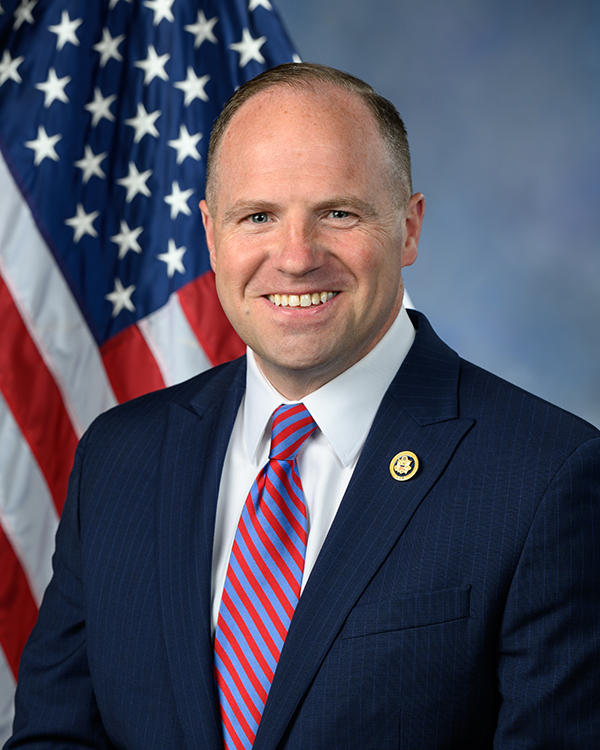
Rep. Timothy M. Kennedy
Sponsored bills
Maddy summaryThis House resolution reaffirms the United States' commitment to protecting refugees and displaced persons by calling for the restoration of the Refugee Admissions Program and asylum protections. It urges federal officials to lift current bans on refugee entry, resume vetting for approved applicants, and increase humanitarian aid to host countries. The measure highlights the economic contributions of refugees and emphasizes the need for fair, humane policies that align with international obligations and domestic law.
Maddy summaryThis bill creates a new process to identify military veterans who served at specific Nevada test sites and other facilities linked to toxic exposure, removing the requirement for them to provide proof of contact with harmful substances. It officially classifies service in these areas as involving radiation risks and establishes a legal presumption that veterans who worked there are eligible for disability benefits related to certain diseases without needing to prove a direct link between their illness and the environment. To support these changes, the legislation mandates the creation of a registry to track affected service members and funds a scientific study to better understand the health impacts of toxic exposures at these locations.
Maddy summaryHR 5408, the Faster Labor Contracts Act, requires employers to begin negotiating a first contract with a newly certified union within 10 days of written request. If no agreement is reached within 90 days, the parties must seek mediation, and if unresolved after 30 days of mediation, the dispute moves to binding arbitration by a three-member panel. The arbitration decision, based on factors like employer finances, industry standards, and cost of living, becomes binding for two years. This bill directly affects newly certified unions and their employers during initial contract negotiations, aiming to reduce delays that currently average 465 days.
Maddy summaryThis resolution expresses support for designating June 5, 2026, as National Gun Violence Awareness Day and June 2026 as National Gun Violence Awareness Month. The bill calls on the public to wear orange on the designated day to honor victims and promote awareness of gun safety. It highlights statistics on gun-related deaths and injuries to underscore the need for community discussions on making neighborhoods safer.
Maddy summaryH.Con.Res. 107 is a non-binding resolution that formally recognizes the importance of reducing gun violence and strengthening public safety as the United States celebrates its 250th anniversary in 2026. The bill does not create new laws or change existing policies, but instead expresses Congress's commitment to these goals and honors the lives lost to gun violence. It acknowledges the efforts of community leaders, law enforcement, and advocates while calling for continued support of victim services and data collection initiatives.
Maddy summaryThe Residential AED and CPR Preparedness Act of 2026 creates a grant program to help owners or operators of federally assisted multifamily housing improve emergency cardiac care readiness. To receive funding, these housing entities must partner with qualified health care organizations to develop emergency response plans, train residents and staff, and purchase or maintain automated external defibrillators. The bill authorizes $25 million annually from 2027 to 2031 to support these activities in housing projects that serve people with disabilities, the elderly, or other assisted populations. Additionally, the Department of Health and Human Services must consult with various housing and medical agencies while reporting progress to Congress every two years.
Maddy summaryThe Celiac Safety Act of 2026 officially classifies gluten-containing grains as a major food allergen under federal law, directly impacting the food industry and individuals with celiac disease or gluten intolerance. This change requires manufacturers to label products containing wheat, rye, barley, or their crossbred hybrids with the same prominence as other major allergens like milk. The new labeling requirements will not take effect until 18 months after the law is enacted, giving businesses time to adjust their packaging and production processes.
Maddy summaryThis bill, known as the Arlington National Cemetery Viewshed Protection Act, restricts the construction of large triumphal arches in the Washington, D.C. area to preserve visual sightlines. It specifically bans the building of any such arches within Lady Bird Johnson Park and prohibits the use of federal funds for these structures there. Additionally, the law prevents the erection of triumphal arches taller than 50 feet on any land managed by the National Park Service unless Congress explicitly approves them. These measures aim to limit new monumental structures that could obstruct views of the Arlington National Cemetery from the capital region.
Maddy summaryThe American High-Speed Rail Act expands federal funding and streamlines regulations to support the development of high-speed and higher-speed rail projects across the United States. It authorizes billions of dollars in grants for corridor planning, technology improvements, and construction, while allowing the federal government to cover up to 100% of project costs under specific conditions. The bill also introduces new provisions to facilitate land acquisition, prioritize border projects, and extend labor protections to workers involved in federally funded rail infrastructure. Additionally, the legislation defines higher-speed rail as trains traveling between 110 and 186 miles per hour and includes tax incentives for rail carriers that sell or lease property to support these projects.