

Maddy summaryThis resolution formally recognizes the week of May 4 through May 8, 2026, as "Teacher Appreciation Week" to honor the work of public school educators. It highlights the importance of teachers in the education system and notes that a majority of them support various policies, including protections for students and funding for public schools. The document also expresses the view that teachers should have a direct role in education policymaking at federal, state, and local levels. By issuing this designation, the House of Representatives aims to acknowledge the value of teachers and encourage government leaders to engage with them on issues affecting the classroom.
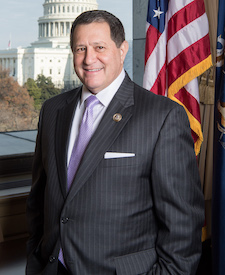
Rep. Joseph D. Morelle
Sponsored bills
Maddy summaryThis bill rebrands the current Medicare payment system for physicians as the Data-driven Performance Payment System and updates how financial incentives are calculated starting in 2028. Under the new rules, doctors who meet performance standards will receive a 25% payment increase, while those below the standard will face a 25% decrease, with a lower penalty for those who cannot report data due to extraordinary circumstances. The legislation also creates a funding mechanism to provide lump-sum bonuses to small, under-resourced practices in rural or underserved areas when the overall system generates savings, ensuring these providers can invest in care improvements.
Maddy summaryThis bill, titled the Protecting Human Rights and Public Health in Foreign Assistance Act, aims to cancel specific regulations issued by the Department of State. It directly affects the federal government by prohibiting any department or agency from enforcing, implementing, or proposing rules related to protecting life, combating discriminatory equity ideology, and combating gender ideology in foreign aid programs. The legislation treats these cancelled rules as if they never existed, effectively nullifying their impact on future foreign assistance policies.
Maddy summaryThis bill renames a U.S. Postal Service facility at 2200 South Salina Street in Syracuse, New York, as the "Wallie Howard Jr. Post Office Building." All official references in federal laws, documents, or records to this specific location will now use the new name. The bill has no policy impact beyond this administrative designation.
This bill authorizes the Capitol Police Board to waive the mandatory retirement age for members of the Capitol Police up to age 65. (Under current law, a member of the Capitol Police is generally subject to mandatory retirement at age 57 but may receive a waiver from the board authorizing later retirement up to age 60.)
Maddy summaryThe HELP Act of 2026 directs the Department of Health and Human Services to create a program that strengthens and coordinates 211 services, which provide free information and referrals for health and human services like food assistance and housing. The bill authorizes $250 million annually from 2026 to 2032 to fund grants for state-level 211 networks, requiring recipients to match at least 25% of the funding with local resources. A designated nonprofit administering agency will distribute these funds, oversee coordination between 211, 911, and 988 systems, and run public awareness campaigns to ensure all individuals can access these services regardless of location or disability.
Maddy summaryHR 5543, the Baltic Security Assessment Act of 2025, requires the U.S. State and Defense Departments to submit a report within 180 days of enactment. The report will assess emerging military, cyber, hybrid, and political threats to Estonia, Latvia, and Lithuania, including the roles of Russia, Belarus, China, Iran, and other actors. It will also evaluate U.S. and NATO military presence in the region, opportunities for defense cooperation, and recommendations to strengthen deterrence, cybersecurity, and democratic resilience in the Baltic countries. This bill directly affects U.S. foreign policy and defense planning regarding the Baltics, but does not create new programs or funding.
Maddy summaryThis bill strengthens the Vaccines for Children Program and Medicaid immunization coverage to improve vaccine access for children. It expands eligibility to include children enrolled in state child health plans and clarifies that providers can charge fees for vaccine administration and counseling services up to Medicare rates. The legislation also increases federal funding for Medicaid by 1% per quarter starting in 2027, contingent on states providing culturally competent vaccination outreach, and requires annual public reports on vaccination rates by demographic factors.
Maddy summaryThis bill establishes a grant program to help vulnerable mothers and babies in areas with high climate-related health risks, such as extreme heat and air pollution. It directs the Department of Health and Human Services to award up to $105 million over four years to community groups, healthcare providers, and local organizations for initiatives that provide cooling resources, health education, and support services. The program prioritizes areas with high rates of maternal and infant health disparities and requires grantees to address racial and ethnic inequities. Additionally, the bill creates a research consortium at the National Institutes of Health to study climate impacts on birth outcomes and funds training programs for health profession schools to better prepare providers for these risks.
Maddy summaryThe Momnibus Act is a comprehensive legislative bill designed to improve maternal health outcomes across the United States by addressing social determinants of health, expanding access to care, and reducing disparities among pregnant and postpartum individuals. The bill establishes a federal task force to coordinate efforts between agencies and stakeholders to eliminate preventable maternal mortality and severe morbidity, while providing sustained funding to community-based organizations to address nonclinical factors like housing, nutrition, and transportation. Key provisions include extending WIC eligibility to 24 months postpartum, creating grants to grow and diversify the perinatal workforce, implementing respectful maternity care training for all healthcare employees, and establishing compliance programs to track and address bias in maternity care settings. The legislation also includes specific measures for incarcerated mothers, veterans, and vulnerable populations affected by climate change, alongside funding for maternal mental health services and technology-enabled care models to expand access in underserved areas.