

Maddy summaryHR 2033, the Military Spouse Hiring Act, expands the Work Opportunity Tax Credit to include spouses of active-duty military personnel. It adds "qualified military spouse" as an eligible category for the tax credit, meaning employers who hire such spouses can claim the credit. A "qualified military spouse" is defined as someone certified by a local agency as married to an active-duty service member at the time of hire. The credit applies to hires occurring after the bill's enactment date. This directly affects military spouses seeking employment and employers hiring them, providing a tax incentive to encourage their hiring.
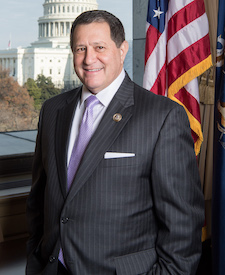
Rep. Joseph D. Morelle
Sponsored bills
Maddy summaryHR 1990, the American Innovation and R&D Competitiveness Act of 2025, amends tax rules for businesses to make research and development (R&D) costs more flexible. It allows companies to deduct R&D expenses immediately as business costs (instead of capitalizing them) or to spread these costs over a minimum 60-month period. The bill clarifies which R&D expenses qualify, excludes land improvements and mineral exploration costs, and ensures companies can claim R&D tax credits without conflict with expense treatment. This directly affects businesses that conduct R&D, changing how they account for these costs on tax returns starting for 2022 taxable years.
Maddy summaryHRES 190 is a procedural resolution that elects specific House members to serve on two congressional committees: the Joint Committee on the Library (Reps. Carey, Morelle, and Johnson of Texas) and the Joint Committee on Printing (Reps. Morelle, Murphy, Sewell, and Miller of Illinois). This resolution does not change laws or policies but formally appoints these representatives to their committee roles, which oversee matters related to the Library of Congress and congressional printing operations. The appointment process follows standard House procedures without altering existing legislative authority.
Maddy summaryHR 1939, the U.S. Engagement in Sudanese Peace Act, requires the U.S. government to develop a comprehensive strategy supporting peace in Sudan, including sanctions on individuals responsible for atrocities and restrictions on arms sales to entities supporting the Rapid Support Forces (RSF) and Sudanese Armed Forces (SAF). The bill mandates reports on international crimes, violations of humanitarian aid access, and U.S. weapons used in Sudan, while directing the U.S. to advocate for unimpeded humanitarian access and support for Sudanese women and youth in peace processes. It establishes a Special Envoy for Sudan with a 5-year term and requires the President to impose sanctions on foreign persons who commit or enable genocide, war crimes, or crimes against humanity in Sudan. The legislation prohibits the sale of major defense equipment to countries supporting the RSF or SAF, with limited waiver authority, directly affecting U.S. foreign policy implementation and humanitarian efforts in Sudan.
Maddy summaryThis bill prohibits the non-consensual sharing of digitally manipulated intimate images (deepfakes) of identifiable people. It creates a civil right for victims to sue individuals who distribute such images without consent, allowing claims for actual damages, $150,000 in liquidated damages, or punitive damages, plus attorney fees. Criminal penalties up to 10 years in prison apply for malicious disclosure intended to harass, harm reputation, or facilitate violence. Exceptions include disclosures to law enforcement for investigations, legitimate public interest matters (excluding mere public figure status), or efforts to assist the victim. The law specifically defines "intimate digital depictions" to include explicit body parts, sexual fluids, or sexual conduct in manipulated images.
Maddy summaryHR 1954, the "Do No Harm Act," amends the Religious Freedom Restoration Act (RFRA) to clarify that RFRA does not override specific federal laws protecting against harm. It explicitly exempts provisions related to anti-discrimination (like the Civil Rights Act), workplace protections (wages, leave, collective activity), child safety, and healthcare access from RFRA's requirements. The bill ensures RFRA cannot be used to challenge government programs or contracts that provide these essential protections. It also clarifies that RFRA applies only to disputes involving government as a party, not private disputes between individuals. This change preserves existing legal safeguards while modifying RFRA's scope.
Maddy summaryHR 1901, the CHIPP Act, makes Children's Health Insurance Program (CHIP) funding permanent for all future fiscal years, removing previous expiration dates that required annual congressional renewal. This directly affects low-income children and families who rely on CHIP coverage and the states that administer these programs. The key mechanism is amending federal law to require "such sums as are necessary" for CHIP funding starting in fiscal year 2029 and beyond. Other provisions adjust funding for related programs like pediatric quality measures and outreach, but the primary change is CHIP’s permanent funding structure.
Maddy summaryHR 1942, the DELIVER Act of 2025, increases the IRS standard mileage reimbursement rate for delivering meals to vulnerable populations. It specifically raises the rate to 14 cents per mile for vehicles used to deliver meals directly to homebound elderly, disabled, frail, or at-risk individuals. This change applies to mileage expenses claimed under tax code sections 162 and 212, which cover business expenses. The bill directly affects meal delivery organizations and volunteers providing services to these at-risk groups. The amendment takes effect for miles driven after the bill's enactment date.
Maddy summaryHR 1875, the Medicaid Provider Screening Accountability Act, requires states to conduct monthly checks starting January 1, 2028, to verify if Medicaid providers or suppliers are still eligible to participate. It directly affects all healthcare providers and suppliers enrolled in Medicaid, including those seeking initial enrollment, renewal, or revalidation. The key provision mandates states to check federal and state databases (created under the Affordable Care Act) to confirm no termination of participation has occurred by the federal government or other states. This ensures providers remain compliant with federal and state participation rules throughout their enrollment period. The bill focuses on operational screening, not on reducing fraud or improving care outcomes.
Protecting Americans’ Social Security Data Act This bill prohibits political appointees and special government employees from accessing Social Security data systems that contain personally identifiable information about Social Security beneficiaries. Specifically, political appointees and special government employees may not access systems maintained by the Social Security Administration (SSA) that issue or record Social Security account numbers, that are used to determine eligibility for or to pay Social Security benefits, or that otherwise contain personally identifiable information about individuals receiving or applying for benefits. The bill also establishes a civil right of action for an individual whose information was negligently accessed or disclosed in violation of these provisions. The individual may bring suit against the United States if the violator was a U.S. employee or officer, or against the violator if they were not a U.S. employee or officer. Such a claim must be brought within two years of the affected individual’s discovery of the violation. Upon a finding of liability, defendants are liable for specified monetary damages. If an individual is criminally charged or subject to proposed disciplinary or adverse action by a federal or state agency for having accessed or disclosed information in violation of these provisions, SSA must notify the individual whose information was accessed or disclosed of the violation as soon as practicable. Finally, the bill requires the SSA Office of the Inspector General to investigate and report to Congress on any unauthorized access to or disclosure of information in a beneficiary data system.