

Maddy summaryThis bill requires the Secretary of State to develop a strategy encouraging foreign nations to jointly purchase defense equipment and services from the United States. The legislation mandates the government to identify lead buyers, address licensing challenges, and explore ways to speed up approval processes for these shared procurement efforts. Officials must submit regular reports to Congress every six months for three years, detailing the strategy's progress and any obstacles encountered. The policy aims to streamline how the U.S. sells defense articles to a lead nation who then distributes them to other allied partners under specific agreements.
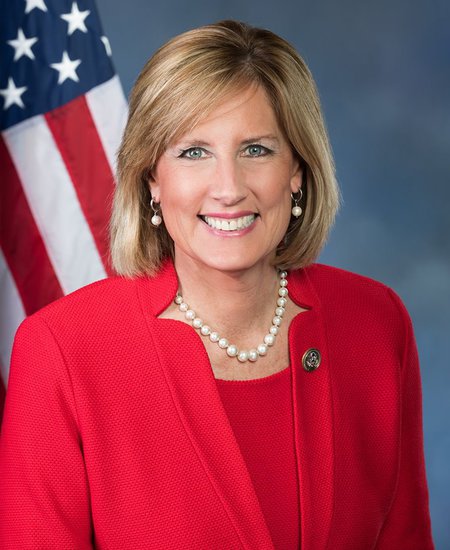
Rep. Claudia Tenney
Sponsored bills
Maddy summaryHR 6297, the PEACE Act, requires the U.S. State Department to assess antisemitism and terrorism threats in Europe and provide regular briefings to Congress on this issue. Specifically, the Assistant Secretary for European and Eurasian Affairs must deliver an initial briefing to the House Foreign Affairs and Senate Foreign Relations Committees within 180 days of the bill's enactment, followed by annual briefings for two years. This procedural bill focuses on establishing a reporting mechanism for congressional oversight, without creating new funding or direct policy changes for affected groups.
Maddy summaryThis bill requires the Commerce and State Departments to develop strategies preventing U.S. and allied technology exports to Iran for drone production. It specifically targets microchips, GPS modules, and other critical components (like microcontrollers and voltage regulators) used in Iranian drones that have been linked to attacks in Ukraine and against Israel via groups like Hamas. The strategy must identify U.S. and foreign manufacturers, track third-party distributors circumventing controls, and coordinate with allies to block these exports. It directly affects U.S. technology companies, global distributors, and foreign partners whose exports could enable Iran's drone program. The bill aims to disrupt technology flows supporting Iranian drones used in conflicts without making speculative claims about outcomes.
Maddy summaryThe Abraham Accords Expansion Act of 2026 updates the legal framework for the Special Envoy to include Central Asia and the Caucasus in normalization efforts alongside existing regions. This change formally recognizes Kazakhstan as the first Central Asian nation to join the Abraham Accords and defines specific countries within the Caucasus and Central Asia regions. The bill requires the Special Envoy to coordinate with other federal agencies like Defense and Commerce while implementing these goals using existing authorities without requesting new funding. Additionally, the act allows the Special Envoy to appoint a Deputy Special Envoy with relevant regional expertise to assist in these expanded diplomatic activities.
Maddy summaryThis bill aims to improve the integrity of the Temporary Assistance for Needy Families (TANF) program by tightening rules on how federal funds are used and reported. It requires states to apply existing federal payment integrity standards to their programs and mandates a report outlining a plan to reduce improper payments within a decade. Additionally, the legislation restricts grants to families with income below twice the poverty line and sets strict deadlines for states to spend their allocated funds, allowing only a limited reserve for future use. The bill also prohibits states from using federal money to replace their own spending and requires official certification that funds will supplement, not supplant, existing state resources. These changes are scheduled to take effect on October 1, 2027.
Maddy summaryThis bill creates new grounds for deporting non-citizens who are members of or associated with criminal gangs. It defines a "criminal gang" as a group of five or more people whose primary purpose is committing serious crimes like drug offenses, violence, trafficking, or weapons violations. The Secretary of Homeland Security can designate groups as criminal gangs after consultation with the Attorney General, and these designations make gang members ineligible for asylum, temporary protected status, parole, and other immigration benefits. The bill also establishes procedures for reviewing and revoking these designations, with limited judicial review options.
Maddy summaryHR 1041, the Veterans 2nd Amendment Protection Act, prevents the Department of Veterans Affairs (VA) from automatically sending veterans' personal information to the national background check system (NICS) solely because a court has appointed a fiduciary (like a guardian) to manage their benefits. This directly affects veterans who have a fiduciary appointed due to mental health or cognitive challenges but are not deemed a danger to themselves or others. The bill requires a court order finding the veteran poses a danger before any such information can be shared with the NICS. It changes VA procedures to block unnecessary barriers to firearm ownership for veterans who qualify for fiduciary support without a judicial determination of danger.
Maddy summaryHRES 1314, the America 250 Commemorative Flag Act, designates a special flag featuring the number 250 within the circle of stars as an official United States flag for the 250th anniversary of the Declaration of Independence. This resolution authorizes the America 250 flag to be flown alongside the national flag and POW/MIA flags at all government buildings, embassies, and official U.S. locations worldwide during the commemoration year. The bill serves as a ceremonial measure to honor the nation's history and the sacrifices made by patriots, without altering any existing laws or policies.
Maddy summaryThis resolution expresses support for the Trump administration's efforts to combat fraud, waste, and abuse in Medicare, Medicaid, and other federal health care programs. It highlights specific actions taken, such as using advanced technology to detect fraud, suspending billions of dollars in suspected fraudulent payments, and coordinating with law enforcement to prosecute offenders. The document also acknowledges the creation of a new task force designed to lead a governmentwide strategy against fraud in federal benefit programs. Ultimately, the bill serves as a formal recognition of these initiatives rather than introducing new laws or policy changes.
Maddy summaryThe Rental Housing Investment Act provides tax incentives to encourage the development of new long-term residential rental properties in the United States. It allows developers to take an accelerated depreciation deduction of up to $150,000 per unit for buildings containing at least two dwelling units, with an increased limit of $250,000 per unit for projects designated as affordable housing. To ensure these properties remain available for rent, the bill includes rules that require the buildings to be used for rental purposes for at least 10 years, or 15 years for affordable housing, before the tax benefits are recaptured. These changes apply to properties placed in service after a 12-month delay following the law's enactment.