

Maddy summaryHR 1326, the DOE and USDA Interagency Research Act, requires the Energy and Agriculture Secretaries to jointly conduct collaborative research focused on shared priorities like sustainable energy, agriculture, and climate resilience. It mandates a competitive grant process for federal agencies, universities, and nonprofits to fund projects in areas such as AI for farming/energy systems, biofuels, grid security, and rural technology development. The bill also requires a report to Congress within two years detailing research coordination, achievements, and future collaboration opportunities. This legislation directly affects federal agencies, research institutions, and agricultural/energy sectors through new funding mechanisms and joint projects, without altering existing regulations or creating new mandates for the public.
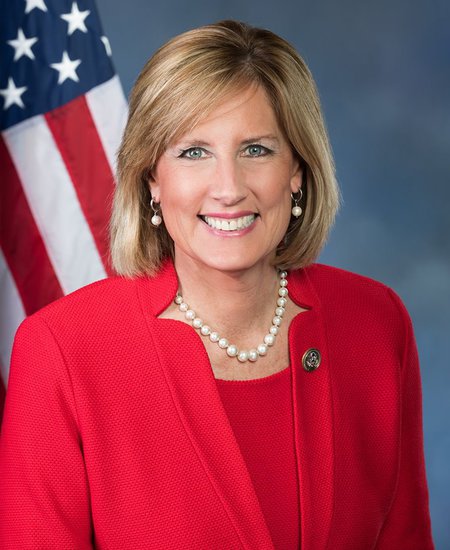
Rep. Claudia Tenney
Sponsored bills
Maddy summaryHR 2286, the American Genetic Privacy Act of 2025, prohibits commercial DNA testing services (like ancestry companies) from selling or disclosing genetic data collected from users to the People’s Republic of China or any entity controlled by China. It directly affects individuals who use these services, as their genetic information - defined as data obtained through such testing - cannot be shared with Chinese entities. The bill empowers the Federal Trade Commission (FTC) to enforce these restrictions as violations of unfair or deceptive trade practices under existing law. This creates a clear legal barrier to prevent U.S. genetic data from being accessed by Chinese entities through commercial DNA testing platforms.
Maddy summaryThis bill reauthorizes and expands U.S.-Israel energy cooperation programs through 2031. It increases annual funding for the BIRD Energy Foundation from $2 million to $5 million and for the U.S.-Israel Energy Center from $4 million to $7 million, extending support through fiscal years 2026-2031. The bill adds new focus areas like hydrogen energy, fusion, industrial decarbonization, carbon management, agrivoltaics, grid modernization, and energy infrastructure cybersecurity to existing collaboration efforts. These changes directly affect U.S. and Israeli energy companies, researchers, and institutions working on commercializing clean energy technologies.
Maddy summaryThis bill prohibits doctors from performing abortions based solely on a Down syndrome diagnosis. It requires providers to ask patients about such diagnoses before an abortion and inform them of the ban. Violations could result in criminal penalties (up to 5 years in prison) or civil lawsuits seeking damages for the patient or family. The law applies to all abortions performed in the U.S. or transported across state lines for this specific purpose. It does not restrict other abortion procedures or create a new right to abortion.
Maddy summaryHR 2279, the "No Tax on LOSAP Act," increases the tax exclusion for length-of-service awards from $50 to $1,000 per year for employees receiving these awards from their employers. It clarifies that payments under length-of-service award programs (LOSAPs) are explicitly included in the tax exclusion definition, removing ambiguity. The bill applies to awards given after its enactment date. This change directly affects employees who receive recognition awards for tenure, making the first $1,000 of such awards tax-free annually.
Maddy summaryHRES 230 is a non-binding resolution expressing Congress's sense that the U.S. Congress and administration must urgently collaborate on food and agricultural trade policies. It directly affects U.S. farmers, ranchers, and the $9.6 trillion agricultural sector, which supports millions of jobs and generates significant exports. The resolution calls for concrete actions including securing new market access, enforcing trade agreements, eliminating unjustified trade barriers (like tariffs and nontariff restrictions), and using science-based approaches to strengthen global trade. It emphasizes addressing a 9% decline in 2023 agricultural exports and a projected $37 billion trade deficit, contrasting with historical trade surpluses.
Maddy summaryHRES 227 is a non-binding resolution expressing the House of Representatives' support for designating March 18, 2025, as "National Agriculture Day" to honor agriculture's role as a vital U.S. industry. It does not create new laws, allocate funds, or impose requirements on any group. The resolution serves as a symbolic gesture to highlight agriculture's economic impact and contributions to the nation. As a procedural resolution, it has no direct policy effect beyond raising awareness.
Maddy summaryThe Innovative FEED Act of 2025 establishes a new regulatory category for "zootechnical animal food substances" - additives in animal feed that affect digestive byproducts, reduce foodborne pathogens, or alter an animal's gut microbiome without providing nutrition. These substances would be regulated as food additives (not drugs) under the Federal Food, Drug, and Cosmetic Act, requiring manufacturers to submit specific safety and efficacy data for approval. The bill mandates labeling stating "Not for use in the diagnosis, cure, mitigation, treatment, or prevention of disease in animals" and allows optional claims about intended effects on animal body function. It explicitly excludes existing drugs, hormones, ionophores, and other substances from this category, ensuring no mandatory use of these additives.
Maddy summaryThis bill (HR 2199) prevents private health insurance plans from discriminating against patients with end-stage kidney disease (ESRD) who require dialysis. It amends the Social Security Act to prohibit plans from treating dialysis coverage differently than other medical services or applying network restrictions that disproportionately harm ESRD patients. The law clarifies that plans cannot deny or limit benefits for dialysis based on a patient’s diagnosis, while preserving a plan’s right to choose which dialysis providers are in their network. It directly affects ESRD patients and their private health insurance coverage, ensuring dialysis is treated equally with other covered medical services. The bill does not require plans to include specific dialysis providers but stops them from unfairly restricting access to necessary care.
Maddy summaryThis bill delays two Medicare billing deadlines for ground ambulance services from 2025 to 2028. It amends the Social Security Act to extend the timeline for implementing specific billing rules under Section 1834(l). The change directly affects Medicare ambulance providers by postponing compliance deadlines for billing requirements. No new services or funding are created - only a technical extension of existing timelines.