

Maddy summaryHR 3208, the "No Official Palestine Entry Act of 2025," prevents U.S. funding for United Nations agencies that grant Palestine any status, rights, or privileges beyond its current observer status. The bill amends two existing laws to replace the phrase "full membership" with "any status, rights, or privileges beyond observer status" in funding restrictions. This directly affects U.S. government decisions on contributing to UN agencies if Palestine's standing is upgraded. The policy change specifically targets funding eligibility, not direct impacts on Palestinian citizens or officials. The bill explicitly excludes Taiwan from its provisions.
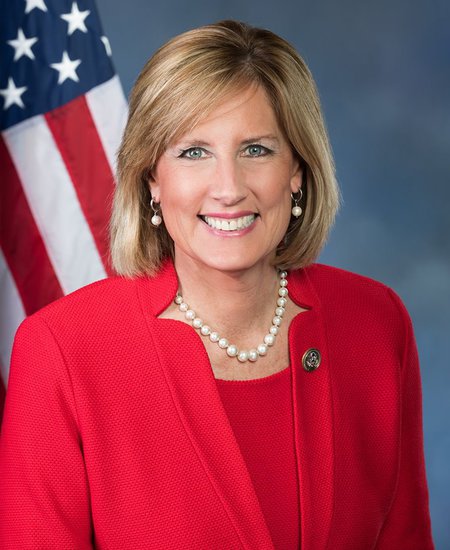
Rep. Claudia Tenney
Sponsored bills
Maddy summaryThis bill clarifies liability for payroll tax errors when third-party payroll services (like professional employer organizations) rely on employer certifications. It allows these services to depend on employer-provided information unless they knew or should have known of an error. If an error is discovered, the employer bears full liability unless the third party had "constructive knowledge" of the error, in which case liability is shared based on the portion of the error the third party knew about. The bill also prevents the IRS from delaying payroll tax credits or auditing employers solely because a third party relied on an erroneous certification from that employer. It directly affects third-party payroll services and the businesses that use their services for tax filings.
Maddy summaryHR 976, the "1071 Repeal to Protect Small Business Lending Act," would repeal data collection and reporting requirements for small business loans under Section 704B of the Equal Credit Opportunity Act. This specifically removes the mandate for financial institutions - especially community banks and credit unions - to track and submit loan data by business characteristics like race or gender. The bill aims to reduce compliance costs for lenders, which its findings argue limit small business access to credit. The repeal would eliminate these reporting obligations and remove references to the requirement from related federal laws.
Maddy summaryThis bill would deny federal tax deductions for gender transition procedures and prohibit Medicaid, Medicare, and Children's Health Insurance Program (CHIP) funding for such procedures. It defines gender transition procedures broadly to include hormonal treatments, surgeries, and cosmetic procedures intended to align physical appearance with gender identity, with limited exceptions for medically necessary treatments related to disorders of sex development or life-threatening conditions. The legislation would also require health insurance plans to exclude gender transition procedures from essential health benefits under the Affordable Care Act. This would directly affect individuals seeking gender transition care who rely on federal health programs or tax deductions for medical expenses.
Maddy summaryHR 3204, the BASIC ACT, increases tax incentives for semiconductor manufacturing. It raises the advanced manufacturing investment credit from 25% to 35% for qualifying semiconductor production facilities and extends the deadline for claiming the credit from 2026 to 2030. The bill directly affects companies building or expanding semiconductor manufacturing plants in the U.S. The changes apply to property placed in service after the bill's enactment date. This provides longer-term financial support for domestic semiconductor investment.
Maddy summaryHR 3178, the Save Healthcare Workers Act, creates a new federal crime for assaulting hospital staff while they are performing their duties, with penalties including fines and up to 10 years in prison (up to 20 years for aggravated cases involving weapons or injuries). The bill directly affects hospital employees - including nurses, doctors, and support staff - across all covered facilities (such as emergency rooms, long-term care centers, and children’s hospitals) by criminalizing violence that disrupts patient care. It also establishes a $25 million annual grant program (2025-2034) to help hospitals implement safety measures like staff de-escalation training, security technology, and coordination with local law enforcement. These provisions aim to address workplace violence in healthcare settings, which the bill cites as a growing problem affecting service delivery and staff retention.
Maddy summaryHRES 373 is a symbolic resolution expressing support for designating May as "Fallen Heroes Memorial Month" to honor U.S. military service members who died in service. It urges the President to issue an annual proclamation designating May as this commemorative month, recognizing over 1.3 million fallen service members and calling on Americans to reflect on their sacrifice. The resolution does not create new laws or requirements but formally requests a presidential proclamation to honor these veterans and their families. It directly affects the President (who would issue the proclamation) and the public (who are encouraged to participate in remembrance). This is a non-binding ceremonial gesture, consistent with existing Memorial Day observances.
Maddy summaryHR 3134, the Emergency Care Improvement Act, allows Medicare and Medicaid to reimburse freestanding emergency centers (FECs) for specific emergency services. The bill defines FECs as 24/7 facilities meeting state emergency care standards, with physician staffing, hospital referral agreements, and quality programs - currently operating in over 118 locations, primarily in Texas. It amends coverage rules to include FECs under Medicare Part B and Medicaid for "specified emergency services" (excluding certain evaluation codes), sets payment rates based on outpatient department standards, and extends EMTALA emergency care laws to cover these centers. This policy change directly affects FECs and Medicare/Medicaid beneficiaries by enabling reimbursement for emergency care previously excluded from coverage.
Maddy summaryHR 3155, the Child Care for American Families Act, increases tax credits for employers providing child care by raising the credit percentage from 25% to 40% (50% for small businesses with ≤500 employees, 60% for facilities in rural areas or specific census tracts), with annual limits of $1.2 million in credits and $2 million in qualifying costs. It requires the Treasury to create a public awareness program within one year to inform eligible employers about the credit and filing procedures. The bill also mandates a GAO study on state/local licensing requirements and regulatory barriers affecting child care facilities, including recommendations to reduce multi-state compliance costs. This legislation directly impacts employers, particularly small businesses and rural providers, by making employer-sponsored child care more financially accessible.
Maddy summaryHR 3137 extends federal tax credits for biodiesel production and use through 2026, directly affecting biodiesel producers, refiners, and businesses that purchase or use biodiesel. The bill updates tax code provisions to keep the biodiesel credit active until 2026 (instead of expiring in 2024) and prevents double benefits by disallowing credits for fuel already covered under a separate clean fuel production credit. It also extends related credits for second-generation biofuels until 2027 and applies to fuels sold or used after December 31, 2024. The changes maintain existing tax incentives without altering eligibility or creating new requirements.