

Maddy summaryHRES 481 is a symbolic resolution condemning recent antisemitic attacks in the U.S., specifically referencing the June 1, 2025, Boulder, Colorado, assault on a Jewish community gathering and other incidents like the May 2025 Washington, D.C., embassy shooting. It formally recognizes a pattern of violence targeting Jewish individuals and institutions, including attacks during religious events. The resolution calls on law enforcement to thoroughly investigate and prosecute such incidents and urges elected officials to publicly oppose antisemitism and politically motivated violence. As a non-binding resolution, it does not create new laws or allocate funding but serves to affirm congressional stance against antisemitism.
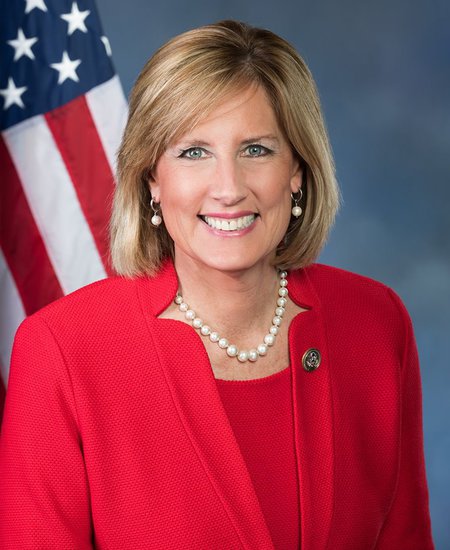
Rep. Claudia Tenney
Sponsored bills
Maddy summaryHRES 483 is a House resolution recognizing the 250th anniversary of the U.S. Army's founding on June 14, 1775. It expresses appreciation for the Army's service over 250 years, honors soldiers' valor and core values, and calls for public observance through ceremonies and activities. The resolution has no policy impact or funding provisions - it is purely commemorative. It was introduced by 30 bipartisan House members and referred to the Armed Services Committee.
Maddy summary# Summary of the Proposed Legislative Document This document outlines a comprehensive legislative proposal that amends and reauthorizes various environmental, weather, climate, and health-related programs. Key elements include: 1. **National Integrated Heat Health Information System (NIHHIS)**: Establishes a new system within NOAA to reduce heat-related health risks, with a 5-year strategic plan and $5 million annual funding (2026-2030) for implementation. 2. **National Landslide Preparedness Act Reauthorization**: - Updates definitions to include "atmospheric river" and "extreme precipitation event" - Increases funding from $25 million to $35 million annually (with at least $10 million for landslide early warning systems) - Establishes regional partnerships with eligible organizations and institutions of higher education - Requires assessment of risks from atmospheric river flooding and extreme precipitation events 3. **Harmful Algal Bloom and Hypoxia Program**: - Creates a National-Level Incubator Program to develop new strategies for preventing, mitigating, and controlling harmful algal blooms - Increases funding for NOAA ($19.5 million annually) and EPA ($8 million annually) - Establishes an Action Strategy for harmful algal blooms to be updated every five years 4. **Other Key Provisions**: - Amends the Flood Level Observation, Operations, and Decision Support Act - Establishes an interagency committee to coordinate heat health activities across multiple federal departments - Creates an "unfunded priorities list" for Congress to identify critical needs not included in the budget - Includes provisions for meteorological observations in the Arctic region - Authorizes technical assistance for Pacific Island nations The legislation represents a significant expansion of NOAA's role in climate and weather-related research, public health protection, and disaster preparedness, with emphasis on cross-agency coordination, updated terminology reflecting current scientific understanding, and increased funding for critical programs.
Maddy summaryThe Freedom to Frack Act would amend the Energy Independence and Security Act of 2007 to make states banning hydraulic fracturing (fracking) ineligible for certain federal energy grants. Specifically, states that establish or maintain a fracking prohibition would lose eligibility for grants under Section 545(c) of that law. This directly affects states with existing fracking bans, potentially reducing their access to federal funding for energy programs. The key mechanism ties grant eligibility to the absence of state-level fracking restrictions, without directly altering state laws.
Maddy summaryHR 649, the Whole Milk for Healthy Kids Act of 2025, amends the National School Lunch Act to allow schools participating in the program to offer students both organic and non-organic whole milk, in addition to reduced-fat, low-fat, and fat-free options. Key provisions include clarifying that milk fat in whole milk should not count toward saturated fat limits for meal compliance, prohibiting schools from purchasing milk from Chinese state-owned enterprises, and ensuring schools cannot be barred from offering the full range of milk types listed. The bill directly affects public and private schools serving the National School Lunch Program by expanding their milk options for students. It focuses on concrete policy changes to dietary offerings and sourcing restrictions within the school nutrition program.
Maddy summaryHRES 472 is a symbolic House resolution condemning an antisemitic terrorist attack in Boulder, Colorado, on June 1, 2025, which targeted Jewish individuals. The resolution explicitly condemns the attack - where the perpetrator used Molotov cocktails against victims aged 52-88, including a Holocaust survivor - and calls for prosecuting the perpetrator. It also expresses concern about rising antisemitism on campuses and online, while urging Congress to secure borders and deport visa overstayers (though this is a symbolic call, not a new law). The resolution directly affects the Boulder Jewish community and victims of the attack, with no new policy changes enacted.
Maddy summaryHRES 475 (June 4, 2025) is a non-binding resolution that formally recognizes "Family Month" and ends the House of Representatives' recognition of Pride Month. It directs the House to "recognize the benefit of marriage and family" while stating it "no longer recognizes Pride Month," citing the resolution's view that traditional nuclear families are essential to society. The resolution does not create new laws or policies but changes the House's official acknowledgment of months. It specifically targets the House's ceremonial recognition, not federal law or programs affecting citizens. This is a symbolic procedural action with no direct impact on legislation or constituents.
Maddy summaryThis bill creates an exception for certain small biotech companies from Medicare's drug price negotiation program starting in 2029. It applies to "research and development-intensive small biotech manufacturers" that invest a specific percentage (30%-70%) of their net revenue in R&D over the prior three years and have 5 or fewer qualifying single-source drugs. To qualify, companies must annually submit financial data to Medicare proving their R&D spending meets the threshold. This directly affects small U.S.-based biotech firms developing innovative drugs, allowing them to avoid price negotiations under Medicare for qualifying products.
Maddy summaryThe BARK Act of 2025 protects donors, nonprofits, and local/government entities from liability when donating "apparently fit" pet food or supplies in good faith to help animals. It shields them from lawsuits related to minor issues like appearance, age, or packaging, as long as the items meet basic safety standards and aren’t defective. Donors must inform recipients about any flaws, and recipients must agree to recondition items to meet standards before distribution. This law does not cover cases of gross negligence or intentional harm, and it doesn’t override existing health regulations. The bill directly affects pet food donors, shelters, and animal welfare programs by reducing legal barriers to sharing surplus supplies.
Maddy summaryThis resolution (HRES 459) is a symbolic gesture recognizing National Poppy Day, observed the Friday before Memorial Day. It supports the tradition of wearing red poppies as a symbol honoring U.S. military veterans who died in service, referencing the historical connection to World War I poetry and veterans' organizations. The resolution encourages all U.S. citizens, residents, and visitors to wear poppies on this designated day to express appreciation for those who died preserving freedom. It does not create new laws, funding, or obligations, but formally acknowledges the poppy's role in commemorating military sacrifice.