

Maddy summaryThe Title IX Clarification Act of 2026 amends federal education law to explicitly define the terms "sex," "female," and "male" based on biological characteristics. Specifically, it states that "sex" refers to an individual's biologically determined status as male or female, while "female" and "male" are defined by the presence of specific reproductive systems capable of producing ova or sperm, respectively. These definitions apply to all education programs and activities that receive federal financial assistance starting on the date the bill becomes law. The legislation aims to clarify existing statutes by removing ambiguity around biological sex definitions in the context of Title IX protections.
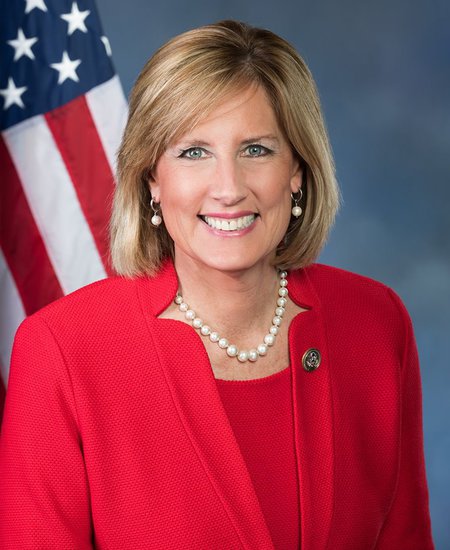
Rep. Claudia Tenney
Sponsored bills
Maddy summaryHR 5267, the American Franchise Act, clarifies when franchisors can be considered joint employers of franchisee employees under federal labor laws. It defines "substantial direct and immediate control" over essential employment terms like wages, benefits, hours, hiring, and discipline - requiring franchisors to actively set these terms to be deemed joint employers. The bill explicitly excludes routine brand standards, training, or minimal safety requirements from constituting such control. This directly affects franchisors and franchisees by limiting joint employer liability to cases where franchisors exert significant, ongoing influence over core employment decisions. The law applies prospectively to new cases after enactment, not past disputes.
Maddy summaryThis House resolution marks the 25th anniversary of the September 11, 2001 terrorist attacks by formally honoring the memory of the nearly 3,000 victims and recognizing the sacrifices made by first responders, military personnel, and the passengers of United Airlines Flight 93. The bill acknowledges the ongoing health challenges faced by survivors and responders, highlighting the role of the World Trade Center Health Program in providing long-term medical support. It also credits charitable organizations and community groups that have continued to assist victims' families and veterans over the past two decades. Finally, the resolution urges the American public to observe the anniversary with ceremonies and reaffirms Congress's commitment to remembering the events and lessons of that day.
Maddy summaryH.Res. 1497 is a House resolution that commemorates the fifth anniversary of the Abbey Gate bombing, in which 13 U.S. servicemembers were killed during the withdrawal from Afghanistan. The bill lists the names of the fallen soldiers and formally condemns the Biden-Harris administration for what it describes as dereliction of duty and the forfeiture of military property to the Taliban. It asserts that the withdrawal was a disastrous failure that ignored security warnings and left Americans at risk, while also criticizing the lack of accountability from officials involved in the decision-making process.
Maddy summaryThe American Mariner Tax Fairness Act amends the Internal Revenue Code to allow U.S. merchant mariners working on qualifying vessels in foreign trade to treat their earnings as foreign earned income for tax purposes. This change directly affects U.S. citizens or residents who are actively employed on large, U.S.-flagged ships of at least 6,000 deadweight tons used exclusively in international commerce. To qualify, a mariner must work at least 90 full days during any 12-consecutive-month period while the vessel is engaged in U.S. foreign trade. The bill effectively grants these workers the same tax exclusion benefits currently available to individuals working abroad, applying to taxable years beginning after the law's enactment.
Maddy summaryThe Fair Treatment of Religious Organizations Act of 2026 changes how the IRS determines if a group qualifies for tax-exempt status based on its religious beliefs. Specifically, it ensures that beliefs regarding marriage, sexuality, or gender identity are not automatically considered illegal or against public policy when evaluating a religious organization's purpose. Additionally, the bill clarifies that a belief does not need to be central to a religion to be recognized as a valid religious belief for tax purposes. These rules will apply to tax years starting after December 31, 2025, affecting how various faith-based groups are assessed under the Internal Revenue Code.
Maddy summaryHR 2555, the Freedom of Association in Higher Education Act of 2025, protects students who join or form single-sex social organizations (like fraternities or sororities) at colleges. It prohibits colleges receiving federal funds from taking negative actions against these students or organizations solely because they limit membership to one sex - such as denying housing, financial aid, leadership roles, or recognition. The bill ensures students can join such groups without coercion and stops colleges from imposing unfair recruitment rules on single-sex organizations compared to others. It does not require colleges to recognize single-sex groups, allow organizations to set their own membership rules, or override Title IX protections.
Maddy summaryThe No Antisemitism in Education Act of 2026 requires schools and universities receiving federal funds to treat antisemitism with the same seriousness as other forms of discrimination prohibited by Title VI of the Civil Rights Act. Under this law, institutions must use the official definition of antisemitism found in a prior presidential executive order to investigate complaints and enforce their own policies. The bill explicitly states that these requirements do not violate free speech rights or override existing state laws, ensuring that Jewish students and staff are protected from harassment and exclusion on campus.
Maddy summaryThe Right to Worship Act makes it unlawful for individuals to knowingly disrupt religious services or prevent people from entering houses of worship within 100 feet of an entryway during the hour before and after a scheduled service. The bill applies to conduct that meaningfully interferes with a service's normal operation or unreasonably hinders participation, while explicitly allowing free speech as long as it adheres to these specific time, place, and manner restrictions. Violators face escalating civil fines ranging from $2,500 for a first offense to $10,000 for subsequent offenses, assessed by the Attorney General. Additionally, the act permits aggrieved individuals, the U.S. Attorney General, or state attorneys general to file civil lawsuits seeking injunctive relief, compensatory damages, and attorney fees.
Maddy summaryHR 7008, the Stop Insider Trading Act, restricts Members of Congress, their spouses, and dependent children from purchasing certain investments like stocks in publicly traded companies. It requires 7-14 days' advance public notice before selling any such investment, including the sale date, description, and number of shares. Exceptions apply for work-related transactions (e.g., employer compensation) and reinvesting dividends. Violations trigger a fee of $2,000 or 10% of the investment’s value (whichever is greater), plus any net gain, paid from personal funds - not congressional allowances or campaign donations. The bill aims to prevent conflicts of interest by increasing transparency around congressional financial dealings.