

VOCA Fix to Sustain the Crime Victims Fund Act of 2021 This bill adds a new source of revenue for the Crime Victims Fund and makes changes to formula grants supported by the fund. Specifically, the bill directs revenues collected from deferred prosecution and non-prosecution agreements to be deposited into the Crime Victims Fund. Currently, such revenues are deposited into the general fund of the Treasury. Additionally, the bill increases the percentage—from 60% to 75%—of state compensation payments to crime victims in the prior fiscal year used to calculate formula grants for state victim compensation programs. Finally, the bill directs states to waive the matching requirement for recipients of state victim assistance formula grants during and for one year after a pandemic-related national emergency. It also allows states to waive the matching requirement pursuant to a policy established by the state.
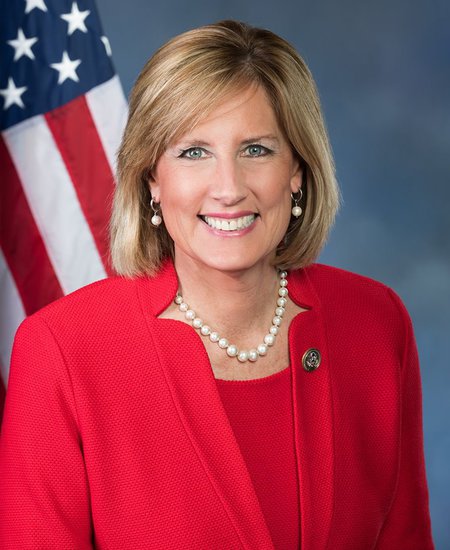
Rep. Claudia Tenney
Sponsored bills
This resolution denounces socialism and opposes the implementation of socialist policies in the United States.
Entrepreneurs Need Timely Replenishment (for) Eating Establishments Act or the ENTRÉE Act This bill provides FY2021 supplemental appropriations for the Restaurant Revitalization Fund and modifies requirements related to administration of the fund. The fund was established in response to COVID-19 to make grants to eligible food and beverage purveyors for covering specified costs such as payroll, operational expenses, and paid sick leave. The bill correspondingly rescinds unobligated amounts previously made available for the Economic Injury Disaster Loan Program and coronavirus state and local fiscal recovery funds. Further, the bill requires the Small Business Administration (SBA) to (1) review and process grant applications in the order in which they are received; (2) impose requirements on applicants that reduce waste, fraud, and abuse; and (3) submit and report monthly on an oversight and audit plan outlining the SBA's policies, procedures, and activities with respect to these grants.
Veterans Entrepreneurship Act of 2021 This bill requires the Small Business Administration to carry out a pilot program assessing the feasibility and advisability of making grants to eligible veterans to start or acquire a small business concern, a franchise business enterprise, or any other appropriate category of business enterprise. Eligible veterans are those veterans or members of the Armed Forces who (1) are currently retiring or separating from the Armed Forces or have been honorably discharged from active duty, (2) have completed a specified minimum period of active duty, and (3) are entitled to certain educational assistance programs. Grant recipients must complete an entrepreneurship readiness program and prepare a business plan, and they may use grant funds for purposes such as purchasing goods or services, funding a project that is directed toward economic development objectives, and acquiring a business enterprise.
Remembering Our Local Heroes Act This bill directs the Department of the Interior to establish a grant program to fund construction, restoration, renovation, and maintenance for memorials designed to perpetuate in a permanent manner the memory of individuals or groups, living or deceased, who are veterans of the Armed Forces who served on or after April 6, 1917; are members of the Armed Forces killed while on active duty as a result of injuries incurred in the line of duty on or after April 6, 1917; have served as law enforcement officers; or have served as firefighters. No grant awarded under the program may exceed $100,000.
Veterans Burn Pits Exposure Recognition Act of 2021 This bill requires the Department of Veterans Affairs (VA) to concede, for the purposes of health care benefits and wartime disability compensation, that a veteran was exposed to certain toxic substances, chemicals, and hazards from burn pits if such veteran served on active duty in a covered location during a specified time frame (unless there is affirmative evidence to establish that the veteran was not exposed during such service). A burn pit is an area used for burning solid waste in open air without equipment. Specifically, the bill covers the following locations and corresponding time periods: Iraq between August 2, 1990, and February 28, 1991, as well as from March 19, 2003, until burn pits are no longer used in this location; Somalia and Southwest Asia (including Kuwait, Saudi Arabia, Oman, and Qatar) from August 2, 1990, until burn pits are no longer used in these locations; and Afghanistan, Syria, Jordan, Egypt, Lebanon, Yemen, Uzbekistan, the Philippines, and Djibouti from September 11, 2001, until burn pits are no longer used in these locations. Under the bill, if an exposed veteran submits insufficient evidence to establish a service-connection for purposes of disability compensation, the VA shall provide a medical examination and request a medical opinion regarding a causal link between the disability and a toxin, chemical, or hazard.
This resolution recognizes and expresses support for the efforts of democracy and human rights activists in Cuba.
Volunteer First Responder Housing Act This bill expands eligibility to qualified volunteer first responders for assistance under (1) the Department of Agriculture Single Family Housing Guaranteed Loan Program, and (2) certain Department of Housing and Urban Development single-family property disposition programs.
American Broadband Act This bill addresses broadband and other communications services. The bill limits applicable state and local regulatory authority. Limitations include setting (and providing statutory authority for) deadlines for reviews and decisions related to personal wireless and other telecommunication service facilities, as well as cable franchises and services. Further, a state or locality may not provide broadband services in areas with more than one other commercial provider. The bill exempts certain telecommunications infrastructure projects from environmental and historic preservation reviews, including projects carried out after a declared disaster or emergency (e.g., a wildfire). The bill also establishes a rebuttable presumption that a request for a review of the effects of deploying wireless service on historically, culturally, or religiously significant tribal or Native Hawaiian land is complete if the tribe or Native Hawaiian organization receives certain forms. The bill enhances criminal penalties for willful or malicious destruction of a communication facility. Furthermore, the General Services Administration must establish a common fee schedule for deploying wireless facilities that affect federal property. Additionally, the National Telecommunications and Information Administration must award grants for expanding high-speed broadband access, facilitate through an interagency strike force timely reviews of telecommunications-related requests that affect federal property (e.g., a request for an easement or right-of-way), and report on certain requests concerning communications facilities on federal real property. The bill also requires collaboration among federal agencies that support broadband deployment.
This resolution honors the suppliers of the National Aeronautics and Space Administration (NASA) for the work they are doing on the Artemis missions.