

Make in America to Sell in America Act of 2021 This bill requires certain actions to identify critical goods and establish minimum domestic content requirements. Specifically, the bill directs the Department of Commerce to publish an annual report that identifies finished and intermediate goods that are critical for U.S. national security or the protection of the industrial base. Additionally, the bill establishes a minimum domestic content requirement for those covered goods identified in Commerce's report. A covered good may not be introduced for sale in the United States unless the domestic value content of the good is more than 50%, with limited exceptions. The President may waive this requirement under specified circumstances. Further, the bill establishes enforcement provisions, including civil penalties and investigations by the U.S. International Trade Commission.
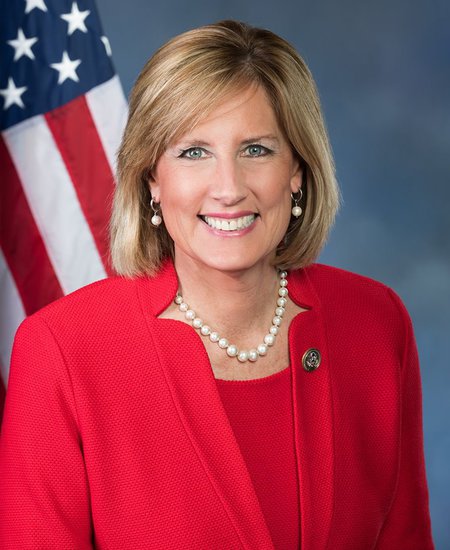
Rep. Claudia Tenney
Sponsored bills
This joint resolution nullifies a Department of Labor emergency temporary standard for preventing the transmission of COVID-19 in employment settings. Under the standard issued on November 5, 2021, employers with 100 or more employees must require their onsite employees to either be fully vaccinated against COVID-19 or undergo weekly COVID-19 testing.
Maddy summaryThis bill removes a temporary expiration date for telehealth coverage in health insurance plans. It amends two sections of the Internal Revenue Code to permanently allow health plans to cover telehealth services without the prior deadline of December 31, 2021. The key change makes existing telehealth coverage rules permanent for health insurance plans under federal tax law. This directly affects health insurance plans that provide telehealth benefits, ensuring they can continue covering these services without needing to renew temporary provisions. The bill does not change what telehealth services are covered, only makes the coverage rules permanent.
Secure Equipment Act of 2021 This bill requires the Federal Communications Commission (FCC) to establish rules stating that it will no longer review or approve any authorization application for equipment that is on the list of covered communications equipment or services. (Listed communications equipment or services are those that the FCC determines pose an unacceptable risk to national security or the security and safety of U.S. persons.)
This concurrent resolution declares that Congress should not impose any new performance fee, tax, royalty, or other charge relating to the public performance of sound recordings on a local radio station for broadcasting sound recordings over the air, or on any business for such public performance of sound recordings.
Honoring Our Promises through Expedition for Afghan SIVs Act of 2021 or the HOPE for Afghan SIVs Act of 2021 This bill authorizes the Department of State and the Department of Homeland Security (DHS) to postpone the medical exam requirement for qualifying citizens or nationals of Afghanistan seeking entry into the United States as special immigrants. Specifically, this bill applies to an existing program that provides special immigrant status to an individual (or the spouse or child of such an individual) who (1) faithfully performed sensitive and trusted duties for the U.S. government or the International Security Assistance Force in Afghanistan on or after October 7, 2001, and (2) has experienced or is experiencing an ongoing serious threat due to the performance of those duties. Under this bill, the State Department and DHS may jointly issue a blanket waiver of any requirement for such individuals to undergo a medical exam before admission into the United States. DHS shall ensure, to the greatest extent practicable, that individuals admitted under such a waiver undergo medical exams no later than 30 days after admission into the United States. Such an individual shall be admitted as a conditional permanent resident. DHS shall remove the conditions once the individual receives and passes a medical examination.
Chinese Communist Party (CCP) Politburo Accountability Act This bill authorizes the President to impose visa- and property-blocking sanctions on certain senior officials of the Chinese Communist Party (CCP) and addresses related issues. The President may impose sanctions on senior CCP officials who have engaged in or provided support for (1) any malign disinformation campaign or political warfare operation against the United States; (2) the theft of intellectual property belonging to a U.S. individual or entity; (3) actions undermining Taiwan's sovereignty; or (4) restrictions against the practice of religion in China, including the forced closure of any place of worship. The President must impose sanctions on four named senior CCP officials. The Department of State must report to Congress on whether any CCP Politburo members meet the criteria for sanctions under various authorities. (The Politburo and the Politburo Standing Committee are China's highest decision-making bodies.)
Our Veterans Earned It Act This bill prohibits members of the Armed Forces who refuse to receive a COVID-19 vaccination from being denied a federal benefit they are entitled to by reason of their service in the Armed Forces.
Fiscal State of the Nation Resolution This concurrent resolution requires the congressional budget committees to conduct an annual joint hearing to receive a presentation from the Comptroller General regarding (1) the Government Accountability Office's audit of the financial statement of the executive branch, and (2) the financial position and condition of the federal government.
Employment Freedom for All Act This bill prohibits an employer from enforcing a noncompete agreement with an employee, or former employee, who has been fired for not receiving a COVID-19 vaccine. The Federal Trade Commission and state attorneys general are authorized to enforce this bill.