

Removing Waste and Protecting Medicare Act This bill makes several budgetary changes, including (1) prohibiting sequestration orders in 2022, (2) rescinding certain COVID-19 state and local relief funds, and (3) extending certain adjustments under Medicare with respect to sequestration and payments under the physician fee schedule. It also modifies requirements relating to federal programs and benefits, such as permanently requiring taxpayers to include Social Security numbers on their tax returns in order to qualify for the child tax credit.
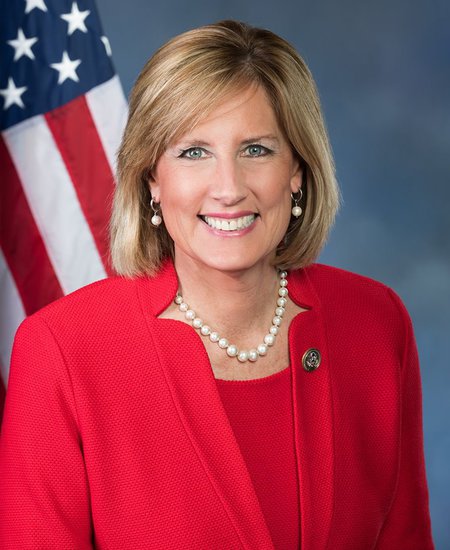
Rep. Claudia Tenney
Sponsored bills
Illegal Immigrant Payoff Prohibition Act This bill prohibits the payment of a settlement to an alien for a civil action brought against the United States in connection with the alien's inadmissibility to, or unlawful presence in, the United States.
Stop Enabling Repeat Violence and Endangering Our Communities Act or the SERVE Our Communities Act This bill authorizes the Bureau of Justice Assistance to make grants to states and local governments for mentoring, transitional services, and training to help offenders successfully reintegrate back into the community after incarceration. To be eligible for a grant, a state or local government must take steps to prevent repeat offenses by violent offenders and allow a state court or magistrate to consider the danger an individual poses to the community when determining bail or pretrial release conditions.
Supporting Every at-Risk Veteran In Critical Emergencies Act of 2021 or the SERVICE Act of 2021 This bill authorizes the Office of Community Oriented Policing Services within the Department of Justice to make grants to support the creation and operation of veterans' response teams in state, local, and tribal law enforcement agencies.
Better Enforcement of Grievous Offenses by unNaturalized Emigrants Act or the BE GONE Act This bill expands, for immigration purposes, the definition of aggravated felony to include sexual abuse, sexual assault, and aggravated sexual violence. (Under current law, a conviction for an aggravated felony is grounds for deportation and may bar an individual from other immigration-related benefits.)
Fentanyl Penalties Parity Act This bill modifies the drug quantity thresholds that trigger a mandatory minimum prison term for a defendant who manufactures, distributes, imports, exports, or possesses with intent to distribute fentanyl. Specifically, the bill reduces from 400 to 20 grams the fentanyl quantity and from 100 to 5 grams the fentanyl analogue quantity that trigger a mandatory minimum prison term for high-level first-time or repeat offenders. It also reduces from 40 to 2 grams the fentanyl quantity and from 10 to 0.5 grams the fentanyl analogue quantity that trigger a mandatory minimum prison term for low-level first-time or repeat offenders.
Care for Her Act This bill allows an eligible taxpayer to claim the Child Tax Credit for the tax year preceding the year the child is born. It also sets out other activities to support parents and pregnant women. Specifically, the bill establishes the Pregnancy Support Collaborative, which consists of representatives from the Department of Health and Human Services (HHS) and states that elect to participate. The collaborative must maintain a clearinghouse of information on providers of pregnancy and parenting supports and services. States must identify providers in their jurisdictions who meet applicable criteria for inclusion. In addition, the collaborative must share information about education and training opportunities for parents and pregnant women and identify successful programs (including workplace policies) to support them. Furthermore, the collaborative must award grants to states for local programs to improve maternal and infant health outcomes. If a community demonstrates that its program reduces Medicaid costs, it retains a portion of those savings. If approved by the collaborative, HHS must award grants to providers in the clearinghouse for mentoring and training pregnant women and new mothers and addressing gaps in the availability of maternity housing. Additionally, HHS may award grants for pregnancy and parenting supports and services. The Centers for Disease Control and Prevention and the Centers for Medicare & Medicaid Services must jointly maintain a database of de-identified epidemiological and Medicaid claims data to evaluate the effect of maternity homes on maternal and infant health outcomes.
Havana Syndrome Attacks Response Act This bill requires the President to sanction foreign persons and governments for carrying out clandestine attacks on U.S. personnel that have caused brain injury. Specifically, the President must impose visa- and asset-blocking sanctions on any foreign person that has directed or carried out such an attack. If the President determines a foreign government carried out such an attack, the President must notify Congress and sanction that country by terminating any foreign assistance (except for humanitarian aid or food or agricultural commodities or products) and arms transactions, restricting commercial exports, and denying access to U.S. credit or other financial assistance. The President must remove these sanctions after 12 months, provided that (1) the country's government gives reliable assurances that it will not conduct future attacks, and (2) the executive branch does not have persuasive information indicating an attack occurred in the preceding six months. The bill also requires a congressional briefing and report about suspected clandestine attacks on U.S. personnel that have caused brain injury, including hypotheses concerning the identity of the perpetrators and the technical methods used to carry out the attacks.
Responsibility for Unaccompanied Minors Act This bill amends provisions relating to responsibilities of the Department of Health and Human Services (HHS) for the care of unaccompanied alien children. The Office of Refugee Resettlement of HHS may provide care for an unaccompanied alien child until the conclusion of the child's immigration proceedings or the child reaching 18 years of age, whichever occurs first. Before placing an unaccompanied alien child with a sponsor, the office shall evaluate the child's future need for follow-up services. Before placing an accompanied alien child, HHS shall (1) require the proposed sponsor to execute a sponsor care agreement, (2) notify the welfare agency of the state where the child will be placed, and (3) conduct a background check of the sponsor and all adults living in the household in which the child will reside. Under the care agreement, each sponsor shall agree to (1) provide for the child's physical and mental well-being, and (2) ensure the child's presence at immigration proceedings and compliance with all court and agency orders. HHS shall assume physical custody of a child if the non-parent or legal guardian sponsor fails to comply with the care agreement. HHS shall periodically report to Congress on instances where a sponsor failed to comply with a care agreement. The Department of Justice shall increase the number of immigration judge teams by at least 225.
Hong Kong People's Freedom and Choice Act of 2021 This bill provides for temporary protected status (TPS) for qualifying Hong Kong residents and contains other immigration-related provisions. Hong Kong shall be treated as a TPS-designated territory for 18 months starting from this bill's enactment. (Qualifying nationals of a TPS-designated territory or country may not be removed from the United States and shall have employment authorization while the designation is in effect.) Furthermore, Hong Kong shall be treated as separate from China for the purposes of various numerical limitations on immigrant visas. (In the treaty that transferred sovereignty of Hong Kong to China, China pledged that Hong Kong "will enjoy a high degree of autonomy.") The bill also establishes Priority Hong Kong Resident status for qualified individuals. To obtain such status, an individual must meet certain requirements, such as having resided in Hong Kong for at least ten years as of the day of this bill's enactment and not having citizenship in any jurisdiction other than China, Hong Kong, or Macau. For seeking refugee status or asylum, a Priority Hong Kong Resident may establish a well-founded fear of persecution based on various factors, such as fear based on the individual's significant role in certain protests against China's encroachment into Hong Kong's autonomy. The Department of Homeland Security (DHS) or the Department of State may provide special immigrant status to an eligible Priority Hong Kong Resident with a bachelor's or graduate degree if DHS determines that doing so would provide a significant benefit to the United States.