

Maddy summaryThe "Accountable Produce is Medicine Act of 2026" mandates the creation of a new pilot program within the Center for Medicare and Medicaid Innovation. This program requires selected healthcare providers to offer a comprehensive set of "Accountable Produce is Medicine services" to eligible Medicare, Medicaid, and CHIP beneficiaries. These services, provided without patient cost-sharing, include healthy foods (like fruits and vegetables), nutrition counseling, care coordination, and remote monitoring for individuals with specific chronic diseases in underserved areas. Participating programs will screen patients, deliver these services for a year, and track health data to evaluate outcomes and cost savings over a period of at least five years.
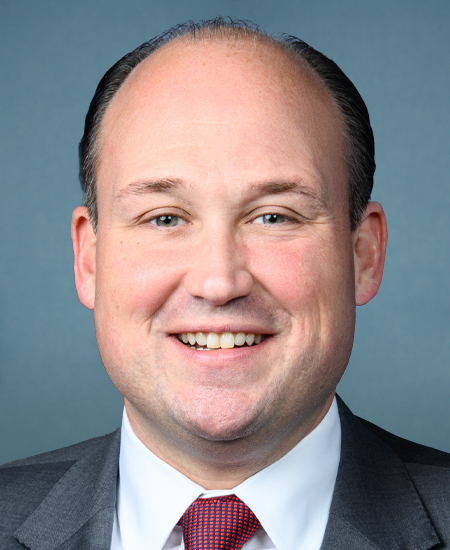
Rep. Nicholas A. Langworthy
Sponsored bills
Maddy summaryThe Stop Climate Shakedowns Act of 2026 prohibits state and local governments from suing energy companies for damages related to climate change or greenhouse gas emissions. This bill declares that regulating emissions is exclusively a federal responsibility and voids any state laws that hold energy businesses liable for alleged climate harms. Consequently, all pending lawsuits of this nature against energy producers must be dismissed immediately, preventing states from imposing retroactive penalties for past lawful operations. The legislation directly affects companies involved in the production, refinement, and sale of oil, gas, and coal by shielding them from civil liability in both state and federal courts.
Maddy summaryThe KIDNEY Remote Monitoring Act (H.R. 8319) aims to ensure Medicare payment for remote physiologic monitoring services provided to individuals with end-stage renal disease (ESRD) who receive home dialysis. The bill amends the Social Security Act to direct that these monitoring services, when furnished by a physician, will be paid for under Medicare Part B. This change would take effect for services provided on or after January 1, 2028, aligning their payment with the standard fee schedule for physician services.
Maddy summaryThis resolution appoints specific members of the House of Representatives to serve on various standing committees. Representative Kiley of California is assigned to the Transportation and Infrastructure, Judiciary, and Education and Workforce committees, while Representative Fuller joins the Small Business and Transportation and Infrastructure committees. The document establishes each member's ranking position within their respective committees to determine speaking order and committee responsibilities. This administrative action organizes committee assignments for the 119th Congress without altering policy or legislative priorities.
Maddy summaryThis resolution allows the House of Representatives to consider four separate pieces of legislation without certain procedural objections. It directly affects the legislative process by streamlining how specific bills and a resolution move through the House. The first three items are bills that amend the Clean Air Act to address air quality monitoring during wildfires, EPA review procedures, and international emissions standards. The fourth item is a resolution expressing support for tax policies aimed at helping working families. This procedural measure does not change policy itself but enables the House to vote on these underlying proposals.
Maddy summaryThe SACRED Act adds a new federal crime to protect access to places of religious worship by prohibiting intimidating or harassing conduct within 100 feet of religious buildings. It directly affects individuals who engage in disruptive behavior near religious sites and those seeking to enter or exit them. The law defines prohibited actions as conduct that causes reasonable fear for physical safety or intentionally harasses people within 8 feet, with penalties ranging from fines up to $10,000 for nonviolent first offenses to potential life imprisonment if death results. The bill also establishes civil remedies allowing aggrieved individuals or religious organizations to sue for damages and injunctive relief, while permitting state and federal attorneys general to bring civil actions on behalf of affected persons. Importantly, the legislation explicitly preserves the right to peaceful expressive conduct like picketing and does not override existing state or local laws.
Maddy summaryThis House resolution is a procedural measure that sets the rules for considering seven separate bills in the U.S. House of Representatives. It allows for the expedited consideration of legislation related to juvenile justice in Washington, D.C., law enforcement vehicle pursuits, judicial nominations, energy infrastructure, and coal industry oversight. The resolution waives points of order and limits debate time to streamline the legislative process for these specific bills.
Maddy summaryThis bill amends the Homeland Security Act of 2002 to officially recognize utility line technicians as emergency response providers during major disasters or presidential emergencies. The change adds utility line technicians to the list of qualified emergency responders, ensuring they receive appropriate support and resources when responding to declared disasters. The legislation applies specifically to utility workers who are actively responding to emergencies declared under the Robert T. Stafford Disaster Relief and Emergency Assistance Act. By making this clarification, the bill aims to formalize the role of utility line technicians in emergency response efforts without changing their existing responsibilities or authority.
Maddy summaryHR 556, the Protecting Access for Hunters and Anglers Act, prevents federal agencies from banning lead ammunition or tackle on public lands and waters managed for hunting or fishing. It directly affects hunters and anglers using federal lands (like national wildlife refuges, public forests, and BLM lands) by blocking nationwide restrictions on lead products. The bill allows limited exceptions only for specific locations where wildlife decline is directly linked to lead use, and the restriction must align with state law or get approval from the state wildlife agency. This changes how federal land managers can regulate lead, requiring state coordination for any local restrictions.
Maddy summaryThis bill establishes a dedicated Transportation Security Trust Fund to ensure money collected from airline passenger security fees is used exclusively for aviation security purposes. The fund would support the Transportation Security Administration by paying salaries and benefits for its personnel, funding passenger and baggage screening operations, and purchasing security technology and infrastructure. Additionally, the legislation guarantees that aviation security operations can continue without interruption during government funding lapses, prioritizing frontline staff compensation and operational expenses before using remaining funds for technology upgrades.