No Fortune for Fraud Act This bill prohibits a Member of the House of Representatives from receiving compensation for a biography, a media appearance, or other creative work if the Member is convicted of specified felony offenses (e.g., bribing public officials or defrauding the government) or offenses related to violations of campaign finance laws. A Member who violates the prohibition shall be subject to a civil penalty of up to $10 million for each violation.
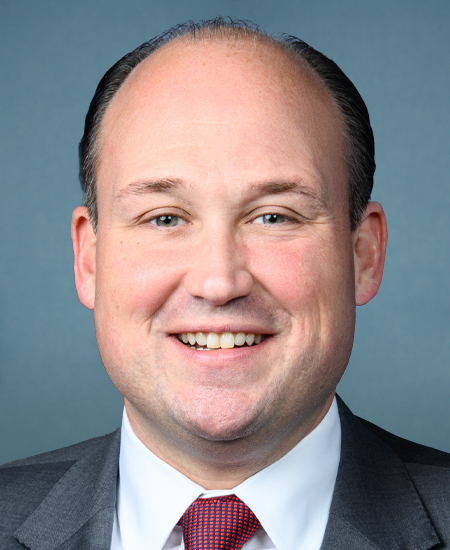
Rep. Nicholas A. Langworthy
Sponsored bills
Maddy summaryHRES 670 is a non-binding resolution expressing the House of Representatives' sense that all 50 states should include the September 11, 2001, terrorist attacks in elementary and secondary school curricula. It aims to ensure students learn about this historical event to honor the 2,977 victims and remember its significance, though it does not require states to change education standards. The resolution highlights the attacks as a pivotal moment that shaped U.S. national security and calls for continued remembrance through education. As a procedural resolution, it carries no legal force but seeks to encourage state-level curriculum decisions.
Maddy summaryHR 5383, the GIVE MILK Act, amends the Child Nutrition Act to allow WIC participants with young children to choose their preferred milk type (whole, low-fat, or nonfat) instead of receiving a default option. This change directly affects WIC participants caring for children aged 12 months to 4 years, aligning with dietary guidelines for that age group. The key provision requires the Secretary of Agriculture to issue the milk type elected by the participant or their guardian, updating WIC program regulations under Section 17(f) of the Child Nutrition Act. The bill focuses on enabling participant choice based on established nutritional recommendations for childhood development.
Maddy summaryThis bill requires the Bureau of Prisons to develop and implement a strategy for scanning all incoming mail at federal prisons to stop fentanyl and other synthetic drugs from entering facilities. It directs the Bureau to evaluate existing scanning technology within 180 days and submit a detailed plan to Congress within 90 days, including how to provide digital copies of mail to inmates within 24 hours and physical copies within 30 days (if safe). The strategy must achieve 100% mail scanning capacity at all federal prisons, prioritize high-security facilities, and include a budget proposal for fiscal years 2024-2026. This directly affects federal prisons, inmates, and Bureau employees by changing mail processing procedures to enhance safety and reduce staffing burdens from manual mail checks.
Investing in Rural America Act This bill allows Farm Credit System (FCS) institutions to provide financing and technical assistance for essential community facility projects as part of the Department of Agriculture's Community Facilities Direct Loan & Grant Program. (This program provides funding to develop essential community facilities in rural areas.) The FCS financing and technical assistance may be provided in order to make capital available to develop, build, maintain, improve, or provide other support for essential community facilities in rural communities (e.g., certain facilities that provide healthcare, community support, public safety, educational, or utility services). Under the bill, the financing provided by an FCS institution may not exceed 15% of the institution’s total assets unless the FCS institution offers at least one non-FCS lending institution an interest in the financing under reasonable terms and conditions acceptable to the borrower. The FCS institution must also report the offer to the Farm Credit Administration (FCA). The FCA must submit an annual report to Congress on the activities undertaken by FCS institutions under this bill, including through the partnerships between FCS institutions and other lending institutions. The FCA must post the report on the agency's website.

Rural Hospital Technical Assistance Program Act This bill provides statutory authority for the Rural Hospital Technical Assistance Program within the Department of Agriculture (USDA). Under the bill, USDA must establish and maintain (directly or by grant, contract, or cooperative agreement) a program to help eligible hospital facilities in rural areas with a population of 50,000 inhabitants or less. The program must provide tailored technical assistance and training to hospital facilities to identify development needs for maintaining essential health care services and support action plans for financial, operational, and quality improvement projects to meet these needs. Development needs include (1) constructing, expanding, and modernizing health care facilities; (2) increasing telehealth capabilities; and (3) acquiring or upgrading health care information systems (e.g., electronic health records). The program must also provide technical assistance and training to help hospital facilities to better manage their financial and business strategies and identify, and apply for assistance from, USDA loan and grant programs. In selecting eligible hospital facilities to participate in the program, USDA must give priority to borrowers and grantees of certain USDA rural assistance programs. USDA must also submit an annual report to Congress on the progress and results of the program.
Maddy summaryThe Child Online Safety Modernization Act of 2023 updates federal law to replace "child pornography" with "child sexual abuse material" across numerous statutes and legal definitions. It modernizes the CyberTipline reporting system to better identify and locate minors involved in cases of child sexual abuse material. The bill makes technical amendments to ensure consistent terminology in legal proceedings related to online child exploitation. These changes aim to improve law enforcement effectiveness in addressing online child sexual exploitation while maintaining legal clarity.
Maddy summaryHR 5113, the REACH Our Tribes Act, requires the U.S. Department of Agriculture to establish an annual consultation process with Tribal Governments on budget requests and program reauthorizations (like farm bills), including 30 days' notice before meetings and public reports summarizing discussions and responses. It also mandates USDA to publicly report on funding provided to Tribal entities through its programs and improve outreach for underutilized programs. Additionally, the bill creates an interagency task force to streamline application requirements for economic development programs and a public online repository listing all federal economic development programs available to tribes. These provisions directly affect Tribal Governments and Tribal entities (including tribes, tribal organizations, and businesses) by enhancing their input in budget decisions and improving access to federal resources.
Erie Canal Bicentennial Commemorative Coin Act This bill directs the Department of the Treasury to mint and issue 50,000 $5 gold coins, 400,000 $1 silver coins, and 750,000 half-dollar clad coins in recognition of the bicentennial of the Erie Canal. The designs of the coins must be emblematic of the Erie Canal and its impact on the development of the United States and New York. All sales of coins issued under this bill must include a surcharge to be paid to the Erie Canalway Heritage Fund, Inc., to support the historic preservation and community development of the Erie Canalway National Heritage Corridor in New York and for educational and commemorative programs.
Maddy summaryHR 5117, the Securing American Classrooms Act of 2023, allocates $1 billion from the Treasury Forfeiture Fund to fund school safety grants. The bill directs the Attorney General to use these funds for grants under the Safe Streets Act, with $750 million specifically requiring grantees to certify they will hire at least one veteran as a school resource officer. This provision directly affects school districts or organizations receiving these grants, mandating a veteran hiring component for a portion of the funding. The bill creates a concrete policy change by tying a significant share of school safety funding to veteran employment in school resource officer roles.