

Maddy summaryHR 7770, the Rosie the Riveter Commemorative Coin Act, authorizes the U.S. Mint to produce and sell three commemorative coins honoring women who worked on the U.S. home front during World War II. It specifies $5 gold coins (max 50,000), $1 silver coins (max 400,000), and half-dollar coins (max 750,000), all to be issued between January 1, 2025, and December 31, 2025. Each coin sale includes a surcharge ($35 for gold, $10 for silver, $5 for half-dollar), with all surcharge funds directed to the Rosie the Riveter Trust for maintaining the Rosie the Riveter WWII Home Front National Historical Park and educational programs. The coins will feature designs reflecting the legacy of diverse women workers and must meet specific weight, diameter, and composition standards.
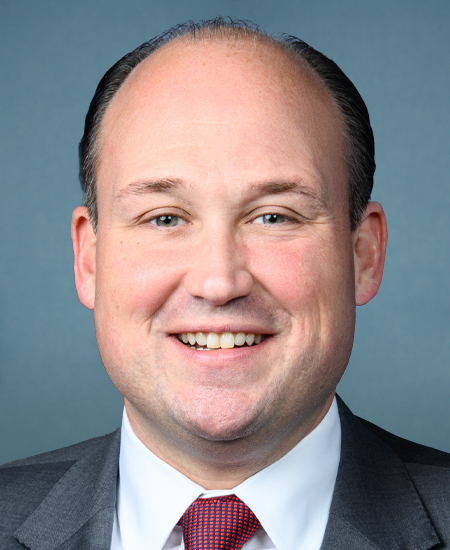
Rep. Nicholas A. Langworthy
Sponsored bills
Maddy summaryThe Great Lakes Mapping Act requires the National Oceanic and Atmospheric Administration (NOAA) to complete high-resolution mapping of all Great Lakes lakebeds by December 31, 2029. This includes creating detailed depth maps, collecting bathymetric data, developing data processing methods, and building a public digital system to catalog and share all collected information. NOAA must make preliminary map sections available during the project and release the full map with supporting data within 180 days of completion. The bill authorizes $200 million to fund this effort, which directly affects NOAA, Great Lakes bordering states, and the public through increased access to lakebed data.
Maddy summaryThis bill establishes a new process for investigating whistleblower retaliation claims within the FBI. It designates the Inspector General of the Department of Justice to receive and investigate allegations of retaliation against FBI employees who disclose information protected under whistleblower laws. The bill sets specific timelines for investigations, requires the Inspector General to notify complainants of investigation status, and allows for corrective actions like reinstatement, back pay, and other remedies if retaliation is found. It also creates procedures for disciplinary action against FBI employees who engage in retaliation and requires annual reports to Congress detailing investigation outcomes. The bill directly affects FBI employees who make protected disclosures and those who retaliate against them.
Maddy summaryThe GO Ag Act (HR 7731) creates a federal grant program to fund new agricultural education programs in secondary schools. It provides competitive grants of up to $100,000 per applicant for 5 years, requiring schools to demonstrate how programs will serve all students - including special populations - and align with existing career education standards. Grants cover curriculum development, equipment, and materials but cannot fund programs already operating or prepare students exclusively for one employer. The bill authorizes $5 million through fiscal year 2027 to support these new initiatives.
Maddy summaryThis resolution (HRES 1086) is a symbolic gesture expressing the House's support for designating March 19, 2024, as "National Agriculture Day." It does not create new laws or policies, but instead formally recognizes agriculture as a vital industry in the U.S. economy. The resolution celebrates agriculture's broad economic impact without imposing any requirements or changes on farmers, consumers, or government programs. It is a commemorative statement, not a substantive legislative action.
Maddy summaryHR 7629, the Protect Our Letter Carriers Act of 2024, allocates $1.4 billion annually (2025-2029) to the U.S. Postal Service for high-security collection boxes and replacing physical universal mailbox keys with electronic versions, directly affecting USPS operations and letter carriers. It requires the Attorney General to appoint specialized prosecutors in each district to coordinate investigations and prosecutions of postal-related crimes, such as assaults on carriers or mail theft. The bill also mandates the U.S. Sentencing Commission to adjust guidelines so that assaults or robberies against postal employees are treated with the same severity as assaults against law enforcement officers. These provisions aim to enhance safety through infrastructure upgrades, improved prosecution, and stricter sentencing for crimes targeting postal workers.
Maddy summaryThe Laken Riley Act (HR 7511) would require federal authorities to detain non-citizens charged with or convicted of burglary, theft, larceny, or shoplifting offenses. It also creates new legal standing for state attorneys general to sue federal immigration officials in federal court if they believe immigration enforcement decisions (like releasing aliens or granting parole) cause financial harm exceeding $100 to the state or its residents. The bill amends immigration laws to expand detention requirements for certain property crimes and allows states to seek court orders to enforce immigration policies. It does not create new criminal penalties but modifies existing immigration enforcement procedures. The bill’s findings and political language about the Laken Riley case are not part of its policy provisions.
Maddy summaryThe Federal Judgeship Act of 2024 adds new federal district judgeships across multiple courts, primarily in California, Florida, Texas, and other states with growing caseloads. It authorizes specific numbers of additional judges for districts including the Central and Northern Districts of California, the Middle District of Florida, and the Western District of Texas, with appointments to take effect in 2025, 2027, 2029, and 2031. The bill also permanently converts certain temporary judgeships to permanent positions and adds circuit judges to the Ninth Circuit Court of Appeals in 2027 and 2031. These changes directly affect federal court operations by increasing judicial capacity in specific geographic regions. The legislation focuses on adjusting court staffing levels to address case volume without altering substantive legal procedures or policies.
Maddy summaryThis bill requires the General Services Administration to review and improve the federal subaward reporting system within 180 days, focusing on accuracy, consistency, and public access. It mandates a standardized reporting plan within one year to reduce administrative burden on recipients while expanding data collection to include second-tier subawards (beyond the first tier currently reported). Federal agencies must implement these changes by year two, with annual progress reports to Congress. The law directly affects federal agencies managing grants and their recipients, aiming to make subaward data more complete, transparent, and easier to access for the public.
Maddy summaryHR 7577, the CHEERS Act, creates a new tax deduction for restaurants, bars, and entertainment venues by expanding eligibility under the energy efficiency tax code (Section 179D). It defines "qualified energy-efficient draft property" as stainless steel or aluminum containers and tap equipment used for alcohol distribution in these businesses, treating them as eligible for the existing energy efficiency tax deduction. This change applies to equipment placed in service after the bill's enactment date, directly benefiting hospitality businesses that own or lease such equipment. The provision modifies existing tax code language without creating new tax rates or altering other regulations.