

Maddy summaryHRES 1170 prohibits U.S. House Members, Delegates, and Resident Commissioners from bringing or displaying any foreign nation's flag on the House floor during sessions, except for lapel pins or flags shown during speeches under House rules. The resolution applies to all flag sizes and is enforced by the House Sergeant-at-Arms. It directly affects House members' conduct during floor proceedings but allows limited exceptions for personal accessories and official speeches. This is a procedural rule change, not a substantive policy.
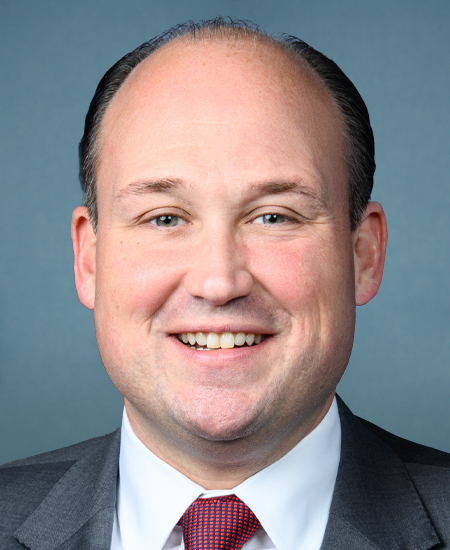
Rep. Nicholas A. Langworthy
Sponsored bills
Maddy summaryThis House resolution condemns Iran's April 13, 2024 attack on Israel, which involved over 350 drones and missiles launched directly from Iran. It affirms support for Israel's right to self-defense, commends international efforts (including U.S., U.K., French, and Jordanian intercepts) that minimized damage, and calls for enforcing U.S. sanctions against Iran to disrupt its missile programs and support for proxies like Hamas and Hezbollah. As a non-binding resolution, it expresses congressional support without creating new laws or funding.
Maddy summaryHR 8066, the Ammunition Supply Chain Act, requires the Secretary of the Army to submit a report to Congress within 180 days of enactment. The report must assess the U.S. supply chain for ammunition components like nitrocellulose and smokeless gunpowder, focusing on improving sourcing, avoiding single points of failure, managing global demand risks, and leveraging private sector capacity. This bill directly affects the Department of Defense and ammunition manufacturers by mandating a review of supply chain vulnerabilities. It is procedural in nature, establishing a reporting requirement without creating new regulations or funding.
Maddy summaryHR 8061, the Crime Victims Fund Stabilization Act of 2024, ensures stable funding for the Crime Victims Fund by directing certain False Claims Act collections into it from 2024 through 2029. Specifically, it adds a provision requiring that amounts collected under the False Claims Act (excluding whistleblower rewards and government reimbursement for damages) be deposited into the fund during this period. This directly affects crime victims who rely on the fund for services like counseling and emergency aid, as it prevents potential shortfalls in funding. The bill makes a concrete policy change by redirecting specific federal civil penalties into the fund, rather than altering the fund's existing purposes or eligibility rules.
Maddy summaryHR 6046, the Standing Against Houthi Aggression Act, requires the Secretary of State to designate Ansarallah (the Houthis) as a Foreign Terrorist Organization within 90 days of enactment and mandates the President to impose sanctions under existing authorities (Executive Orders 13224 and 13780) against Ansarallah and its members, agents, or affiliates. The bill directly affects Ansarallah and any foreign entities linked to it by triggering U.S. sanctions. Key provisions set strict 90-day deadlines for both the designation and sanctions implementation. The law focuses on reversing a prior designation revocation and enforcing existing legal mechanisms against the group.
Maddy summaryHR 5947 terminates specific U.S. waivers and licenses related to Iran, ending a 2023 waiver that allowed funds transfer from South Korea to Qatar. It prohibits the Treasury Department from reissuing similar waivers or licenses for the same purpose and blocks the President from granting Iran access to certain designated financial accounts established under prior laws. The bill directly affects U.S. foreign policy implementation by restricting how Treasury handles Iran-related financial transactions. It enacts concrete policy changes by ending existing authorizations and preventing future approvals for Iran to access specific accounts.
Maddy summaryThis resolution (HRES 288) urges the European Union to formally designate Iran's Islamic Revolutionary Guard Corps (IRGC) as a terrorist organization under EU legal framework Common Position 931. It does not create new laws but requests the EU take this specific action, noting the EU has previously sanctioned IRGC individuals but not the organization as a whole. The resolution cites the IRGC's role in human rights abuses, support for proxy groups, and involvement in conflicts like Ukraine as context for the request. Introduced in April 2023 by 20+ House members, it is a non-binding expression of congressional preference.
Maddy summaryHR 5921, the "No U.S. Financing for Iran Act of 2023," prohibits U.S. financial institutions from authorizing transactions related to Iran's imports or exports (excluding agricultural goods, food, medicine, and medical devices for civilians). It also requires the U.S. to oppose International Monetary Fund (IMF) financial aid to Iran and block Iran's access to IMF Special Drawing Rights. The bill amends the Export-Import Bank Act to ban U.S. financing for Iran's government or state-controlled entities. The law expires either 30 days after the President certifies Iran has stopped supporting international terrorism and is no longer a major money laundering concern, or 10 years from enactment.
Maddy summaryHRES 1148 is a resolution passed by the U.S. House of Representatives that condemns the Iranian government for supporting terrorism, regional proxy conflicts, and internal suppression of dissent - including its crackdown on protests following Mahsa Amini's death in 2022. It specifically calls for maintaining sanctions against Iran, supporting the Iranian Resistance's Ten-Point Plan (which advocates for a democratic, secular, nonnuclear Iran), and protecting Iranian political refugees in Albania. The resolution also affirms the Iranian people's right to self-determination under international law and urges the U.S. to recognize their struggle for freedom. As a non-binding resolution, it does not create new laws but formally expresses congressional stance.
Maddy summaryHR 8005, the Child Exploitation and Artificial Intelligence Expert Commission Act of 2024, establishes a 13-member commission to investigate how artificial intelligence is used in child exploitation crimes and recommend solutions to improve law enforcement's ability to prevent, detect, and prosecute such crimes. The commission, appointed by congressional leaders with expertise in law enforcement, AI, or child welfare, must submit a final report to Congress within two years detailing findings and recommendations for legal or technical improvements. This bill does not create new laws but focuses on identifying legal barriers and developing actionable solutions for law enforcement agencies. The commission will operate independently without federal government employees serving as members.