

Maddy summaryHR 7 prohibits federal funds from being used for abortions or health insurance plans covering abortion, with exceptions for pregnancies resulting from rape, incest, or when a woman's life is endangered. It blocks federal premium tax credits under the Affordable Care Act for health plans covering abortion (except in specified cases) and requires clear disclosure of abortion coverage and related surcharges in plan materials. The bill allows individuals or employers to purchase separate abortion coverage using non-federal funds, such as out-of-pocket payments, without affecting federal subsidies. It directly affects federal health programs, ACA marketplace plans, and health insurance issuers offering coverage that includes abortion services.
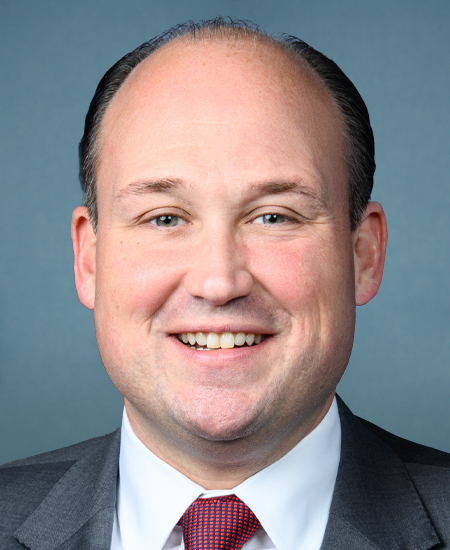
Rep. Nicholas A. Langworthy
Sponsored bills
Maddy summaryHR 578, "Sarah’s Law," requires mandatory detention for certain non-citizens (aliens) charged with crimes resulting in death or serious bodily injury. It directly affects non-citizens facing such charges and their victims' families. Key provisions mandate that the Department of Homeland Security detain these individuals immediately and notify victims or their closest living relatives (like parents or spouses) about the alien’s identity, immigration status, custody details, and removal efforts. The bill adds specific categories of non-citizens to the mandatory detention list, including those whose visas were revoked or who are deportable for prior immigration violations. This creates a formal process for victim notification while expanding detention requirements under immigration law.
Maddy summaryHRES 49 prohibits all House Members, Delegates, and Resident Commissioners from displaying or bringing foreign flags on the House floor during sessions. Exceptions allow lapel pins with foreign flags and flags shown as part of speeches or debates under House rules. The Sergeant-at-Arms enforces this rule, which applies to all visible foreign flags regardless of size, except for the specified exceptions. This is a procedural rule change affecting conduct on the House floor, not a policy on foreign relations.
Maddy summaryHR 473, the SHOW UP Act of 2025, requires federal executive agencies to return to pre-pandemic telework policies within 30 days of enactment, limiting work-from-home options to those in place on December 31, 2019. Agencies must then conduct a 6-month study analyzing pandemic-era telework impacts - including effects on mission performance, costs from underused office space, and employee productivity tools - and submit a plan to Congress if they seek to expand telework beyond these baseline levels. The plan requires certification from the Office of Personnel Management confirming it will improve mission performance, reduce real estate costs, lower locality pay expenses, and ensure secure remote work capabilities without increasing agency costs. This bill directly affects all federal executive agencies (excluding the Government Accountability Office) and their employees by restricting telework flexibility and imposing strict requirements for any future expansion.
Maddy summaryThis bill creates a new tax deduction for cash tips received by workers in specific service occupations that traditionally accepted tips before 2024 (like servers, barbers, and beauticians). It allows a deduction of up to $25,000 per year for qualified tips included on employer statements, but excludes employees who earned over a certain threshold ($220,000 in 2023) from the same employer the previous year. The deduction applies to taxable years beginning after December 2024 and is designed to reduce taxable income for eligible workers. It directly affects service industry workers in qualifying tip-dependent jobs who receive cash tips, not the general public.
Maddy summaryThis bill updates federal reporting requirements for subawards (funds given by a recipient of federal funding to another entity). It directly affects federal agencies and recipients of federal awards (like universities, nonprofits, and contractors) by requiring them to track and report second-tier subawards (sub-sub-recipients) starting in 2025. Key provisions include standardizing reporting across agencies, reducing paperwork burden through simplified certifications for no-subaward cases, and improving public access to subaward data. The bill mandates annual progress reports to Congress and requires agencies to implement changes within two years of enactment.
Chiropractic Medicare Coverage Modernization Act of 2025 This bill expands Medicare coverage of chiropractic services to include all services provided by chiropractors, rather than only subluxation corrections through manual manipulation of the spine.
This bill increases the annual limit on the tax credit for qualified railroad track maintenance expenses (also referred to as the short line railroad tax credit) and expands eligibility for claiming the credit. Under current law, the tax credit is limited each tax year to $3,500 multiplied by the sum of the number of miles of railroad track owned or leased by the taxpayer (miles owned or leased) and the number of railroad track miles assigned to the taxpayer by a Class II or III railroad (miles assigned). This bill increases the annual limit to $6,100 multiplied by the sum of miles owned or leased and miles assigned. The $6,100 amount used in the calculation of the tax credit limit is adjusted for inflation for tax years beginning after 2025. The bill also expands eligibility for the tax credit to include gross expenses for maintaining railroad tracks owned or leased as of January 1, 2024. Under current law, the tax credit is limited to gross expenses for maintaining railroad tracks owned or leased as of January 1, 2015.
Maddy summaryHR 507, the Veterans Member Business Loan Act, amends the Federal Credit Union Act to explicitly include loans made to veterans as qualifying "member business loans" under credit unions. This change directly affects veterans seeking business financing through federal credit unions, allowing them to access these loans under the same framework as other small business borrowers. The key mechanism is adding a new definition category ("made to a veteran") to the existing eligibility criteria for business loans, using the standard military definition of "veteran" from Title 38, U.S. Code. The bill does not create new funding or programs but expands existing credit union lending options to include veterans. This definition change takes effect six months after the bill's enactment.
Maddy summaryHR 404, the "Hearing Protection Act," reclassifies firearm silencers (devices that reduce gunfire noise) as firearms for federal tax and regulatory purposes. It imposes a 10% federal tax on silencers, requires the destruction of all existing federal silencer registration records within one year, and preempts state laws that tax or regulate silencers. The bill clarifies that silencers are treated as firearms under federal law, including for licensing and marking requirements, and defines "firearm silencer" to include specific components. Note: The bill’s title is misleading - it addresses firearm silencer regulation, not hearing protection for people.