

Maddy summaryHR 649, the Whole Milk for Healthy Kids Act of 2025, amends the National School Lunch Act to allow schools participating in the program to offer students both organic and non-organic whole milk, in addition to reduced-fat, low-fat, and fat-free options. Key provisions include clarifying that milk fat in whole milk should not count toward saturated fat limits for meal compliance, prohibiting schools from purchasing milk from Chinese state-owned enterprises, and ensuring schools cannot be barred from offering the full range of milk types listed. The bill directly affects public and private schools serving the National School Lunch Program by expanding their milk options for students. It focuses on concrete policy changes to dietary offerings and sourcing restrictions within the school nutrition program.
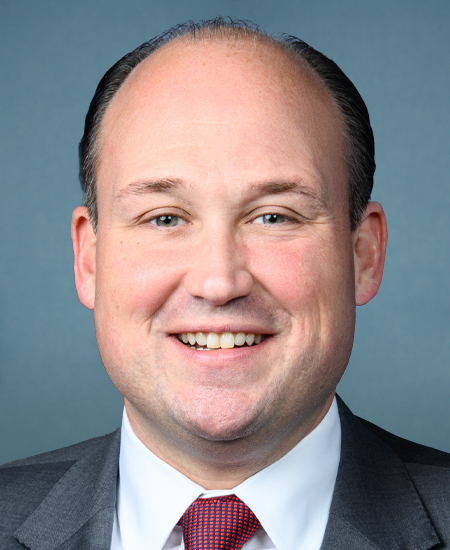
Rep. Nicholas A. Langworthy
Sponsored bills
Maddy summaryThis bill would reform immigration parole by requiring the Secretary of Homeland Security to grant temporary entry only on a case-by-case basis for urgent humanitarian needs or significant public benefit, reversing what the bill describes as systemic overuse. It imposes a strict annual cap of 3,000 paroles starting in fiscal year 2029, restricts parole for nationals of designated "countries of concern" without a State Department waiver, and allows states to sue if they claim financial harm exceeding $100 from parole decisions. The bill directly affects immigrants seeking temporary entry and DHS officials administering the program. Key mechanisms include the new cap, country restrictions, and state lawsuit provisions to enforce compliance.
Maddy summaryHRES 444 is a symbolic House resolution calling on all Americans to observe Memorial Day 2025 by honoring military personnel who died in service. It does not create new laws or affect specific groups, as it is a non-binding expression of national remembrance. The resolution states that Americans should commemorate the sacrifices of over one million service members who died pursuing freedom and peace, framing Memorial Day as a day to express respect for their ultimate sacrifice. This is a routine ceremonial resolution with no policy changes or concrete mechanisms beyond urging public observance.
Maddy summaryHR 3548, the Infrastructure Expansion Act of 2025, changes liability rules for injuries on federally funded infrastructure projects. It prohibits "absolute liability" (where a party is automatically responsible regardless of fault) for elevation or gravity-related risks, requiring states to use "comparative negligence" instead (where fault is shared based on circumstances). This applies to projects receiving federal funding like construction, bridges, or transit systems, directly affecting contractors, property owners, and workers filing injury claims. The bill preempts state laws imposing absolute liability and directs federal courts to handle related cases, while leaving workers’ compensation laws unchanged. It takes effect for projects accepting federal funds on or after January 1, 2026.
Maddy summaryHRES 426 is a procedural resolution that allows the House to vote on two separate disapproval resolutions. It sets up consideration for S.J. Res. 13, which would reverse a Treasury rule affecting bank merger reviews, and S.J. Res. 31, which would reverse an EPA rule changing how pollution sources are regulated under the Clean Air Act. The resolution waives normal procedural hurdles to expedite these votes. It does not change policy but enables Congress to potentially block these specific federal rules. The affected parties would include financial institutions (for the bank rule) and industrial facilities subject to EPA regulations (for the Clean Air Act rule).
Maddy summaryHR 276, the Gulf of America Act, would rename the Gulf of Mexico to the Gulf of America in all U.S. federal documents and maps. It requires all federal agencies to update their records, maps, and publications within 180 days of enactment to reflect this new name. The bill directly affects federal agencies responsible for geographic naming and documentation, such as the Department of the Interior and the Board on Geographic Names. This is a procedural change with no impact on policy, environmental regulations, or affected communities.
Maddy summaryThis resolution blocks a Department of Energy rule that would have set new energy efficiency standards for gas-fired instant water heaters. It prevents the rule from taking effect, meaning appliance manufacturers would not have to meet the proposed efficiency requirements. The rule, submitted in December 2024, directly affected manufacturers of these water heaters and consumers purchasing them. Congress approved this disapproval through a joint resolution passed on May 9, 2025.
Maddy summaryHR 3277, the Ensuring Lasting Smiles Act, requires group health plans and health insurance issuers to cover medically necessary outpatient and inpatient treatments for congenital anomalies or birth defects primarily affecting the eyes, ears, teeth, mouth, or jaw. This includes reconstructive procedures, dental/orthodontic support during treatment, and follow-up care, but excludes purely cosmetic surgery not tied to a medical diagnosis. Cost-sharing (like copays) for these services must not be stricter than for other medical benefits. The law takes effect for plan years beginning January 1, 2026, and mandates insurers to provide notice about this coverage to beneficiaries.
Maddy summaryHR 3295, the Federal Animal Research Accountability Act of 2025, requires research institutions receiving National Institutes of Health (NIH) funding to submit detailed annual reports on animal use. These reports must categorize animals by species and specify: (1) animals used with no pain/distress, (2) animals with pain/distress using pain relief, (3) animals with pain/distress where pain relief would interfere with research, and (4) animals bred but not yet used. The NIH must make these reports publicly accessible online within three months of submission through a searchable database. The bill applies to all NIH-funded research entities and takes effect two years after enactment.
Maddy summaryHRES 395 is a non-binding resolution (not a law) that establishes a symbolic "Bill of Rights" for U.S. law enforcement officers during internal investigations into alleged misconduct. It outlines specific procedural protections, including the right to have legal counsel present during interviews, the right to know investigation details in advance, protection from offensive language or threats during questioning, and the right to not face discipline for invoking the Fifth Amendment. The resolution aims to support officers by ensuring fair investigation processes while condemning calls to defund or dismantle police departments. It does not create new legal rights or change existing laws but encourages states to adopt similar protections for officers.