

Maddy summaryThis bill amends existing law to expand access to mental health services for students in career-focused education programs. It updates the definition of "covered institution" to include both area career and technical education schools (under the Perkins Act) and traditional colleges, ensuring these schools qualify for the same federal mental health and substance use disorder services already available to other higher education institutions. The change directly affects CTE students by making their schools eligible for existing federal funding and support mechanisms. The bill makes no new funding commitments but adjusts legal language to include CTE programs in current service provisions.
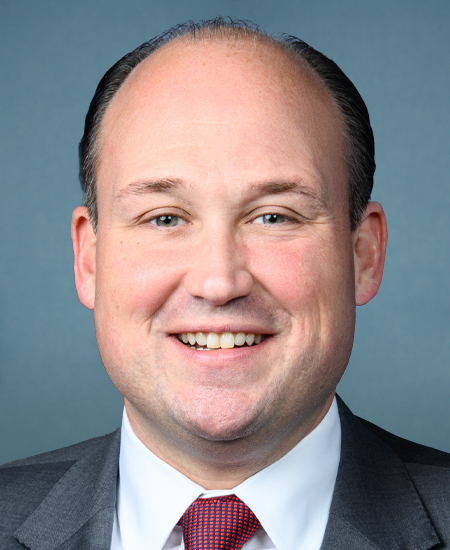
Rep. Nicholas A. Langworthy
Sponsored bills
Maddy summaryThis bill expands U.S. law enforcement cooperation with Canada by creating new legal mechanisms for joint cross-border operations. It allows U.S. agencies to grant foreign officers (like Canadian customs agents) the same legal privileges during joint work, cover liability claims arising from overseas operations, and formally station U.S. and Canadian officers in each other's countries for border security. The law directly affects U.S. Customs and Border Protection, Homeland Security, and Canadian law enforcement through these expanded partnership tools. It modifies existing laws (Tariff Act, Homeland Security Act) to streamline international collaboration without changing border policies.
Maddy summaryHRES 719 is a House resolution honoring Charles "Charlie" James Kirk, the founder of Turning Point USA who was assassinated on September 10, 2025. The resolution condemns his assassination and all political violence, extends condolences to his family, and calls on Americans to reject violence while promoting civil discourse. It specifically recognizes Kirk's legacy as a defender of constitutional principles and his role in inspiring youth through free speech and faith-based civic engagement. As a commemorative resolution, it does not enact policy changes but formally expresses the House's stance on honoring his life and legacy.
Maddy summaryThis bill authorizes the posthumous presentation of a Congressional Gold Medal to Welles Remy Crowther, a volunteer firefighter and equities trader who died saving others during the September 11, 2001, attacks. The medal, designed by the Treasury Secretary, will be given to Crowther’s mother, Alison Crowther, following a formal presentation by congressional leaders. The bill also permits the U.S. Mint to sell bronze duplicates of the medal at cost to cover production expenses. It is a purely commemorative measure with no legislative or regulatory impact.
Maddy summaryThis bill requires health plans and insurers to create a clear, timely process for patients or doctors to request exceptions when step therapy protocols (which force patients to try cheaper drugs first) might harm them. It mandates approval for exceptions in six specific cases, such as when prior treatments failed, delaying care risks severe harm, or the required drug causes adverse reactions. Plans must respond within 72 hours (24 hours for emergencies) and cover the requested drug for at least one year if approved. Additionally, health plans must report annual data on exception requests, approvals, denials, and reasons to the government for transparency.
Maddy summaryHR 5455, the Aviation Funding Stability Act of 2025, ensures continued operation of the Federal Aviation Administration (FAA) during government funding gaps. If Congress fails to pass regular appropriations or a continuing resolution before the new fiscal year begins, the bill allows the FAA to use existing funds from the Airport and Airway Trust Fund to maintain essential programs and airport infrastructure at the previous year’s funding level. This prevents shutdowns for FAA operations like air traffic control, airport grants, and safety programs for up to 30 days or until regular funding is enacted. The bill directly affects all FAA programs funded through the trust fund, including airport improvements and aviation safety initiatives, without creating new policies or altering funding levels.
Maddy summaryThe GRID Power Act requires the Federal Energy Regulatory Commission (FERC) to create new rules within 180 days that streamline the process for connecting new "dispatchable power" projects - like natural gas plants or battery storage - to the electricity grid. It allows transmission providers (such as utilities and grid operators) to propose prioritizing these projects in the interconnection queue if they demonstrate how the projects improve grid reliability or resilience, with public input required before submission. FERC must review such proposals within 60 days and approve or deny them, while also mandating regular reports on grid conditions and periodic rule updates every five years to address evolving challenges. This bill directly affects transmission providers and new power project developers by accelerating connections for reliable energy sources that help prevent blackouts.
Maddy summaryThis bill amends the federal tax code to exclude certain overtime pay from taxable income. It directly affects workers who earn overtime under the Fair Labor Standards Act (FLSA) or through specific employer-employee agreements meeting defined conditions (like exceeding 40 hours per week or railway work standards). The key provision defines "qualified overtime compensation" to exclude this pay from federal income tax calculations. The change applies to tax returns filed for 2025 and later. This creates a concrete tax exemption for qualifying overtime earnings.
Maddy summaryThis bill ensures Medicare coverage for new medical devices designated as "breakthrough devices" during a 4-year period after FDA approval. To qualify, devices must meet specific criteria, including FDA priority review, clinical data from Medicare beneficiaries, and a safety review showing benefits outweigh risks. Medicare must finalize coverage decisions within 6 months of manufacturer applications and before the 4-year period ends. The law appropriates $10 million annually (2025-2030) for Medicare to administer this process.
Maddy summaryHR 3157, the State Energy Accountability Act, requires states with "intermittent energy policies" (like renewable portfolio standards) to evaluate how those policies impact electricity reliability. State regulators must publicly assess five key areas: grid reliability over 10 years, ability to meet demand during emergencies, rate impacts on consumers, replacement of removed power plants, and reliance on out-of-state energy. The bill mandates these evaluations be completed within one year of enactment and made publicly available. It directly affects state regulatory authorities and electric utilities operating under such policies, focusing on accountability for grid reliability rather than changing energy requirements.