

Maddy summaryThe Kidney Care Access Protection Act (HR 6214) improves access to innovative kidney treatments for Medicare beneficiaries with end-stage renal disease. It extends transitional payment adjustments for new renal dialysis drugs and devices for at least three years, then establishes permanent payment adjustments based on actual utilization and costs. The bill also expands Medicare's annual wellness benefit to include kidney disease screening and increases access to kidney disease education services through renal dialysis facilities. These changes apply to Medicare beneficiaries, renal dialysis facilities, and healthcare providers, with key provisions effective January 1, 2026.
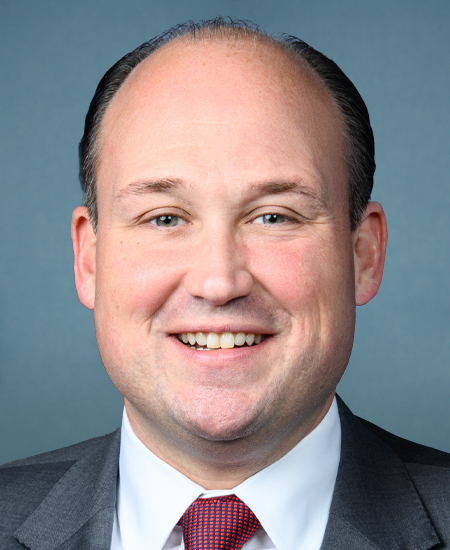
Rep. Nicholas A. Langworthy
Sponsored bills
Maddy summaryHR 6188 would amend U.S. law to designate "Here Rests in Honored Glory" (composed by Donald B. Miller) as the national hymn of the United States, replacing the current national anthem designation under Title 36. The bill adds a new section (307) to the U.S. Code specifying this composition as the official national hymn. This is a procedural change affecting national symbols, not a policy or funding measure. It directly affects how the United States formally recognizes its national musical emblem. The bill does not alter the status of "The Star-Spangled Banner" as the national anthem.
Maddy summaryHR 6190, the Tax Cuts for Veterans Act of 2025, makes military retirement pay and disability-related benefits tax-free for veterans and active-duty service members. The bill amends the tax code to exclude all retirement pay (under Titles 10 and 14 U.S. Code) and disability compensation (under Titles 10, 14, 37, or 38 U.S. Code) from taxable income. This directly affects veterans receiving retirement or disability benefits, including those with combat-related injuries, by eliminating federal income tax on these payments. The policy change applies to taxable years beginning after the bill's enactment.
Maddy summaryHR 6019 repeals a requirement that Senate offices must be notified when legal requests seek Senate data. Specifically, it removes Section 213 of the 2026 appropriations act, which mandated that Senate offices be informed about legal processes requesting disclosure of Senate data. This change directly affects Senate offices by eliminating a procedural notification step for legal requests involving their data. The bill makes no other policy changes, solely removing this specific administrative requirement.
Maddy summaryHR 6137 would create a new separate job code for "direct support professionals" (DSPs) within the federal Standard Occupational Classification system. This change aims to better recognize DSPs - who provide daily support for people with intellectual and developmental disabilities (like helping with daily living, community participation, and goal-setting) - as distinct from other roles like home health aides. The bill requires the Office of Management and Budget to consider this revision during the next system update, without authorizing new funding. It addresses data gaps caused by high turnover rates (39% nationally) in DSP hiring and retention.
Maddy summaryThis bill regulates healthcare platforms that help patients find providers (like online appointment directories). It prohibits these platforms from steering patients toward specific providers based on payment, requiring full disclosure of financial ties between platforms and healthcare providers. Platforms must use objective criteria for listing providers, cannot offer medical services or collect patient data improperly, and must set fair, pre-agreed compensation rates. It directly affects health tech companies operating these platforms and healthcare providers using them to connect with patients.
Maddy summaryThe NEST Act (HR 6096) requires the federal government to provide newborn supply kits to new mothers, focusing on low-income families and communities with high maternal health risks. These kits include essential items like diapers, postpartum pads, breastfeeding supplies, blood pressure monitors, and health information resources. Funds for the kits come from a $5 million annual set-aside in Social Security Act funding, distributed through grants to community health centers, tribal organizations, and hospitals. Priority is given to rural areas, maternity care deserts, and mothers earning below 185% of the poverty line. The program mandates annual reporting on distribution demographics and health outcomes to Congress.
Maddy summaryThis bill expands a tax credit for companies building facilities that manufacture semiconductors, semiconductor equipment, or semiconductor materials. It clarifies which materials count as qualifying (including direct materials like chip substrates and indirect materials like cleaning chemicals used in production) and extends the credit's deadline from 2026 to 2031. The changes directly affect semiconductor manufacturers investing in new facilities or equipment by making the tax credit more broadly applicable and longer-lasting.
Maddy summaryHR 6037 increases annual funding for the West Valley Demonstration Project from $75 million to $150 million, covering fiscal years 2027 through 2037. This project manages nuclear waste cleanup at a site in West Valley, New York. The bill directly affects the project’s budget and operations by doubling its annual funding level for the next decade. It replaces the previous funding authorization that covered 2020-2026 with a higher, extended commitment.
Maddy summaryHRES 864 is a ceremonial resolution honoring U.S. veterans on Veterans Day 2025. It does not create new laws or policies but formally recognizes veterans' service and sacrifice, calling on all Americans to observe Veterans Day. The resolution references historical context about Veterans Day's origins (from Armistice Day to honoring all veterans) but contains no concrete policy changes. It directly addresses the general public, urging them to participate in the observance. As a non-binding resolution, it affects no specific individuals or groups through legislative action.