

Stronger Communities through Better Transit Act This bill requires the Department of Transportation (DOT) to establish a grant program to support operating projects for public transportation and related service improvements, particularly in underserved communities and areas of persistent poverty. Specifically, the bill requires DOT to allocate funding under the program for urbanized areas, states, and Indian tribes that are recipients of funds under either the Federal Transit Administration's (FTA's) Urbanized Area Formula Funding program or Formula Grants for Rural Areas program. Eligible recipients may use funding for operating costs associated with projects that improve public transportation service for transit-dependent populations and support increased transit ridership (e.g., service expansion, information technology enhancements, and workforce development). DOT must apportion the funding so that recipients receive funds that are proportional to their share of operating costs. The bill also provides for an increased federal cost share for operating assistance for projects or programs carried out in areas of persistent poverty or underserved communities. DOT must set up a multimodal access measurement interface for public agencies to aid transit agencies in determining and reporting on access to jobs and essential services. A grant recipient must (1) report specific information to the FTA for inclusion in the National Transit Database, and (2) survey transit riders and non-riding residents regarding transit service improvements. Further, the bill expands the purposes of the public transportation programs to include supporting public transportation's role in combating climate change through growing/retaining transit ridership.
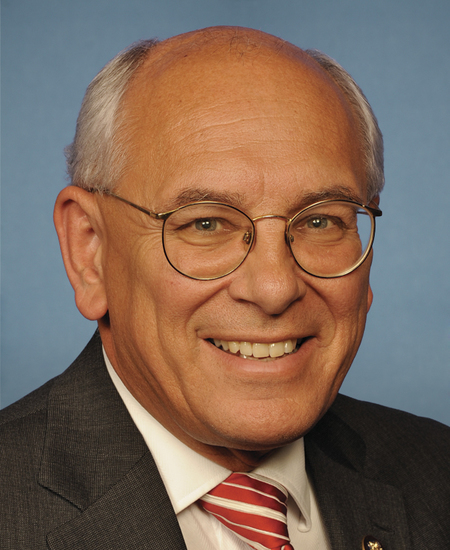
Rep. Paul Tonko
Sponsored bills
Maddy summaryHRES 410 is a non-binding House resolution requiring President Trump to comply with the Constitution’s Foreign Emoluments Clause regarding a $400 million Boeing 747-8 jet gift from Qatar’s royal family. It directs the President to immediately submit all plans for the aircraft to Congress and obtain explicit congressional consent before accepting it, as required by the Constitution. The resolution cites historical precedent where all prior presidents sought Congress’s approval for foreign gifts, including items like medals, horses, and the Statue of Liberty. It emphasizes that accepting the jet without consent would violate the Constitution and pose national security risks. The bill focuses solely on procedural compliance, not the merits of the gift itself.
Maddy summaryThe HEADs UP Act of 2025 would improve healthcare access for people with developmental disabilities by adding them to the list of medically underserved populations that health centers must serve. It authorizes $15 million annually from 2026 to 2030 to fund new primary care and specialized dental services through health centers in underserved areas. Health centers receiving these grants must use the funds to supplement, not replace, existing services for this population. The bill directly affects health centers serving underserved communities and the people with developmental disabilities who face barriers to healthcare.
Maddy summaryHR 3389, the Alzheimer’s Law Enforcement Education Act of 2025, requires the Justice Department to create an online training course for law enforcement officers within one year of the bill’s enactment. The course will teach officers how to interact with people experiencing Alzheimer’s or dementia, including recognizing symptoms, communicating effectively, avoiding physical restraints, and identifying abuse. It mandates that states count completion of this course toward required training hours for law enforcement officers, correctional officers, and probation officers. The bill directly affects state and local law enforcement agencies by establishing standardized training on dementia care for their personnel.
Maddy summaryHR 3398 (the Aaron Salter, Jr., Responsible Body Armor Possession Act) bans civilians from purchasing, owning, or possessing "enhanced body armor" (defined as bullet-resistant gear meeting National Institute of Justice RF1 standards) without exception. The law directly affects most private citizens who might seek such armor, while exempting law enforcement officers (including corrections officers), government agencies, tribes, and individuals who legally owned enhanced body armor before the law took effect. Key provisions include creating a new federal criminal offense punishable by up to five years in prison for violations, with clear definitions of "enhanced body armor" and "covered law enforcement officer" based on existing legal standards. The bill focuses on restricting access to high-level protective gear for non-official use, not on regulating standard body armor.
Maddy summaryHRES 407 is a symbolic House resolution designating May 10, 2025, as "National Asian American, Native Hawaiian, and Pacific Islander Mental Health Day." It directly recognizes the mental health disparities faced by AANHPI communities, including lower service utilization rates and higher youth suicide rates. The resolution encourages federal, state, and local health agencies to improve mental health awareness and access for these communities. It does not create new laws or funding but formally supports efforts to address cultural barriers in mental health care. The designation aligns with May's existing observances of AANHPI Heritage Month and Mental Health Awareness Month.
Maddy summaryHR 3368, the "Born in the USA Act of 2025," prohibits federal funding for Executive Order 14160 (which aimed to restrict birthright citizenship for children born in the U.S.). The bill directly affects federal agencies that might implement the executive order by blocking their use of funds for that purpose. Its key provision is a funding ban targeting the executive order and any similar future policies, without changing citizenship law. The bill does not alter birthright citizenship rights but prevents federal resources from being used to enforce the controversial executive order. It is a procedural measure focused on funding, not a substantive policy change to citizenship rules.
Maddy summaryHR 3316, the Stop Mental Health Stigma in Our Communities Act of 2025, requires the HHS Secretary to develop a national outreach strategy and conduct two systematic reviews targeting mental health disparities in Asian American, Native Hawaiian, and Pacific Islander (AANHPI) communities. The strategy mandates culturally tailored materials to reduce stigma, increase awareness of mental health services, and engage community members, funded at $3 million annually from 2026-2030. It also directs a year-long review of AANHPI youth mental health crises (including suicide rates) and a review of AANHPI behavioral health workforce shortages, both requiring disaggregated data reporting. The bill directly affects AANHPI individuals - particularly youth and underserved subgroups - by mandating federal action to address systemic barriers like language gaps and underrepresentation in care.
Maddy summaryHRES 400 is a ceremonial resolution recognizing May as Asian American, Native Hawaiian, and Pacific Islander Heritage Month. It formally celebrates the historical contributions of these communities to U.S. history and society, as documented in the resolution’s preamble. The resolution does not create new laws, allocate funding, or change policies - it serves solely as a symbolic acknowledgment by the House of Representatives. It highlights the diversity of these communities and their ongoing impact, referencing their growth, cultural milestones, and historical challenges. This recognition aligns with the existing statutory designation of May for Heritage Month under U.S. Code.
Maddy summaryHR 3243, the Therapeutic Fraud Prevention Act of 2025, bans the provision of paid conversion therapy aimed at changing a person's sexual orientation or gender identity, and prohibits advertising such therapy as effective, safe, or without risk. It directly affects LGBTQ+ individuals and their families who might be targeted by these practices, as professionals have determined conversion therapy is ineffective and harmful. The law treats violations as deceptive acts under consumer protection laws, empowering the Federal Trade Commission and state attorneys general to enforce it through civil actions. It explicitly excludes legitimate gender transition support and non-discriminatory counseling from the ban.