

Maddy summaryThe ACHE Act of 2025 requires the National Institute of Environmental Health Sciences to study health impacts of mountaintop removal coal mining on communities in Kentucky, Tennessee, West Virginia, and Virginia. It imposes a temporary moratorium on new federal permits for such mining until the study concludes, while mandating ongoing pollution monitoring (water, air, soil) at existing sites with public reporting of results. Coal mining companies must pay a fee to cover federal costs for the study and monitoring program. The bill directly affects coal mining operations in the specified Appalachian regions and the communities living near them, focusing on evidence-based health research and transparency.
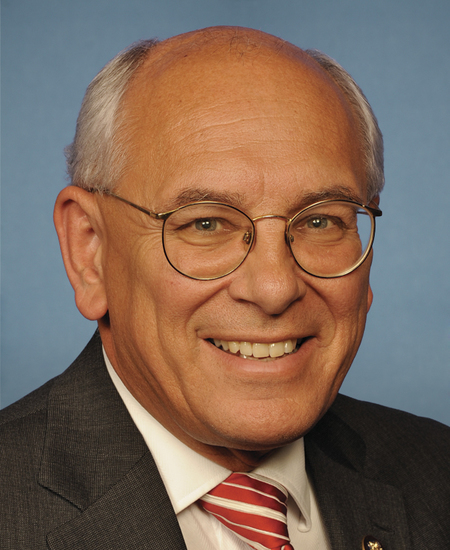
Rep. Paul Tonko
Sponsored bills
Maddy summaryHR 4667, the VISIBLE Act, requires U.S. Immigration and Customs Enforcement (ICE), U.S. Customs and Border Protection (CBP), and other authorized immigration officers to visibly display their agency name and either their last name or unique badge number during all public immigration enforcement activities (such as stops, arrests, raids, or checkpoints). This identification must be clearly legible from 25 feet away on outer clothing, not obscured by gear, and officers cannot wear face coverings that hide their face during public interactions unless for covert operations or hazardous conditions. The bill mandates DHS to discipline non-compliant officers and submit annual reports to Congress detailing enforcement activities, violations, and disciplinary actions. It also directs DHS’s Civil Rights Office to investigate public complaints about noncompliance.
Maddy summaryHCONRES 45 is a symbolic congressional resolution recognizing barriers to physical access in federally funded facilities for people with disabilities. It reaffirms support for the Americans with Disabilities Act (ADA) and the Architectural Barriers Act of 1968, and pledges to prioritize inclusive design in future infrastructure projects. The resolution does not create new legal requirements or funding but formally acknowledges ongoing accessibility challenges faced by over 70 million Americans with disabilities. It cites recent data on disability prevalence and existing federal guidelines for pedestrian access, emphasizing the need for equal access to public facilities.
Maddy summaryHR 4744 establishes a federal grant program to fund community-based mental wellness and resilience initiatives. It provides planning grants (up to $250,000) and program grants (up to $500,000 annually for four years) to local coalitions - groups formed by representatives from at least five community sectors like schools, health services, faith organizations, and businesses. These coalitions must use a public health approach to identify community strengths and risks, build social connections, and implement evidence-based programs addressing mental wellness for all ages. The bill authorizes $36 million over five years (2025-2029), with 20% reserved for rural areas, and requires grantees to develop strategic plans and report on outcomes by 2030.
Maddy summaryHR 4696 amends Section 249 of the Immigration and Nationality Act to update eligibility for a registry program that provides a pathway to legal status for long-term residents. It changes the requirement from entering the U.S. before January 1, 1972, to entering at least 7 years before the application date. This adjustment bases eligibility on a rolling 7-year window instead of a fixed historical cutoff, allowing more recent long-term residents to qualify. The bill directly affects individuals who entered the U.S. after 1972 but maintained continuous residence for at least seven years prior to applying.
Maddy summaryHR 4752, the Reducing Hereditary Cancer Act, requires Medicare to cover genetic testing for germline mutations in individuals with a family history of hereditary cancer or suspicious personal/family history. It mandates coverage for risk-reducing surgeries (like mastectomies or hysterectomies) when guided by evidence-based clinical guidelines, and increases the frequency of cancer screenings (such as mammograms, colonoscopies, and breast MRI) for Medicare beneficiaries confirmed to have hereditary cancer gene mutations - ensuring screenings occur at least annually. The bill applies to Medicare beneficiaries with specific high-risk profiles, aligning coverage with guidelines from recognized oncology organizations like the National Comprehensive Cancer Network. It does not change eligibility but modifies Medicare’s existing coverage rules to expand access to these preventive services.
Maddy summaryThis bill requires a 3-business-day waiting period before someone can receive a handgun from another person who isn't a licensed gun seller. It applies to most private handgun transfers but includes exceptions for law enforcement, family loans (like between spouses or parents and children), temporary transfers to prevent imminent harm, and transfers for shooting or hunting under specific conditions. The waiting period begins when the recipient first offers to take possession of the gun. The law would take effect 90 days after enactment.
Maddy summaryThis bill increases federal Medicaid funding for states that expand spending on behavioral health services (mental health and substance use treatment). It creates a new 90% federal reimbursement rate for the *increase* in quarterly state spending on these services compared to the 2019 baseline, provided states use the funds to supplement existing state funding and improve service delivery (e.g., raising provider payment rates). States must report annually to Congress on payment rates, rationale, and service utilization for these programs. The policy directly affects all 50 states administering Medicaid and the providers delivering behavioral health services within those programs. The changes take effect January 1, 2025, following enactment.
Maddy summaryThis bill requires the Department of Homeland Security (DHS) to create a system tracking all detentions or removals of U.S. citizens and lawful permanent residents (LPRs) during immigration enforcement. DHS must report these cases quarterly to Congress, including instances where minors were removed alongside undocumented parents. The system must also include cases involving citizens or LPRs detained by other agencies and transferred to DHS. A separate process for individuals to prove citizenship or LPR status during detention must be established within 180 days.
Maddy summaryThe Keep Kids Covered Act extends continuous health coverage under Medicaid and CHIP for children. It requires states to maintain coverage for children under age 6 for six years (previously one year) and for children under age 19 for two years (previously one year), without requiring reapplication. Former foster youth will now remain covered until age 26. States must also annually update contact information for enrolled children and inform them about their coverage status and remaining eligibility period.