

Maddy summaryHR 5073, the INFORM Act of 2025, requires immigration authorities to notify the immediate family of a detained individual within 24 hours if they are transferred to a different detention facility. This applies directly to immigrants held under U.S. immigration law and their immediate family members, defined as parents, children, spouses, and certain extended family like step-relatives or domestic partners. The law mandates that notifications include the reason for the transfer and full contact details (name, address, phone number, and point of contact) for the new facility. It establishes a specific timeline and content requirement for these notifications to improve transparency during detention transfers. The bill focuses on procedural changes for facility transfers, not on altering detention policies or immigration eligibility.
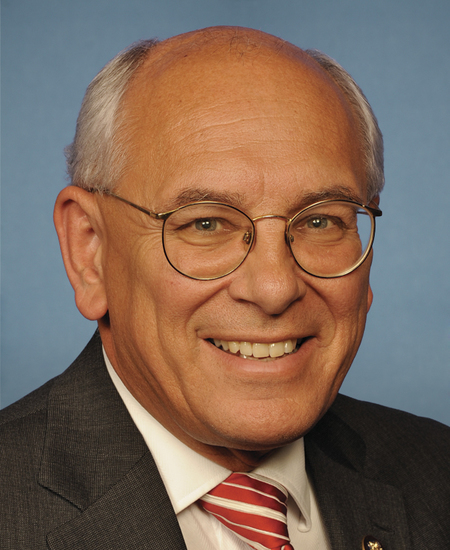
Rep. Paul Tonko
Sponsored bills
Maddy summaryHR 5009, the Fine Arts Protection Act of 2025, requires the Comptroller General to conduct a comprehensive review of the General Services Administration’s (GSA) Fine Arts Program within one year of the bill’s enactment. The review will survey every artwork in the GSA’s public collection - including New Deal-era pieces - estimate its economic value, assess management practices, staffing, funding, and compare GSA’s approach to other art collections. The Comptroller General must then submit a report to Congress within two years, detailing findings and recommending whether the GSA should continue managing the collection. This bill directly affects the GSA’s Fine Arts Program and provides Congress with data to inform future decisions about the collection’s preservation.
Maddy summaryThis bill (HJRES 115) terminates a presidential emergency declaration made on August 11, 2025, which claimed a "crime emergency" in Washington, D.C. It directly affects the District of Columbia by ending federal restrictions that prevented D.C. from using $1 billion in locally-raised funds for public safety, law enforcement, fire services, and schools. The resolution cites that the emergency declaration was legally flawed - section 740 of the DC Home Rule Act does not permit federalizing the Metropolitan Police Department - and notes that D.C. violent crime has reached a 30-year low. The bill formally ends the emergency under the DC Home Rule Act, restoring D.C.'s authority over its own budget and public safety resources.
Maddy summaryHR 4976, the Shielding Students from Wildfire Smoke Act, requires the Environmental Protection Agency to commission the National Academies of Sciences to review existing policies protecting children from wildfire smoke in K-12 schools, childcare centers, and related activities like sports or camps. The review will assess current standards, identify research and policy gaps, and provide recommendations to Congress for better protection, especially in under-resourced settings. This bill does not create new regulations but mandates a formal evaluation of current approaches to safeguard children during smoke events. It directly affects children in educational and childcare environments across the U.S., particularly in communities frequently impacted by wildfires.
Maddy summaryHRES 649 is a symbolic resolution expressing congressional support for designating August 17-23, 2025, as "Warehouse Worker Recognition Week." It directly acknowledges warehouse workers in the logistics industry - over 1.8 million employees who support supply chains, transport goods, and work in challenging conditions like extreme heat. The resolution urges increased public awareness of their contributions, recognizes them as frontline workers, and commits to reducing workplace injuries. It does not create new laws or funding but formally endorses a national observance to celebrate their role in the economy.
Maddy summaryThe GRAS Act (HR 4958) revises food safety regulations by removing the "Generally Recognized As Safe" (GRAS) exemption from the definition of food additives under federal law. It requires food manufacturers to submit detailed safety notices to the FDA for new GRAS uses, including scientific data on carcinogenicity, reproductive toxicity, and cumulative effects, with the FDA reviewing these within 180 days. The bill mandates public comment periods for submitted notices and requires the FDA to reassess the safety of at least 10 GRAS substances every three years, including those marketed before the law's enactment. This directly affects food companies, distributors, and the FDA, adding new submission requirements, review timelines, and associated fees for GRAS-related activities.
Maddy summaryThis bill would change how Social Security cost-of-living adjustments are calculated by creating a new Consumer Price Index for Elderly Consumers (CPI-E) that tracks spending patterns specific to seniors aged 62 and older. It would also modify tax calculations for high earners by applying declining percentages of income above the Social Security tax cap (from 86% in 2026 down to 0% after 2031) for both wages and self-employment income. Additionally, the bill would adjust benefit calculations to include "surplus earnings" above the tax cap for individuals with high lifetime earnings. These changes would primarily affect Social Security beneficiaries and high-earning workers, particularly those becoming eligible for benefits after 2025.
Maddy summaryHR 4937, the EQUAL Parks Act, codifies the 2017 Presidential Memorandum on promoting diversity and inclusion in national parks and public lands, giving it the force of law. It requires federal agencies managing public lands - such as the National Park Service and U.S. Forest Service - to implement the diversity and inclusion guidelines outlined in that memorandum. The bill does not create new programs but mandates that these agencies formally adopt and follow the memorandum’s requirements for improving access and representation. This affects how federal land management agencies operate and engage with diverse communities.
Maddy summaryHR 4917, the Expanding the VOTE Act, amends the Voting Rights Act to increase language access for voters. It expands the definition of "voting materials" to include digital formats and requires states to provide language assistance (both written and oral) for minority language groups, with special provisions for American Indian and Alaska Native languages when written translations aren't feasible. The bill creates grants to help jurisdictions provide voting materials in languages that don't currently trigger Section 203 coverage, and mandates a study on lowering population thresholds for language assistance requirements. This directly affects states, local election jurisdictions, and voters who speak minority languages, including those in communities not currently covered by existing language access rules.
Maddy summaryHR 4912, the Help America Run Act, amends federal campaign finance law to allow candidates to use campaign funds for essential personal expenses like childcare, elder care, and health insurance premiums (excluding current officeholders for health insurance). This directly affects everyday Americans - particularly working parents, caregivers, and those relying on employer health insurance - who face economic barriers to running for office. The bill’s key provision expands permissible campaign expenditures to cover these services when necessary for campaign activities or holding federal office. It aims to reduce financial hurdles for non-wealthy candidates, addressing findings that Congress underrepresents working-class individuals and women. The change would take effect upon the bill’s enactment.