

Maddy summaryHR 6030, the Puerto Rico Substance Use and Health Data Collection Act, requires the federal government to include Puerto Rico in the annual National Survey on Drug Use and Health starting fiscal year 2026. This amendment to the Public Health Service Act ensures Puerto Rico residents' substance use and health data will be collected alongside data from states and territories. The key mechanism is adding Puerto Rico to the survey's geographic scope, which has been excluded since the survey's inception. This provides a more comprehensive dataset for federal health programs serving Puerto Rico.
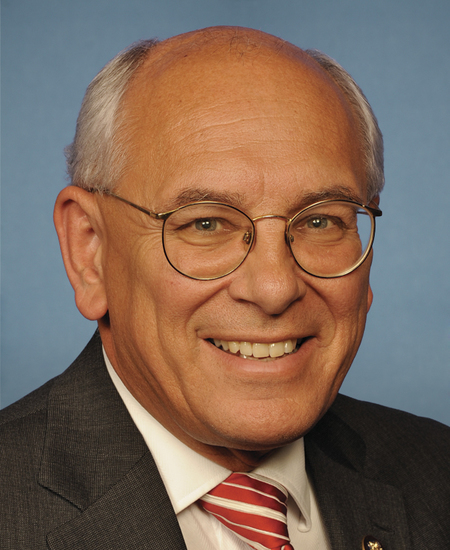
Rep. Paul Tonko
Sponsored bills
Maddy summaryHRES 872 is a symbolic resolution supporting Creutzfeldt-Jakob Disease (CJD) Awareness Day, recognizing CJD as a rare, fatal brain disorder affecting approximately 1-2 people per million annually in the U.S. The resolution does not create new programs or policies but formally acknowledges the disease's impact and the importance of raising public awareness about CJD's rapid progression and challenges for patients and families. It specifically encourages recognition of CJD Awareness Day on November 12, 2025, as a way to highlight this condition. The resolution is non-binding and focuses solely on awareness, not medical research or funding.
Maddy summaryHRES 865, the "Opening the People’s House Resolution," would amend House rules to allow any member to end a "district work period" (a time when members work in their districts instead of in Washington) by submitting a letter to the Clerk. If a majority of House members submit such letters, the current district work period would end within two days, and the Speaker could not schedule a new one for three weeks after the House reconvenes. The Clerk would publicly list all signers in the Congressional Record and online daily. This resolution directly affects House members and the Speaker by changing how district work periods are terminated.
Maddy summaryThis bill, HR 5973, requires federal immigration enforcement personnel to follow strict limits on force use, including proportional application, mandatory de-escalation efforts, and prohibitions on equipment like flash bangs or rubber bullets except for specific public safety threats. It mandates body-worn and vehicle cameras for all operations, with footage retained for one year (three years for force incidents or complaints), and grants affected individuals the right to inspect recordings. The law also requires annual training on force policies, First Amendment compliance, and racial bias avoidance, while demanding detailed quarterly reports to Congress on force usage, assaults on agents, and equipment approvals. These provisions directly affect all federal immigration agents conducting enforcement actions, aiming to increase transparency and accountability during operations.
Maddy summaryThis bill requires states to allow eligible voters to register or update their registration at polling places on election day for federal elections, including during early voting periods. It applies to all states except those with existing laws eliminating voter registration requirements for federal elections. The key mechanism mandates that voters can both register and cast their ballot on the same day at designated polling locations. The requirement takes effect for the November 2026 general election and all subsequent federal elections.
Maddy summaryHRES 846 is a symbolic resolution designating October 2025 as National Domestic Violence Awareness Month. It expresses the House's support for raising awareness about domestic violence and its impacts, and calls for continued congressional attention to ending domestic violence through existing programs. The resolution does not create new laws, allocate funding, or directly affect any specific groups - it is purely a statement of support. It references statistics on domestic violence prevalence but focuses on awareness rather than policy changes.
Maddy summaryHRES 849, the "Ban Crypto Corruption Resolution," would prohibit current and prospective federal elected officials (including the President, Vice President, Members of Congress, and their immediate families) from creating, endorsing, or holding digital assets like cryptocurrencies, memecoins, or NFTs. It requires these individuals to place existing digital assets in a blind trust during their service and for two years afterward, mandates full public disclosure of all crypto transactions, and bans foreign investment in politician-linked digital ventures. The resolution also establishes civil and criminal penalties for violations and clarifies that any personal crypto activities would be deemed unofficial acts. This applies broadly to all covered officials, aiming to prevent conflicts of interest, self-enrichment, and foreign influence through digital asset activities.
Maddy summaryThe American Energy Independence and Affordability Act extends multiple clean energy tax credits that were set to expire between 2025 and 2026. It specifically extends residential clean energy credits through 2034, clean electricity investment credits for wind and solar through 2032, and clean vehicle credits for electric vehicles through 2032. The bill also reinstates special rates for sustainable aviation fuel and modifies requirements for energy-efficient home improvements. These provisions directly affect homeowners installing solar panels, businesses investing in clean energy infrastructure, and manufacturers producing clean energy equipment.
Maddy summaryThis bill prohibits the Department of Veterans Affairs (VA) from discriminating against transgender veterans in healthcare, specifically requiring the VA to provide medically necessary treatments for gender dysphoria. It directly affects transgender veterans seeking VA health services by mandating that the VA cannot deny such care or misgender patients based on gender identity. The law adds a new section to VA healthcare law explicitly banning gender identity discrimination and ensuring access to gender dysphoria treatments, aligning with existing protections under the Affordable Care Act. Additionally, it requires the VA to provide quarterly reports to Congress on how transgender veterans receive healthcare services under this new standard.
Maddy summaryThis bill establishes the New York-New Jersey Watershed Restoration Program to coordinate and fund habitat restoration and water quality improvements across the shared watershed region. It creates a competitive grant program providing federal matching funds (up to 90% for small/rural/disadvantaged communities) to state/local governments, nonprofits, and tribes for projects advancing habitat restoration, climate resilience, and public access. The program prioritizes communities facing environmental injustice and requires coordination with existing regional conservation plans like the Hudson River Estuary Program. Funding of $20 million annually (2026-2031) will support these activities, with 75% dedicated to the grant program and all projects supplementing existing conservation efforts.