

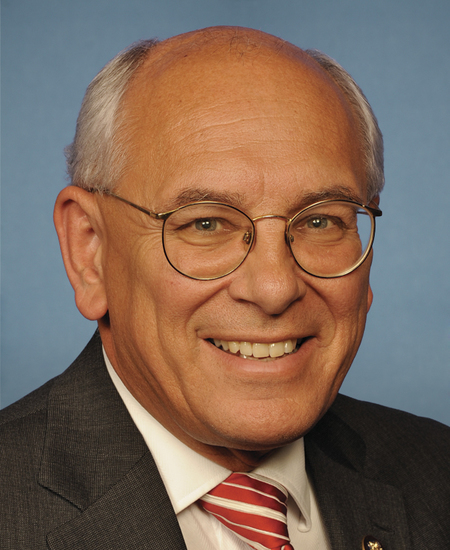
Photo of Paul Tonko
D United States House · District 20 · New York On the 2026 ballot

Rep. Paul Tonko

Compare
Total votes
2,837
all sessions
Attendance
99%
21 missed
Near the chamber average
With party
98%
of cast votes
Higher than 82% of chamber peers
Bipartisan score
1%
crosses aisle rarely
Lower than 82% of chamber peers
Sponsored
2,022
bills & resolutions
Higher than 93% of chamber peers
Committees
5
assignments
2,022 bills and resolutions

Sponsored bills

Total
2,022
Primary
95
Co-sponsor
1,927
This page
2,022
matching current filters
Co-sponsor HR 6407
In committee · Indiana House · Co-sponsor
RCORP Authorization Act

Maddy summaryHR 6407, the RCORP Authorization Act, authorizes $165 million annually (2026-2030) to fund the Rural Communities Opioid Response Program. This program provides grants to states, tribes, rural health offices, and other eligible entities to expand prevention, treatment, and recovery services for opioid and substance use disorders in rural areas. Funds can support planning, evidence-based service models, and coordination with local communities but cannot be used for real property acquisition. The bill directly affects rural communities facing opioid crises and the organizations delivering care through these grants.

In committee Dec 3, 2025 1 co-sponsor
Co-sponsor HRES 856
In committee · Indiana House · Co-sponsor
Expressing the sense of the House of Representatives that the United States Department of Agriculture should use its contingency funds and interchange authority to finance the supplemental nutrition assistance program.

Maddy summaryHRES 856 is a non-binding resolution expressing the House of Representatives' view that the U.S. Department of Agriculture (USDA) should use its existing contingency funds and interchange authority to fund the Supplemental Nutrition Assistance Program (SNAP) for November 2025. The resolution cites that the USDA holds over $5 billion in contingency funds set aside for emergencies and has legal authority under the Department of Agriculture Organic Act to transfer funds between nutrition programs to maintain SNAP benefits. This would directly support approximately 42 million people relying on SNAP, including 16 million children, 8 million seniors, 4 million people with disabilities, and 1.2 million veterans, preventing disruption during a potential funding gap. The resolution does not create new law but urges the administration to use existing resources to ensure continued food assistance.

In committee Dec 2, 2025 1 co-sponsor
Co-sponsor HR 6350
In committee · Indiana House · Co-sponsor
College Athletics Reform Act

Maddy summaryThis bill establishes comprehensive name, image, and likeness (NIL) rights for college athletes, prohibiting institutions from restricting athletes' ability to earn compensation for their personal branding or taking adverse action against them for doing so. It requires transparent NIL agreements for compensation over $600, including specific details about services, compensation amounts, and termination terms. The bill also amends immigration laws to better accommodate international student athletes participating in college sports and updates regulations governing sports agents. Additionally, it establishes a Commission to study college athletics governance, focusing on collective bargaining, revenue sharing, and Title IX compliance, while expanding disclosure requirements for colleges regarding athletics revenue and expenses.

In committee Dec 2, 2025 1 co-sponsor
Co-sponsor HR 1262
Passed · Indiana House · Co-sponsor
Mikaela Naylon Give Kids a Chance Act

Give Kids a Chance Act of 2025 This bill expands the Food and Drug Administration’s (FDA’s) authority with respect to research on rare pediatric diseases, including by permitting the FDA to take enforcement action against drug sponsors that fail to satisfy pediatric study requirements and by reauthorizing programs that support pediatric research.  Specifically, the bill modifies requirements relating to molecularly targeted pediatric cancer investigations to permit research on new drugs in combination with active ingredients that have already been approved, provided certain conditions are met; permits the FDA to take enforcement action against drug sponsors that fail to comply with pediatric study requirements, if such sponsors demonstrated a lack of due diligence in satisfying the requirement; renews the FDA’s authority to award priority review vouchers to sponsors of new products intended to treat rare pediatric diseases through September 30, 2029; and reauthorizes through FY2027 certain funding for the National Institutes of Health to support priority pediatric research.  The bill also provides statutory authority for the FDA’s interpretation of the orphan drug exclusivity period. The bill specifies, consistent with FDA regulations, that the seven-year market exclusivity period for drugs for rare diseases or conditions (i.e., orphan drugs) prohibits the approval of the same drug for the same approved use or indication with respect to the disease or condition. (In Catalyst Pharmaceuticals, Inc. v. Becerra , a court rejected the FDA’s interpretation and held that orphan drug exclusivity extends to all uses or indications for the disease or condition.)

Passed Dec 2, 2025 1 co-sponsor
Co-sponsor HR 6303
In committee · Indiana House · Co-sponsor
CARE for Moms Act

Maddy summaryThe CARE for Moms Act aims to reduce maternal mortality in the United States by expanding access to comprehensive care for pregnant and postpartum individuals. It directly affects women, particularly Black women who face disproportionately higher maternal mortality rates, as well as rural and underserved communities. Key provisions include funding State-based perinatal quality collaboratives ($35 million annually), requiring 12-month Medicaid coverage for postpartum individuals, mandating oral health services during pregnancy, supporting doula services through $50 million in grants, and creating regional centers to address implicit bias in healthcare. The bill also establishes rural mobile health units for obstetric care and requires hospitals to notify authorities 90 days before closing obstetric units. These changes aim to address systemic issues contributing to the U.S. maternal mortality crisis, which has the highest rate among developed nations.

In committee Nov 25, 2025 1 co-sponsor
Co-sponsor HR 6280
In committee · Indiana House · Co-sponsor
Access to Genetic Counselor Services Act of 2025

Maddy summaryThis bill expands Medicare coverage to include genetic counseling services provided by licensed or certified genetic counselors, effective January 1, 2027. It defines "covered genetic counseling services" as those furnished by qualified counselors under state law or certification, with payments set at 80% of the lesser of the actual charge or 85% of the physician fee schedule. Medicare beneficiaries seeking genetic counseling will gain access to these services through covered providers, while preventing balance billing for these specific services. The bill does not restrict physicians from billing for similar services under existing Medicare rules.

In committee Nov 21, 2025 1 co-sponsor
Co-sponsor HR 6243
In committee · Indiana House · Co-sponsor
Semiquincentennial Congressional Time Capsule Act

Maddy summaryHR 6243, the Semiquincentennial Congressional Time Capsule Act, directs the Architect of the Capitol to create and bury a time capsule commemorating the U.S. 250th anniversary. The capsule, to be sealed in the Capitol Visitor Center by July 4, 2026, will contain a joint letter from congressional leadership, commemorative coins, and other durable items (like metal or archival paper) that won’t degrade. It will remain sealed until July 4, 2276, when the 244th Congress will receive and decide how to preserve its contents. This is a ceremonial act with no policy impact, solely marking the semiquincentennial anniversary.

In committee Nov 21, 2025 1 co-sponsor
Primary HRES 903
In committee · Indiana House · Lead sponsor
Expressing support for the designation of November as "Complex Regional Pain Syndrome and Reflex Sympathetic Dystrophy Syndrome Awareness Month".

Maddy summaryHRES 903 is a non-binding House resolution designating November as "Complex Regional Pain Syndrome and Reflex Sympathetic Dystrophy Syndrome Awareness Month." It expresses support for raising public awareness about CRPS/RSD, a rare condition causing chronic limb pain, swelling, and disability without a cure or single diagnostic test. The resolution highlights the need for earlier diagnosis, improved treatment access, and research advancement for this condition, which disproportionately affects women. It does not create new laws or allocate funding but aims to support patients and drive medical progress through heightened visibility.

In committee Nov 20, 2025 0 co-sponsors
Co-sponsor HRES 899
In committee · Indiana House · Co-sponsor
Supporting the goals and principles of Transgender Day of Remembrance by recognizing the epidemic of violence toward transgender people and memorializing the lives lost this year.

Maddy summaryHRES 899 is a symbolic House resolution recognizing the Transgender Day of Remembrance and memorializing transgender people killed by violence in 2024-2025. It directly affects transgender individuals, particularly transgender women of color, by acknowledging the epidemic of violence against them - citing 27 U.S. victims (including names like Rick Alastor Newman and Kyla Jane Walker) and 241 global cases in 2025. The resolution’s key provisions include formally recognizing the violence epidemic, memorializing specific lives lost, and affirming the need for solutions to protect transgender people. It does not create new laws but expresses congressional support for addressing systemic violence and discrimination faced by transgender communities.

In committee Nov 20, 2025 1 co-sponsor
Co-sponsor HR 6166
In committee · Indiana House · Co-sponsor
Lowering Drug Costs for American Families Act

Maddy summaryThis bill expands Medicare's drug price negotiation program to cover 50 drugs (up from 20) and requires health insurers to apply negotiated prices to cost-sharing for beneficiaries. It establishes annual out-of-pocket cost-sharing limits for prescription drugs under group health plans and insurance coverage, with specific limits of $2,000 for self-only coverage in 2027 that will increase annually. The bill also sets specific cost-sharing limits for insulin products, requiring coverage with no deductible and cost-sharing of no more than $35 per 30-day supply or 25% of the negotiated price. These provisions affect Medicare beneficiaries, people with group health plans, and health insurers across the country. The bill applies to plan years beginning on or after January 1, 2027.

In committee Nov 20, 2025 1 co-sponsor
Showing 231 to 240 of 2,022 bills
Previous 1 … 23 24 25 … 203 Next