Excellence in Mental Health and Addiction Treatment Act of 2021 This bill increases the number of states that may participate in two-year Medicaid demonstration programs that improve access to community mental health services. It also provides for additional grants to certified community behavioral health clinics.
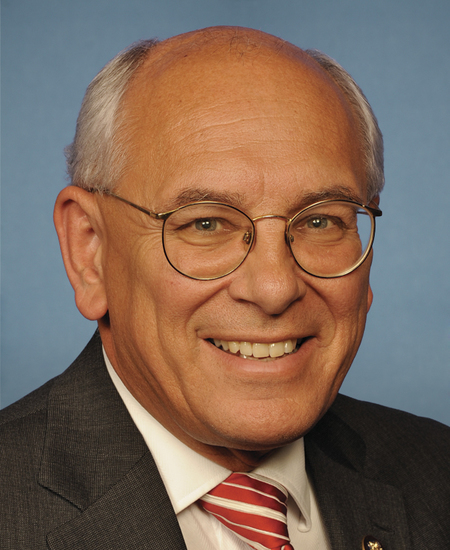
Rep. Paul Tonko
Sponsored bills
Crisis Care Enhancement Act This bill requires states to support evidence-based crisis care services, such as crisis call centers, through the Community Mental Health Services Block Grant (MHBG). In addition, for each year in which the appropriations for that grant exceed a specified amount, states must expend a certain percentage of their MHBG allotment on crisis care services. Additionally, the Substance Abuse and Mental Health Services Administration may permit states and territories to use MHBG funding on crisis care services for individuals who are not part of the grant's target population. Currently, the MHBG targets adults with serious mental illnesses and children with serious emotional disturbances.
Medicare Dental, Vision, and Hearing Benefit Act of 2021 This bill provides for Medicare coverage of dental, vision, and hearing care. Coverage includes (1) routine dental cleanings and exams, basic and major dental services, emergency dental care, and dentures; (2) routine eye exams, eyeglasses, and contact lenses; and (3) routine hearing exams, hearing aids, and exams for hearing aids. With respect to such care, the bill establishes special payment rules, limitations, and coinsurance requirements.
Safe Schools Improvement Act of 2021 This bill requires states to direct their local educational agencies (LEAs) to establish policies that prevent and prohibit bullying and harassment of elementary and secondary school students. In particular, these policies must prohibit bullying and harassment based on race, color, national origin, sex, sexual orientation, gender identity, disability, or religion. Further, LEAs must provide (1) students, parents, and educational professionals with annual notice of the conduct prohibited in their disciplinary policies; (2) students and parents with grievance procedures that target such conduct; and (3) the public with annual data on the incidence and frequency of that conduct at the school and LEA level. The Department of Education must conduct and report on an independent biennial evaluation of programs and policies to combat bullying and harassment in elementary and secondary schools. The National Center for Education Statistics must collect state data to determine the incidence and frequency of the conduct prohibited by LEA disciplinary policies.
COVID-19 and Pandemic Response Centers of Excellence Act This bill establishes and provides funding for the COVID-19 and Pandemic Response Centers of Excellence Program Fund. The Department of Health and Human Services (HHS) must use the funds to set up at least 10 centers of excellence at academic medical centers to address issues associated with COVID-19 and future pandemic preparedness and response efforts. In addition, HHS must establish an advisory committee comprised of representatives from relevant federal agencies, each center of excellence, and national organizations that work with populations disproportionately impacted by COVID-19 and other health disparities. The committee must facilitate collaboration, information-sharing, and dissemination of best practices relating to COVID-19 and future pandemic responses.
This resolution honors the suppliers of the National Aeronautics and Space Administration (NASA) for the work they are doing on the Artemis missions.
Federal Retirement Fairness Act This bill modifies the federal civilian service that is creditable service under the Federal Employees Retirement System (FERS). Specifically, it expands the nondeduction service that may be creditable under FERS. Nondeduction service is federal service where an employee's pay is not subject to retirement deductions (e.g., service under a temporary appointment). Currently, nondeduction service performed before January 1, 1989, is creditable under FERS so long as a deposit is made into the retirement fund to cover the period of nondeduction service. This bill allows nondeduction service performed on or after January 1, 1989, to be creditable under FERS so long as a deposit is made into the retirement fund.
Screening With Dignity Act This bill directs the Transportation Security Administration (TSA) to develop procedures to appropriately and respectfully screen self-identified transgender air passengers and passengers traveling with religious headwear or other articles of faith and begin training of all TSA Officers on such procedures. The TSA must implement protections for such passengers, including (1) prohibiting human viewing of passenger images and conducting pat downs by an officer of the gender requested by the passenger; and (2) ensuring secondary screening measures are no more intrusive than necessary to resolve an alarm or other concern raised by primary screening, including consideration of the sensitivity of the groin, chest, and other body areas and the sensitivity of religious articles of faith such as religious headwear. The TSA shall separately study and report on (1) the cost and feasibility of retrofitting advanced image technology screening equipment to distinguish between foreign objects and human body parts (including hair) in a manner that is gender neutral; and (2) the impact of imaging technology on transgender passengers, passengers whose religious faith requires them to travel with articles of faith, and passengers traveling with assistive devices. Additionally, the TSA must identify any policy, procedure, or training changes and complete any testing, certification, and assessment for qualifying additional technology to ensure that any advanced imaging utilized for passenger screening meets certain requirements, including not generating alarms based only on passengers' body parts (including hair), undergarments, or religious headwear.

Assistance, Quality, and Affordability Act of 2021 This bill provides support for drinking water infrastructure and requires the Environmental Protection Agency (EPA) to address the safety and affordability of drinking water. Specifically, the bill reauthorizes and establishes several programs for drinking water infrastructure. For example, it reauthorizes through FY2031 the drinking water state revolving fund. In addition, the bill revises requirements concerning the safety of drinking water, including by requiring the EPA to promulgate national primary drinking water regulations for perfluoroalkyl and polyfluoroalkyl substances (commonly known as PFAS), microcystin toxin, and 1,4–dioxane. PFAS are man-made and may have adverse human health effects. A variety of products contain the compounds, such as nonstick cookware or weatherproof clothing. Microcystin is a toxin that is produced by certain algae. The solvent known as 1,4–dioxane may also have adverse human health effects. It is used in variety of products, such as adhesives, sealants, and printing inks. The EPA must also implement a residential emergency relief program that assists customers of public water systems with paying drinking water bill. Under the program, the EPA must provide payments to public water systems to reimburse them for forgiving their customers' debts or fees for services provided since March 1, 2020, in order to help the customers retain, reconnect, or restore water services. Public water systems that receive payments may not disconnect or interrupt their customer's service because of such debt or fees. Finally, the bill directs the Government Accountability Office to report on issues relating to the potential for consolidation of certain distressed and small public water systems.
Medicare Vision Act of 2021 This bill expands Medicare coverage to include eyeglasses, contact lenses, and vision services, in accordance with specified limitations. Covered services include routine eye examinations and contact lens fittings.