

Maddy summaryHRES 785 is a symbolic resolution designating November 8, 2021, as "National First-Generation College Celebration Day." It urges all Americans to celebrate this day, recognize the contributions of first-generation college students (those whose parents did not earn bachelor's degrees), and honor the Higher Education Act of 1965. The resolution highlights existing federal programs like TRIO and Pell Grants that support underrepresented students but does not create new laws or funding. As a non-binding resolution, it has no direct policy impact but aims to raise awareness about first-generation students' challenges and achievements.
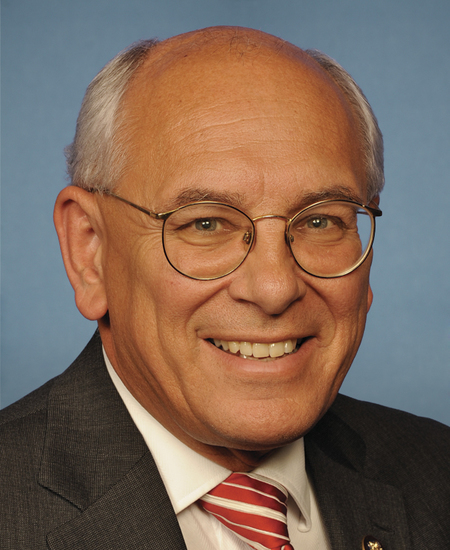
Rep. Paul Tonko
Sponsored bills
Early Childhood Nutrition Improvement Act This bill makes various changes to the Child and Adult Care Food Program, which reimburses child care centers, day care homes, and other sites for meals and snacks provided to low-income individuals. Among these changes, the bill authorizes reimbursements for an additional meal or snack provided to children who are in care for at least eight hours, allows certain child care centers to certify their eligibility on an annual (rather than a monthly) basis, and establishes an advisory committee to make recommendations to reduce unnecessary recordkeeping requirements for program participants.
Greyhound Protection Act of 2021 This bill modifies the federal criminal statute commonly known as the Wire Act. Currently, the Wire Act contains four prohibitions on the use of a wire transmission facility (e.g., the telephone or internet) for certain gambling activities. All four prohibitions apply to sports gambling. However, there have been conflicting interpretations of the applicability of the prohibitions to nonsports gambling (e.g., state lotteries). This bill amends the Wire Act to expressly state that the statute does not authorize the use of wire communications to gamble on commercial greyhound racing or permit the transport of animals for commercial dog racing or related activities.
Fiscal State of the Nation Resolution This concurrent resolution requires the congressional budget committees to conduct an annual joint hearing to receive a presentation from the Comptroller General regarding (1) the Government Accountability Office's audit of the financial statement of the executive branch, and (2) the financial position and condition of the federal government.
This bill establishes the Advisory Committee on Lesbian, Gay, Bisexual, Transgender, and Queer Veterans to consult with the Department of Veterans Affairs regarding the administration of benefits for lesbian, gay, bisexual, transgender, and queer (LGBTQ) veterans, reports and studies pertaining to LGBTQ veterans, and the needs of such veterans with respect to compensation, health care, rehabilitation, outreach, and other benefits and programs.
Public Health Workforce Loan Repayment Act of 2021 This bill establishes a student loan repayment program for public health professionals. As a condition of participation, recipients must agree to complete a period of full-time employment with a state, tribal, or local public health agency. Individuals eligible for this program include those with public health or health professions degrees, as well as those with degrees in statistics, computer science, or related information technology fields.
Commission to Study the Stigmatization, Criminalization, and Ongoing Exclusion and Inequity for LGBTQ Servicemembers and Veterans Act This bill establishes the Commission to Study the Stigmatization, Criminalization, and Ongoing Exclusion and Inequity for LGBTQ Servicemembers and Veterans. The Commission must identify and compile information about the history of military policy regarding homosexuality from 1778 onward, including regarding lesbian, gay, bisexual, transgender, and queer (LGBTQ) sexual orientation and gender identity. The Commission must hold public hearings, gather public testimony, examine lasting and disparate impacts of the discriminatory policies on the physical and mental well-being of members of the Armed Forces, and make recommendations on appropriate remedies.
Ending the Monopoly of Power Over Workplace Harassment through Education and Reporting Act or the EMPOWER Act This bill makes it an unlawful labor practice for an employer to enter into, or attempt to enforce, a contract with an employee or job applicant that contains a nondisparagement or nondisclosure clause that covers workplace or sexual harassment, including retaliation for participating in a workplace harassment proceeding. The bill exempts certain settlement or separation agreements from such prohibition. The bill also requires the Securities and Exchange Commission to promulgate a regulation that requires any issuer of securities to submit a report for the most recent five-year period with respect to workplace and sexual harassment. The commission must provide for the development and dissemination of training programs and information regarding workplace and sexual harassment. The bill denies a tax deduction for amounts related to judgments and expenses in connection with litigation related to workplace or sexual harassment. It also excludes from gross income, for income tax purposes, any amount received in connection with a claim or settlement related to workplace or sexual harassment, or other unlawful discrimination.
Pets Belong With Families Act This bill prohibits public housing agencies from imposing breed restrictions on pets owned by residents of public housing units. The bill continues to allow public housing agencies to prohibit ownership of dangerous animals in public housing, but prohibits classification as dangerous by breed and requires that any such classification be based on specific behaviors or actions of the animal.
American Energy Worker Opportunity Act of 2021 This bill establishes the Office of American Energy Workers in the Department of the Treasury to provide displaced coal workers with wage replacement, health care premiums, retirement savings contributions, and educational assistance. The bill also provides educational assistance for the children of displaced coal workers and provides an incentive for clean energy employers to hire displaced coal workers.