

Protecting Our Democracy Act This bill addresses issues involving (1) abuses of presidential power; (2) checks and balances, accountability, and transparency; and (3) election integrity and security. Specifically, regarding abuses of presidential power, the bill requires the Department of Justice (DOJ) and the President to submit to Congress specified materials relating to certain pardons, prohibits presidential self-pardons, suspends the statute of limitations for federal offenses committed by a sitting President or Vice President, prohibits the acceptance of foreign or domestic emoluments, and sets forth provisions regarding Office of Government Ethics and Office of Special Counsel jurisdiction and enforcement authority. To address checks and balances, accountability, and transparency, the bill authorizes specified actions to enforce congressional subpoenas, imposes limits on presidential declarations of emergencies, requires DOJ to maintain a log of specified communications between it and the White House, requires cause for removal of inspectors general, increases whistleblower protections, and requires a candidate for President or Vice President to provide copies of tax returns for the 10 most recent taxable years to the Federal Election Commission. To address election integrity and security, the bill requires federal campaign reporting of foreign contacts, makes various changes to requirements concerning foreign donations to political campaigns and candidates and foreign contributions to online electioneering communications, prohibits distribution of materially deceptive audio or visual media prior to an election (i.e., deepfakes), and establishes a program to support states and localities transition to ranked choice voting systems.
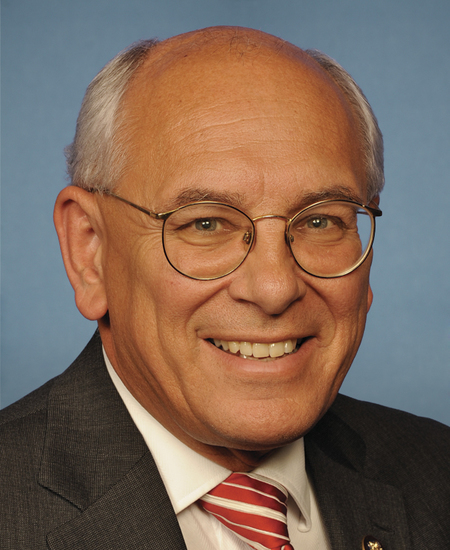
Rep. Paul Tonko
Sponsored bills
Humane Cosmetics Act of 2021 This bill generally prohibits animal testing in the evaluation of cosmetic products, and it prohibits the sale or transport of cosmetics developed using animal testing, subject to civil penalties. These prohibitions begin one year after enactment. The bill specifies exceptions to these prohibitions, including if such animal testing (1) is conducted outside the United States to comply with a foreign regulatory authority; (2) is pursuant to a specified finding that there are no nonanimal alternatives to test the safety of a potentially dangerous cosmetic product or ingredient; (3) is of a product or ingredient for a drug or device subject to regulation by the Food and Drug Administration (FDA); or (4) is required for a noncosmetic purpose pursuant to a state, federal, or foreign regulatory authority. Further, no animal-testing evidence may be used to establish the safety of a cosmetic product or ingredient that is regulated by the FDA after the effective date of this bill, subject to limited exceptions.
Telehealth Extension Act of 2021 This bill expands and otherwise modifies coverage of telehealth services under Medicare. Specifically, the bill permanently (1) removes geographic restrictions on originating sites (i.e., the location of the beneficiary), (2) allows the home of the beneficiary to serve as the originating site for all services, and (3) allows federally qualified health centers and rural health clinics to serve as the distant site (i.e., the location of the health care practitioner). The bill also extends any Medicare telehealth flexibilities that were granted during the COVID-19 public health emergency until two years after the emergency ends and generally allows such flexibilities to be granted during any public health emergency. In addition, the bill (1) allows for Medicare payment of outpatient critical access hospital services consisting of telehealth behavioral therapy until two years after the COVID-19 public health emergency ends; and (2) after the emergency ends, conditions payment for certain high-cost laboratory tests and durable medical equipment that are ordered via telehealth on at least one in-person visit during the preceding six-month period.
Mental Health in International Development and Humanitarian Settings Act or the MINDS Act This bill directs the U.S. Agency for International Development (USAID) and the Department of State to integrate mental health and psychosocial support activities across all U.S. foreign assistance programs, with a particular focus on children and other vulnerable populations. To facilitate this integration, the bill makes organizational changes at the USAID. It authorizes the USAID to appoint a coordinator to oversee and direct mental health and psychosocial support activities. The coordinator must ensure that these activities focus on children, adult caretakers and families, displaced populations, and other vulnerable groups. In addition, the bill establishes a working group comprised of representatives from every USAID bureau and the Department of State to coordinate interagency efforts related to, promote best practices for, and ensure sustainability and continuity of mental health and psychosocial support activities. The USAID and the State Department must brief Congress about the amount of foreign assistance spending on mental health and psychosocial support activities and related matters.
Maddy summaryHRES 845 is a procedural resolution passed by the U.S. House of Representatives to remove Representative Lauren Boebert (Colorado) from two standing committees: the Committee on the Budget and the Committee on Natural Resources. The resolution directly affects Boebert's committee assignments, which are part of her official duties as a House member. It does not change laws or policies but alters her participation in specific legislative committees. This action was taken under House rules requiring members to "reflect creditably on the House," though the resolution itself only addresses committee membership. The resolution was submitted by multiple House members and referred to the Committee on Ethics.
Radiation Exposure Compensation Act Amendments of 2021 This bill expands two programs that compensate individuals who were exposed to radiation during certain nuclear testing or uranium mining and subsequently developed medical conditions, including cancers. First, the bill expands and extends a program that compensates individuals who were exposed to radiation from atmospheric nuclear testing or other sources and subsequently developed specified cancers. Under current law, this program compensates individuals who were present in a designated geographic area during a period of nuclear testing and certain individuals employed in uranium mining. The bill expands the designated areas to include Colorado, Idaho, Montana, New Mexico, and Guam and additional areas in Arizona, Nevada, and Utah; makes more individuals who worked in uranium mining eligible for the program; increases the amount of compensation awarded to and provides medical benefits for eligible claimants; and extends for 19 years following the bill's enactment the fund that supports this program and the statute of limitations for filing claims (currently, the program terminates on July 10, 2022). Second, the bill makes certain individuals employed in uranium mines or mills eligible for a program that compensates workers, including Department of Energy employees and contractors, for illnesses caused by occupational exposure to radiation and hazardous substances during development and testing of the nation's nuclear weapons stockpile. The bill also establishes a grant program in the National Institute of Environmental Health Sciences for institutions of higher education to study the epidemiological impacts of uranium mining and milling among individuals without occupational exposure.
Allied Health Workforce Diversity Act of 2021 This bill allows the Department of Health and Human Services to provide grants to accredited education programs to increase diversity in the physical therapy, occupational therapy, respiratory therapy, audiology, and speech-language pathology professions. Grants may be used to provide scholarships or to support recruitment and retention of students from underrepresented groups.
9/11 Memorial and Museum Act This bill directs the Department of Homeland Security (DHS) to award to the official organization that operates the National September 11 Memorial & Museum a one-time grant to be used solely for the purposes of the operation, security, and maintenance of the memorial and museum. As a condition on receipt of the grant, the organization must provide for free admission to all facilities and museums associated with the memorial and museum for active and retired members of the Armed Forces, individuals who were registered first responders to the terrorist attacks of September 11, 2001, and family members of victims of such attacks; provide for dedicated free admission hours for the general public at least once a week; and allow for annual federal audits of its financial statements.
Stopping Grinch Bots Act of 2021 This bill makes it unlawful to use automated tools (i.e., bots) to intentionally bypass a website's security measures in order to purchase and resell its products or services in interstate commerce.
Promoting Resources to Expand Vaccination, Education, and New Treatments for HPV Cancers Act of 2021 or the PREVENT HPV Cancers Act of 2021 This bill reauthorizes through FY2026 and expands Department of Health and Human Services activities to educate health care providers and the public about human papillomavirus (HPV), its association with certain cancers, and the importance of HPV vaccines. Specifically, the bill (1) requires relevant educational materials to include information about both cervical cancer and other HPV-associated cancers and about the importance of HPV vaccines, including for males; (2) expands the scope of a national education campaign about gynecologic cancers to address HPV-associated cancers more broadly and target specified, at-risk populations; and (3) authorizes demonstration projects to increase knowledge and awareness of gynecologic cancers.